Rain, Snow and Shine – the extreme weather changes in Bosnia! 

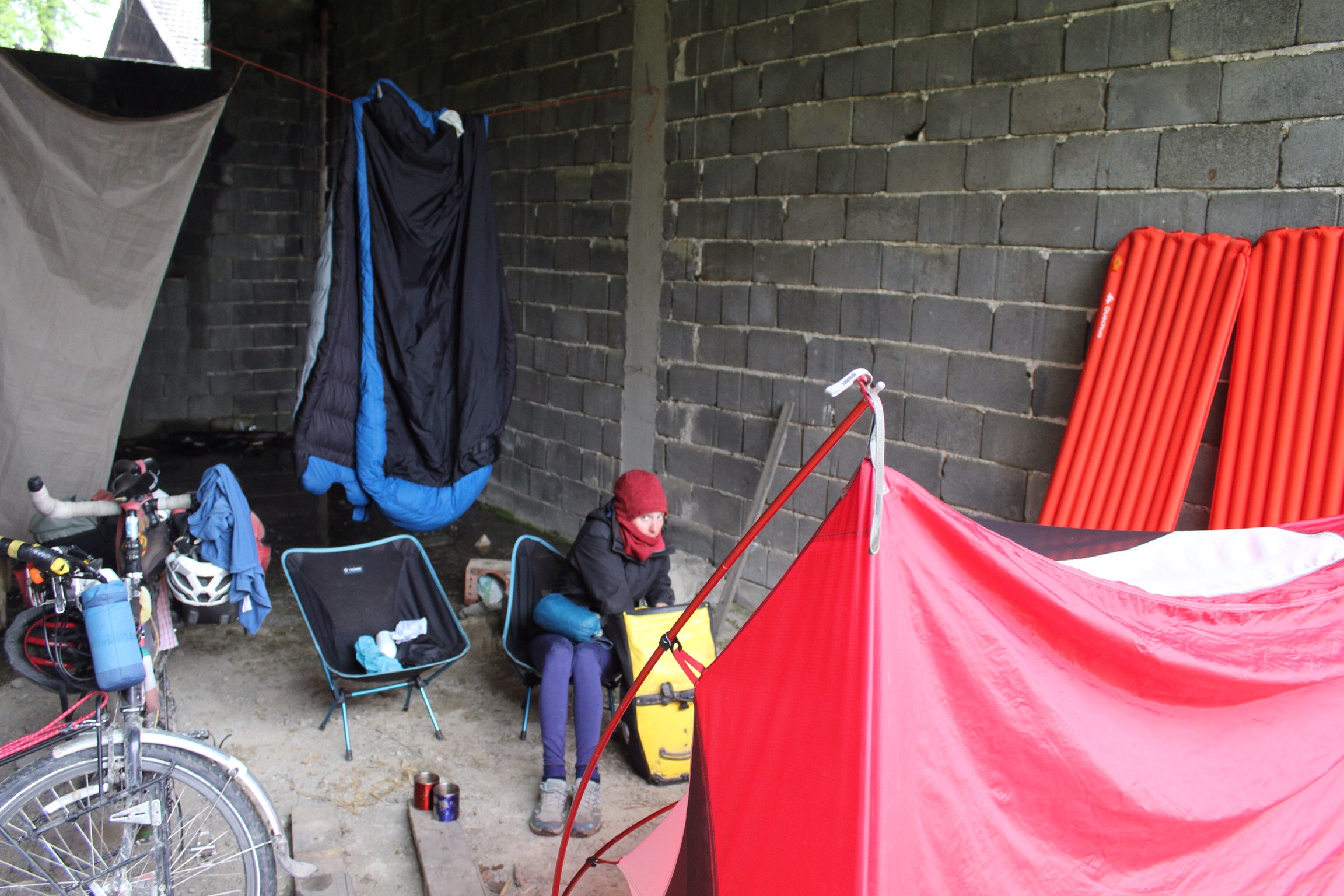
We stayed in a campsite outside the city before heading towards the town of Travnik. With thunderstorms and rain due that night we took cover off the road in an abandoned semi built house which looked as if it was going to keep us dry. It was a bit early to stop but at least we would be safe from the weather when it decided to lash down later that evening. 

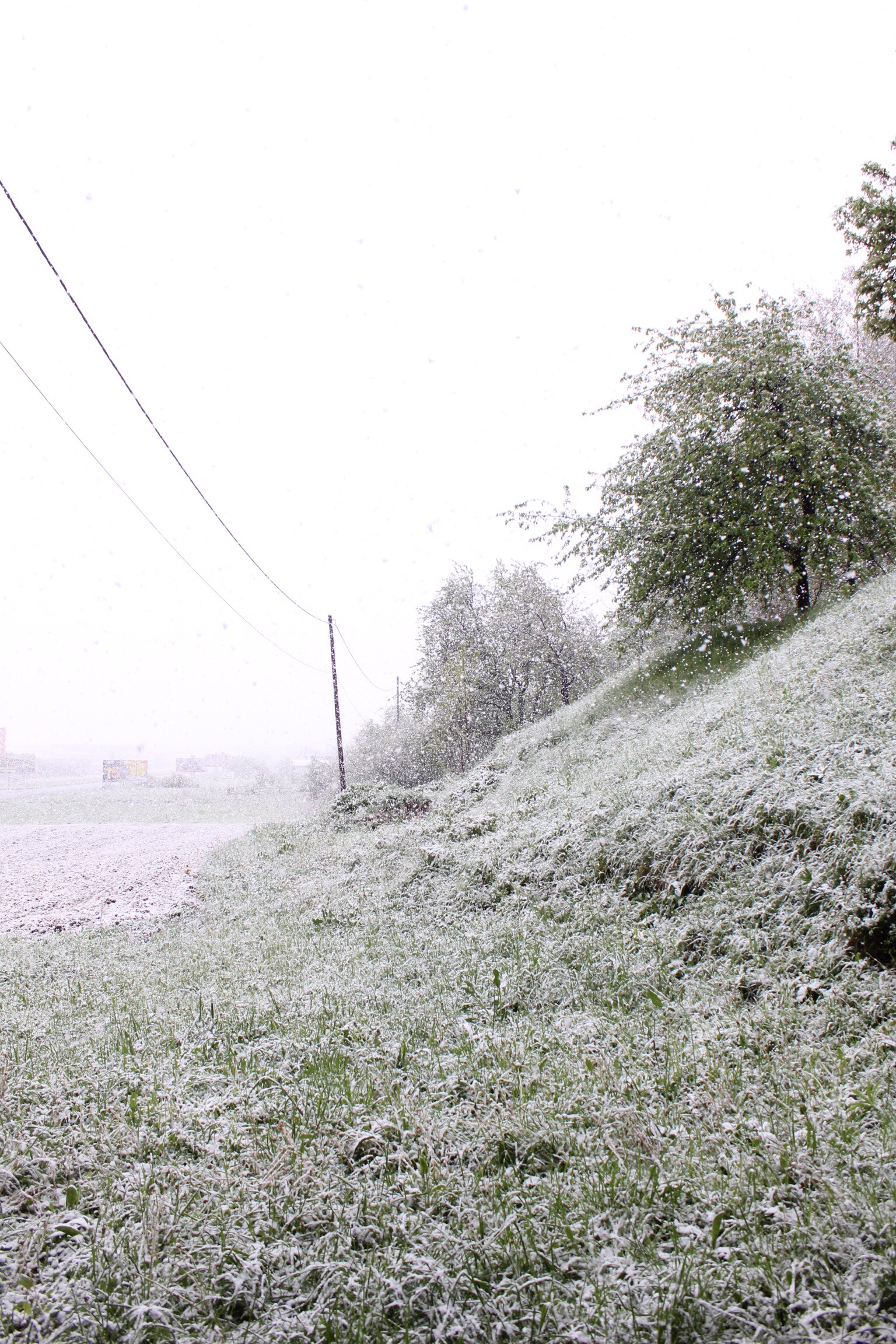
We waited… and waited… all night for the rain to hit but it didn’t start until 4:30am when it dutifully came teeming down. Unfortunately for us the building wasn’t as waterproof as we though and we woke the next morning to the tent sitting in a pool, water seeping into the tent and all our gear waterlogged… Frustrated and grumpy we climb out and try and dry everything off as well best we can. The rain continues all morning and at 11am turns to thick snow which eventually starts to stick. 
Freezing!


We cower in our shelter and watch all the tv programmes we’ve downloaded from BBC iplayer hoping it’ll stop. It doesn’t, and at 2pm we admit defeat and decide to find a restaurant for dinner. We weren’t going to get anywhere today… The best place we find is a pizza joint in a big shopping centre where we hide for the rest of the evening. The snow melts quickly but it’s still pretty cold and we simply head back to the same shelter for a second night. 
Selim our Sarajevo host had suggested a route to Banja Luka but the road was really busy with traffic so we reconsulted the map to see if there was an alternative route. 

We spotted a smaller road – the R440 – which would take us up over a 1000m pass instead. The climb initially was very manageable and thankfully, the weather dry and sunny. We passed through some nice villages. Communities outside of Sarajevo, feel more segregated between the three ethnic groups. Further down the valley we had seen lots of Croatian flags and Croatian beers for sale but up here we suddenly find ourselves cycling past Mosques with the house doorways and vegetable patches are full of women wearing colourful Turkish trousers and head scarfs. 
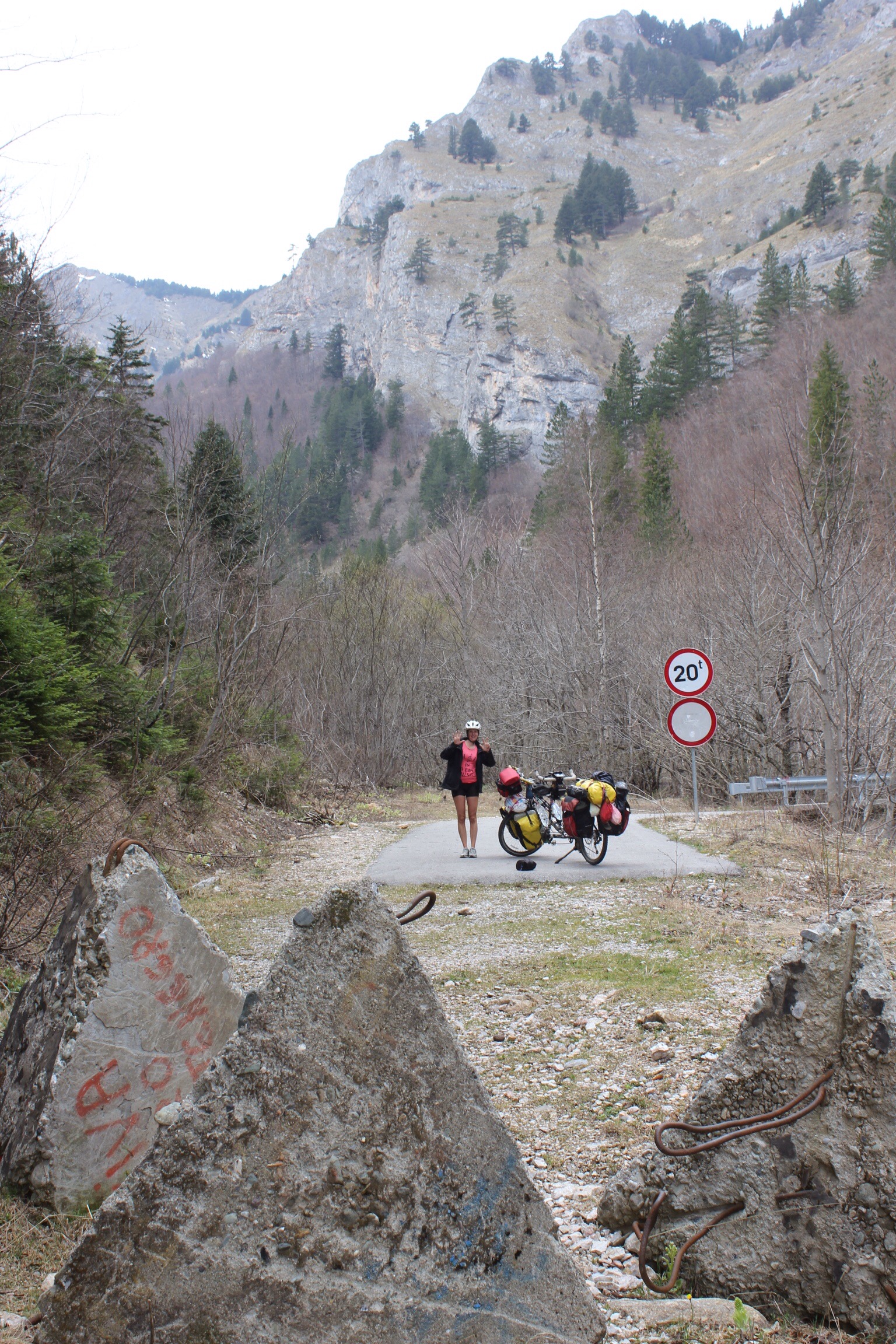
After this final village the Tarmac ends and turns into a dirt track winding its way up the valley next to a river. No snow on the ground yet but we still had 500m to climb… We pass an old army checkpoint and we assume that we are now about to cross into official Republika Srpska territory. No one is manning the post and none of the villagers stop us as we cycle through – we do wonder if we will encounter a difficult road ahead though…

In short we do. The road gets gradually worse and worse and patches of melting snow start to appear. We’re able to cycle through most of these and we are cheered by some fresh boot-prints on the track too. Then we encounter our first major hurdles: first a dug out trench which covers the whole road apart from a thin slice at the side where we precariously push the bike across, the back wheel sliding slowly into the ditch as we go. Then, around the corner, a man made mound which we have to lift tandem over. Overcoming these obstacles the track starts to snake upwards and disappear under icy water… Melting snow. Up we scramble – at times pushing the bike through inches of fast flowing water. Paddy’s shoes do not hold up well to this treatment!

1km from the top we’re faced with this.

The boot tracks are still visible which tells us that a person has definitely used the road as a thoroughfare quite recently – this is encouraging. As we’re struggling up the last section a deer walks out onto the snow and turns his to look at us. We realise the remoteness of our surroundings and then get back to heaving tandem to the top. Here we are able to get back on board and fortunately it’s not as steep on this side so we’re able to wheel slowly down and we only skid and fall over once – me, unusually, taking the brunt of the fall this time.

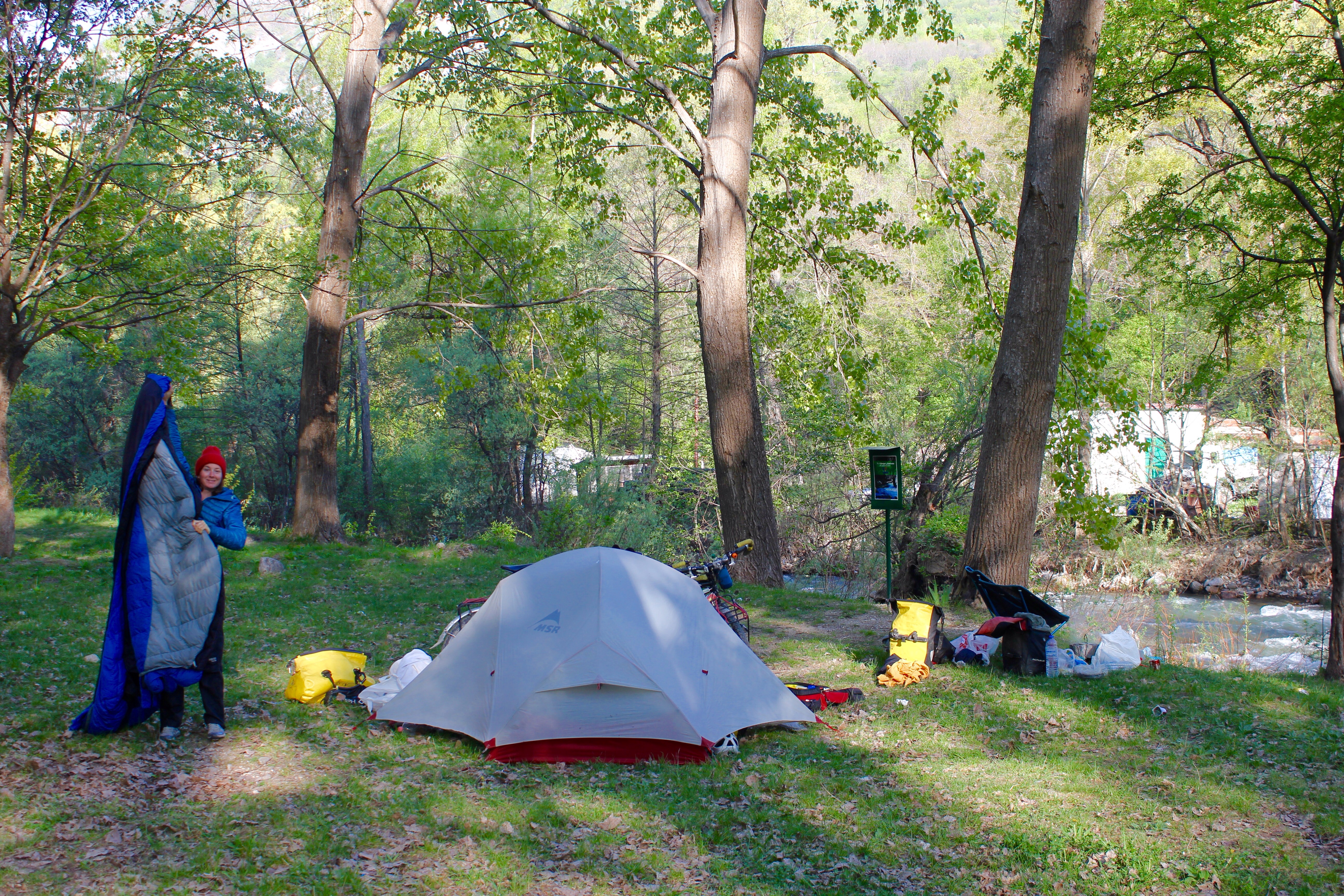
After a short while we find ourselves on a dirt track, the countryside opening up in front of us. We stop outside a house where a friendly family come out to say hello. When we point in the direction we’ve just come they look at us as if we are slightly insane! We meet back up with a proper road soon enough and we enjoy eating up some easy miles freewheeling down through the valley where at the bottom we dip into an open field and set up camp for the night.

The next day was very hot! Quite a change from the snow, sleet and freezing temperatures we had the previous days! We reach Banja Luka which is the capital of the Republika Srpska state. We sit and enjoy basking in the sunshine next to the old castle ruins and the river with no desire to do too much more cycling. 


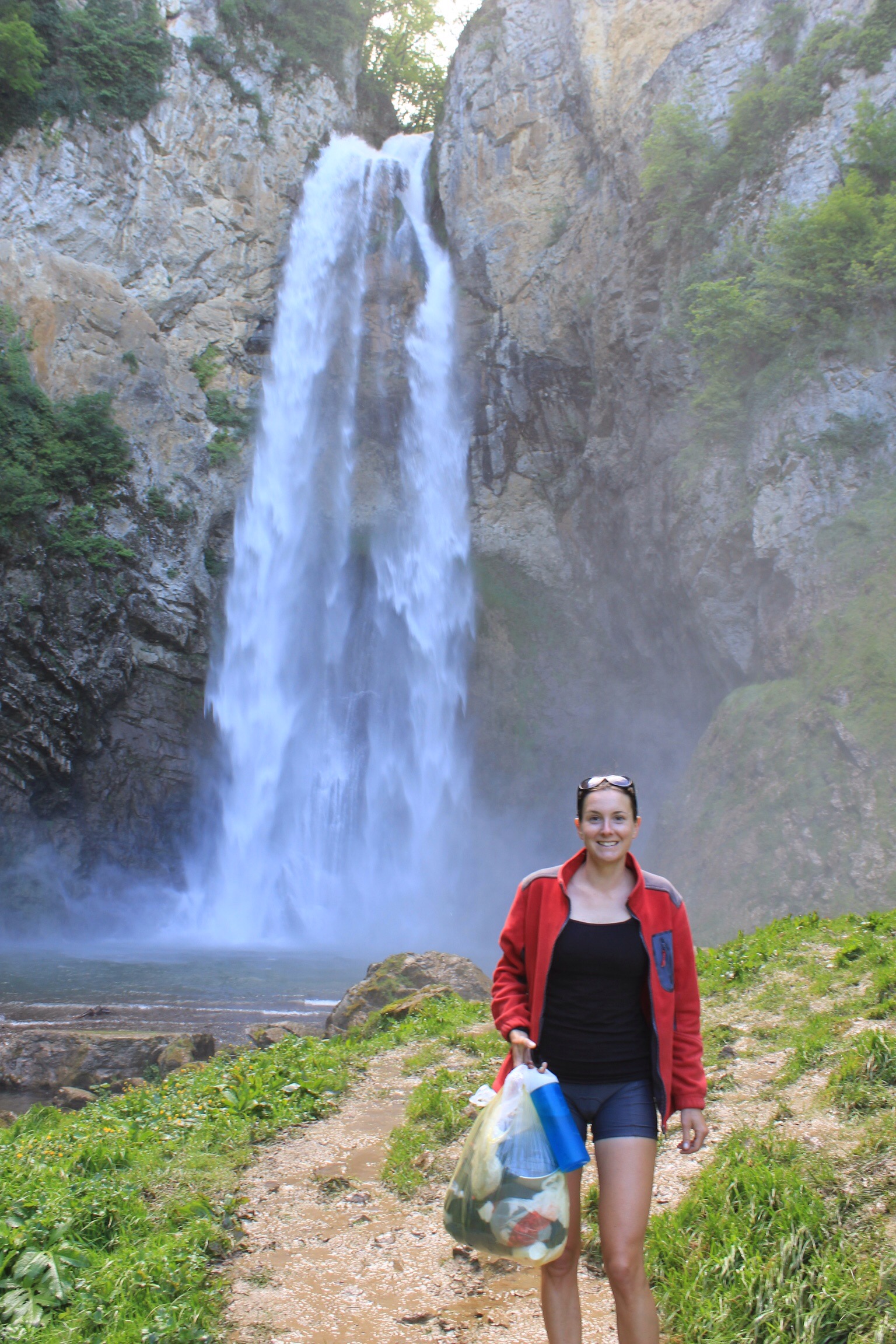
We decide we can’t set the tent up here though, however tempting, so we head out of town and swing west through some lovely rolling green countryside which reminds us both of the U.K. We pass a sign for a waterfall and decide we have time to investigate especially as it might provide a good opportunity to wash ourselves and our clothes. It’s a good waterfall and although the water is freezing we both brave a bath and feel very refreshed after.

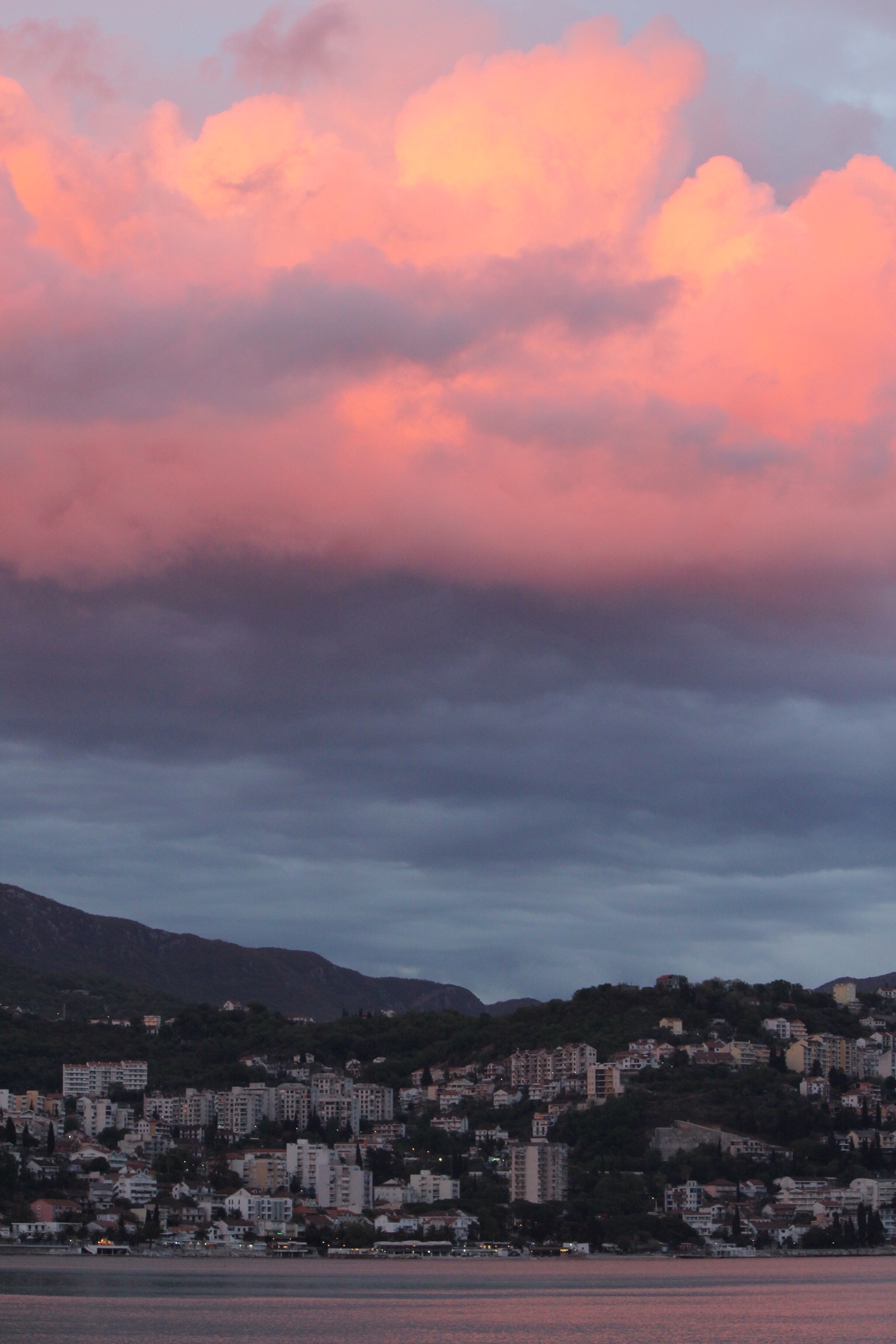
It happens to be a public holiday that day so lots of families and neighbours are sitting out in their gardens together as we pass. At 6:30 we approach a red faced farmer who is busy fixing his tractor outside his house and ask if we can pitch our tent in the field over the road. There’s an amazing sunset. 

Our final day and night in Bosnia saw us make good headway through some very beautiful remote countryside towards the border with Croatia. Lots of rolling hills and quiet lanes lined with green hedgerows full of familiar flowers and plants. A nice few final days in Bosnia which has been really enjoyable despite the extreme changes in weather. 

Sarajevo

We had arranged a warm showers host in Sarajevo which was a real treat. Selim and his wife Yasmin and two lovely daughters hosted us for two nights and we really enjoyed talking to them both. Naturally they both remember the war vividly. Hearing their personal stories about what it was like to live in a sieged city for nearly four years was chilling but important to hear. Tales of living in an apartment where your front room was crumbling onto the pavement below after being bombed, and the whole block only having one working toilet between 60 people. Having to run from building to building to avoid the shots from the snipers and living in constant fear with only UN peace troops to rely on for basic provisions. 

The Siege of Sarajevo lasted nearly four years and was the longest in modern warfare. The city sits on the small Miljacka river and is surrounded by hills. This is where the Serbian backed troops stationed themselves; able to completely surround the city and its inhabitants. We enjoyed listening to their accounts of how individuals carried out small acts of defiance against the siege. People carrying on going to work despite no paycheck, and of course the famous Miss Sarajevo beauty competition. 

Sarajevo wasn’t the only city to be sieged. When the war ended in 1995 the city was unrecognisable with most of its architectural heritage (a wonderful mix of Ottoman and Austro-Hungarian design) and cultural sites lost. The traces of the war have now almost disappeared although a number of the building’s walls have bullet holes.

We also enjoyed talking to Selim about lots of other things too, everything from philosophy to politics – it’s nice for our travels through Bosnia not to be completely dominated by the War… Selim is an interesting guy who is one of those people who is always learning new things. He’s got a degree in contemporary art and sculpture, another in Arabic and is currently in the midst of a part-time degree in Philosophy. He has a full time job working for the train company as well as two kids… and he likes to host cycle travellers in his house!! An inspiration to us all! 


On our first day in Sarajevo we signed up to a free walking tour in the morning. These are tours run by individuals and they work on a tip based system. What’s good about free walking tours is that you tend to get a really personal perspective of a city. Our guide was great and the tour was titled ‘East meets West’. 

It explored the mix between the Ottoman heritage and the later Austro-Hungarian influences. Sarajevo is predominantly Muslim and has over 200 mosques. But it also has lots of Churches, both orthodox and Catholic. Sarajevo has always been home to a diverse mix of people, a tolerant city where different ethnicities and religions have lived harmoniously. It’s probably one of the reasons why the city’s inhabitants where some of the most confused victims of the war – they don’t understand how the country fell into such hatred. 

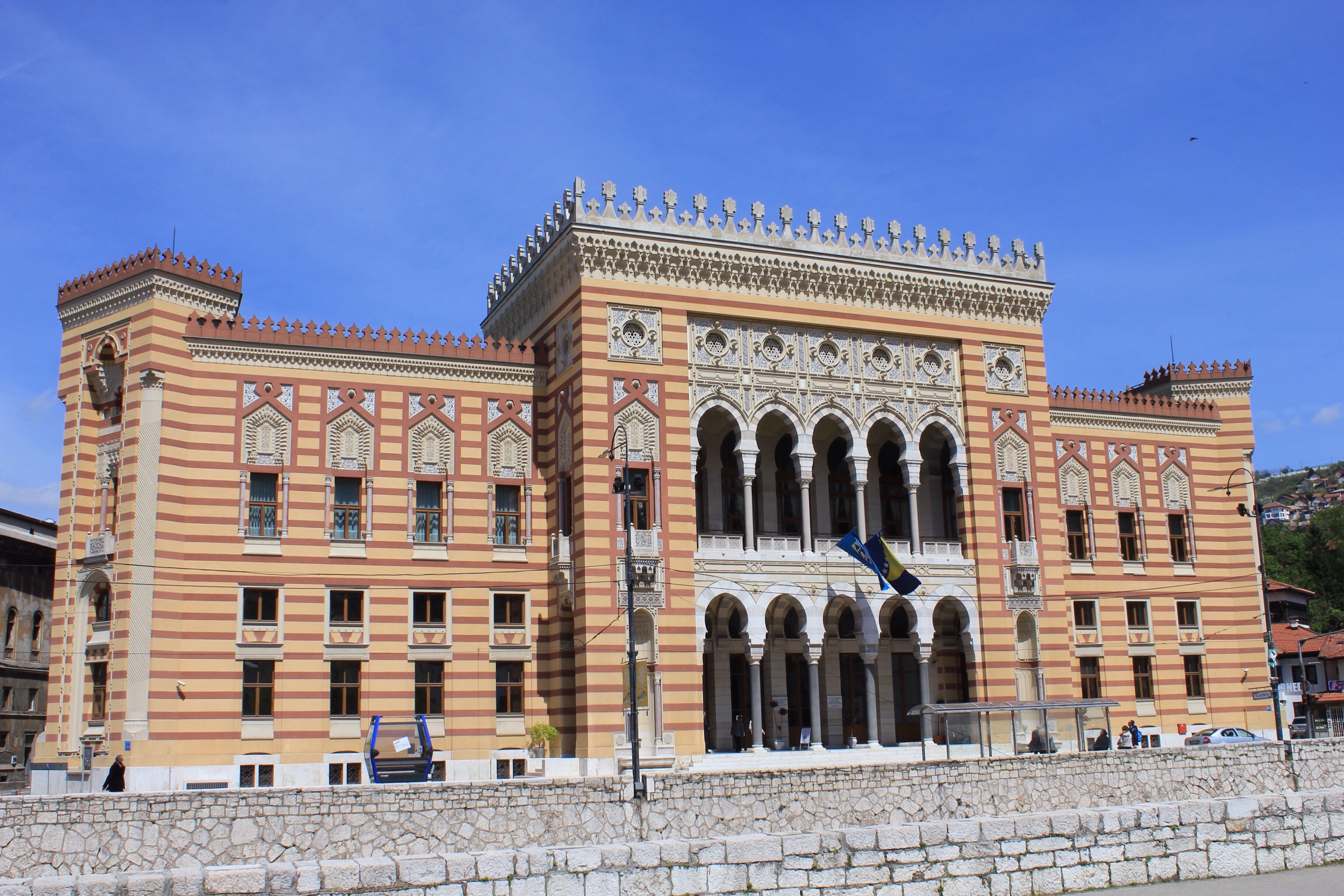
The Austrian-Hungarian renovated town hall – once the biggest library before the war


The tour also touched on the years of Tito, and our guide gave a great personal account of how he was so idolised by his people. Religion was frowned upon in the communist state, but she said people didn’t mind giving up their religious icons because they had Tito to idolise instead. 
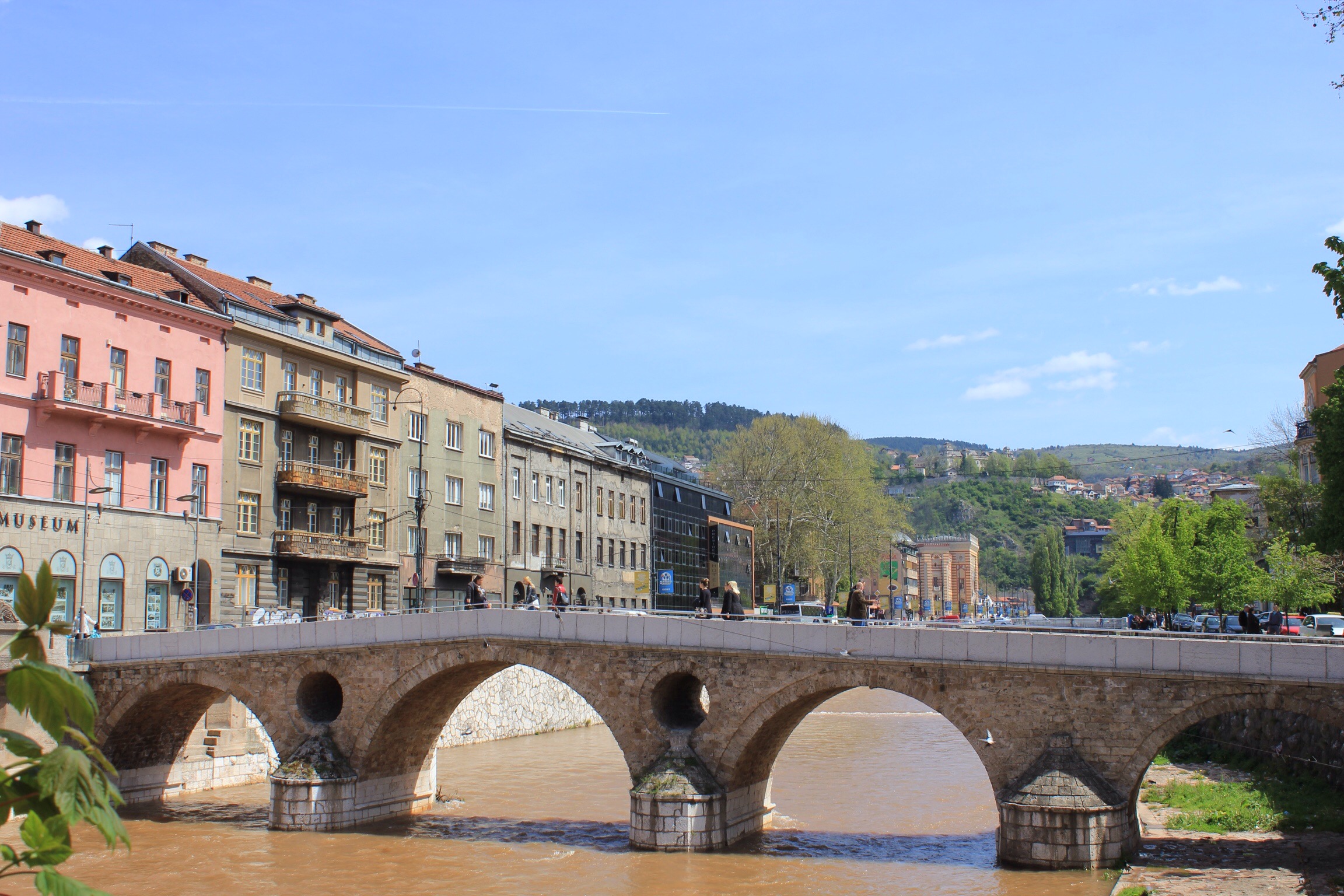
As well as its more recent history, Sarajevo has one other claim to fame in history – it happens to be home to the bridge where Franz Ferdinand was shot, kicking off the First World War.

The ‘Latin’ bridge – it’s worth looking up the story of the assassination!

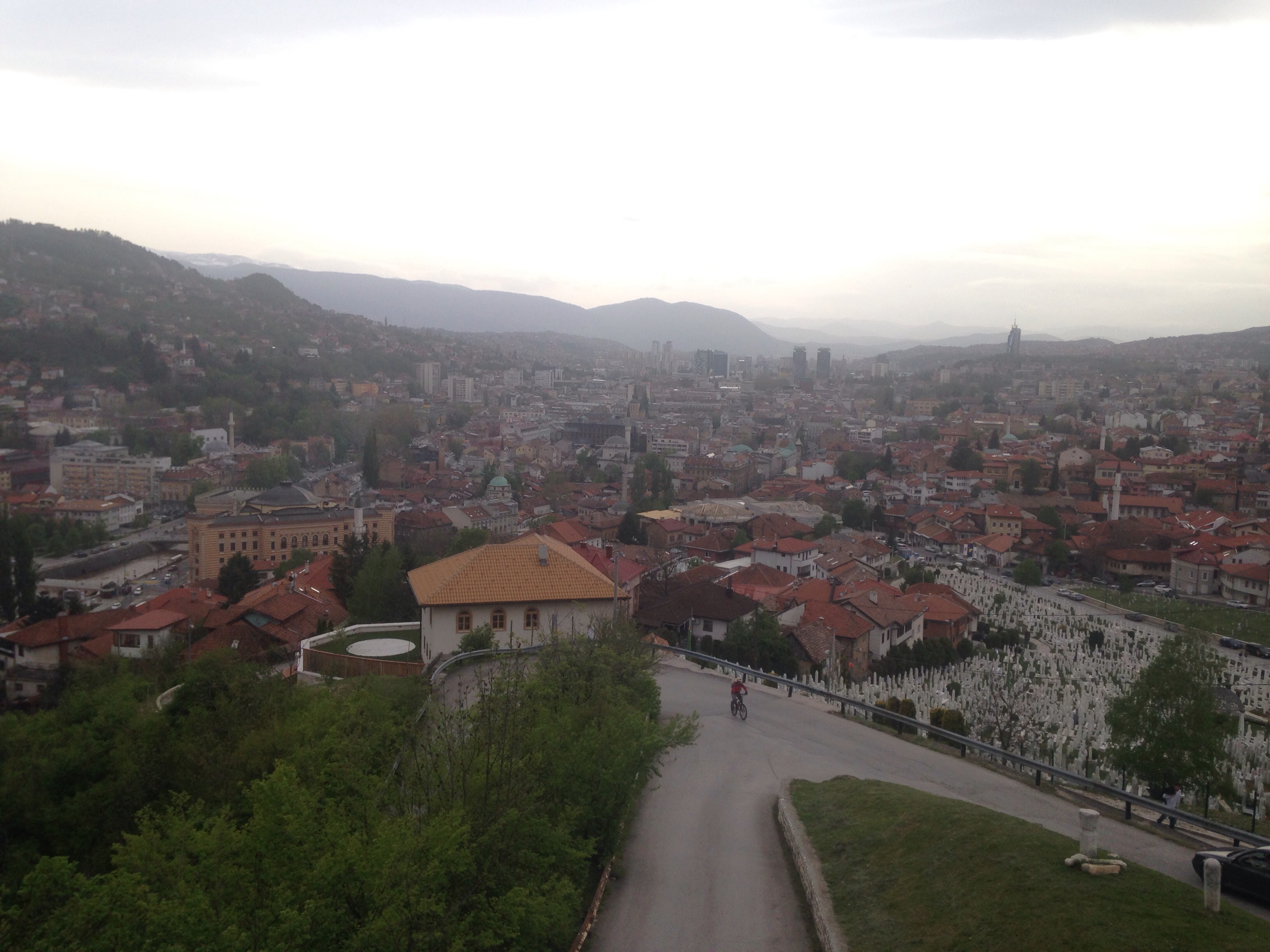
We had great weather while we were here – it had been minus degrees with snow just a few days before – and one afternoon we walked up one of the hills to overlook the city. We also treated ourselves to a date night Indian meal at the only Indian restaurant in the city. Oh and I almost forgot, we both got haircuts! 

On our last afternoon we visited the War museum and took a few hours to learn about Srebrenica and the mass genocide, where 8732 Muslims boys and men (count so far) was carried out by the Army of Rupublika Srpska (backed by Belgrade) during the war in July 1995. It’s horrendous that this was ever allowed to happen and you can’t help but blame the UN peace effort (or lack of). This massacre and accompanying displacement of thousands of Muslim Bosniaks are the worst crimes which have happened on European soil since WW2.

A message painted on a roadside barrier which we passed at the border

What happened here has naturally inflamed ethnic tensions, especially as many Serbs, both in Serbia and the Republika Srpska state of Bosnia and Herzegovnia, refuse to accept what happened, The army generals and leaders who were responsible for this systematic ethnic cleansing are still seen as national heroes by many – despite them being committed for war crimes in The Hague. 

From here we’ll cycle north towards Banja Luka, the defacto capital of the Autonomous region of Republika Srpska. Another cold snap is due to roll in, the weather has been extreme here so we’ll see how we get on with that. Hopefully it won’t slow our progress too much!

Mostar to Sarajevo 

It’s an easy days cycle to Sarajevo from Mostar but we were both keen to get off the main road again as there was no hard shoulder and rain forecast for the next day. Instead we opted for a much more difficult route involving 2 climbs but hoped it would be a scenic climb. Still being wary of the land mines we asked a young lad if it would be OK to camp in the orchard behind his house. After running off to ask his dad and grandad we’re waved in, shown a great spot for the tent and offered a peppermint tea. The house is a new build situated right next to a beautiful old stone house who’s roof has gone. The lad – Mark – speaks perfect English and explains that this house was once the family home for generations but it was destroyed during the war. 

We fall asleep to the sound of an excellent singer performing the call to prayer – Mostar is predominantly Muslim. Paddy and I have got quite good at discerning the good singers from the bad by now and we are sad that Bosnia will probably be the last country where we are likely to hear it regularly. We find it very comforting and quite beautiful. We have found the standard in Bosnia to be excellent and they seem to have a slightly different style from others we’ve heard in places such as Turkey and Iran. 

We sleep well but wake up to lots of rain – a bit of a nightmare when trying to put everything away under the tent. We find cover in our guests old porch and manage to pack the bike up before starting the climb in what is now persistent drizzle. The climb ends up being a humdinger and we grind along at 4.5km for nearly 2 hours up a valley. 

A cold, miserable morning
Nice view though!

Mist rises up like puffs of smoke to join the low lying cloud as we struggle up sweating in our rain jackets. One minute I’m in shorts and t-shirt despite the cold the next fully thermal. Near the top the road turns to switch backs and with these an easier incline. The clouds part for a quick snap of the valley, Mostar in the distance, before the next weather front comes in and the rain turns to thick snow. 

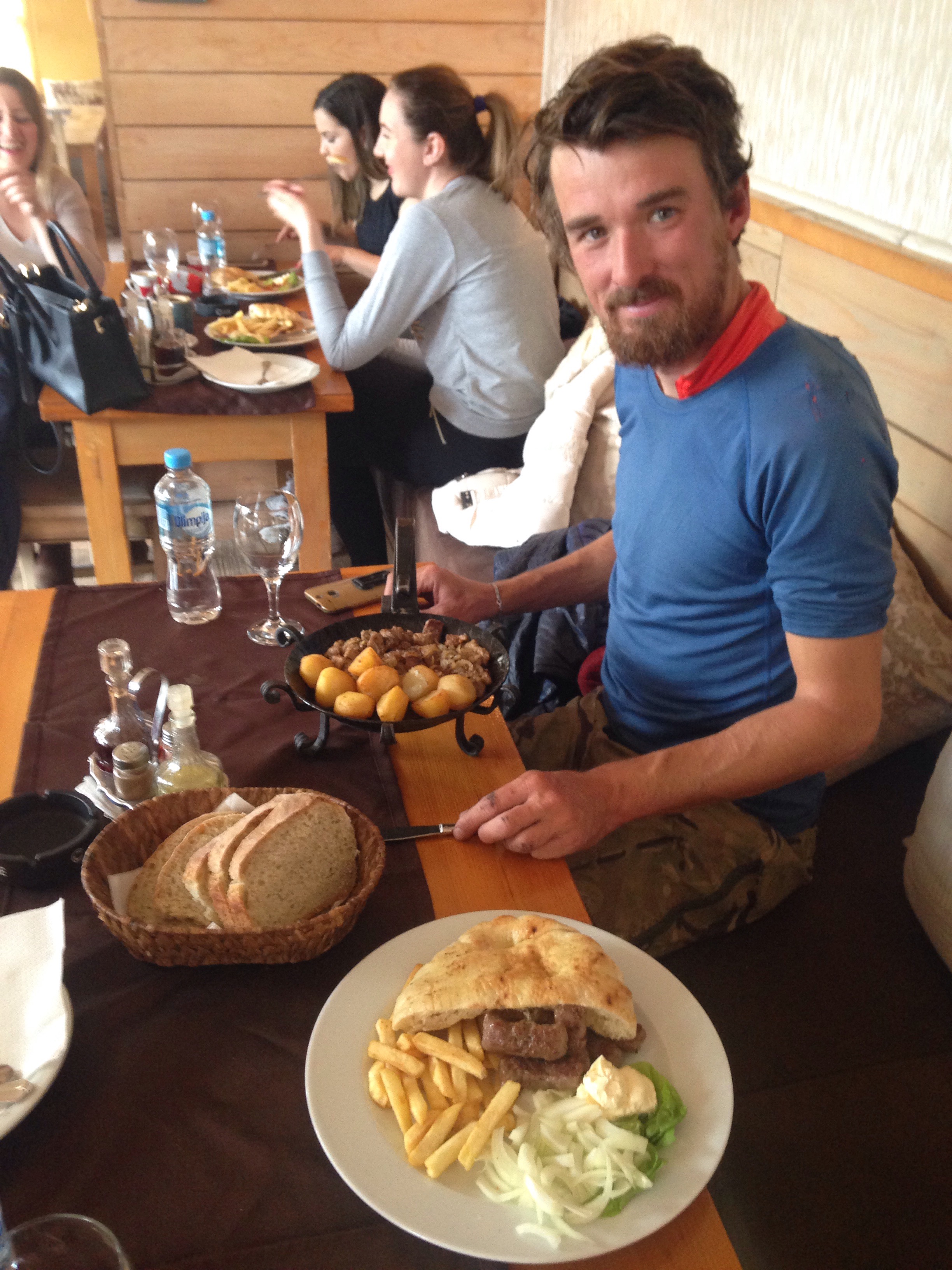
Fortunately we find a very cosy lunch spot in a swanky pub on the other side of the pass and decide we’ve earned a bit of luxury. It’s a great spot with an open fire and lot of locals enjoying a warming Sunday lunch. Bosnian food doesn’t really divert from what Paddy and I now call the Ottoman diet. I.e a version of some cooked meat with bread. The national dish is Cepavi – a plate of small kebab sausages in a flat, pancake-like bread with raw onions. It’s no cunelry masterpiece but it’s good for a hungry cyclist. This flirtation with meat and bread has continued throughout all of the Balkan states and it’s definitely a custom which comes from Turkey – as is the coffee which is essentially prepared the same way as Turkish coffee. 

A happy Irish man with his plate of meat and spuds
Our Turkish coffees in the mornings…

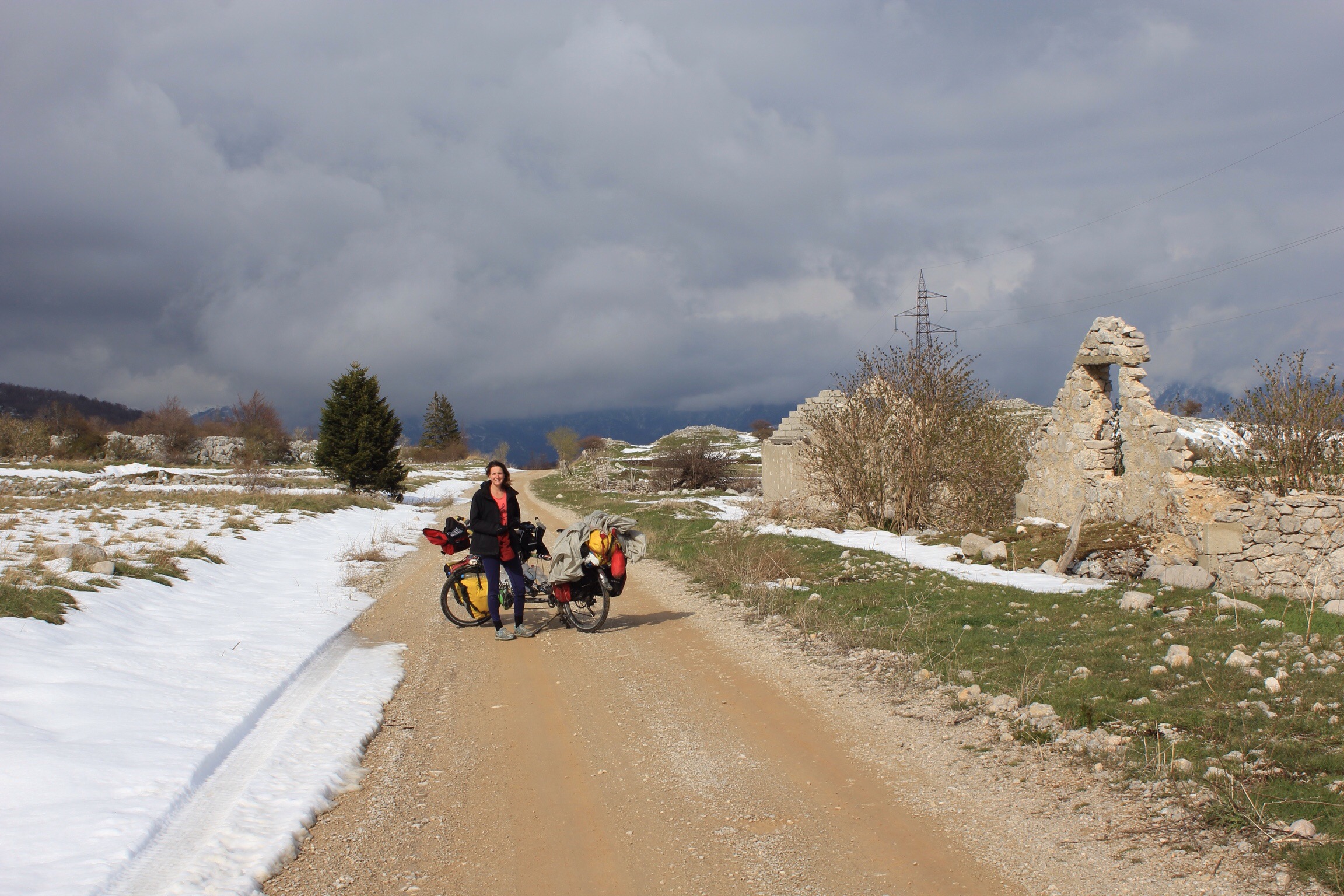
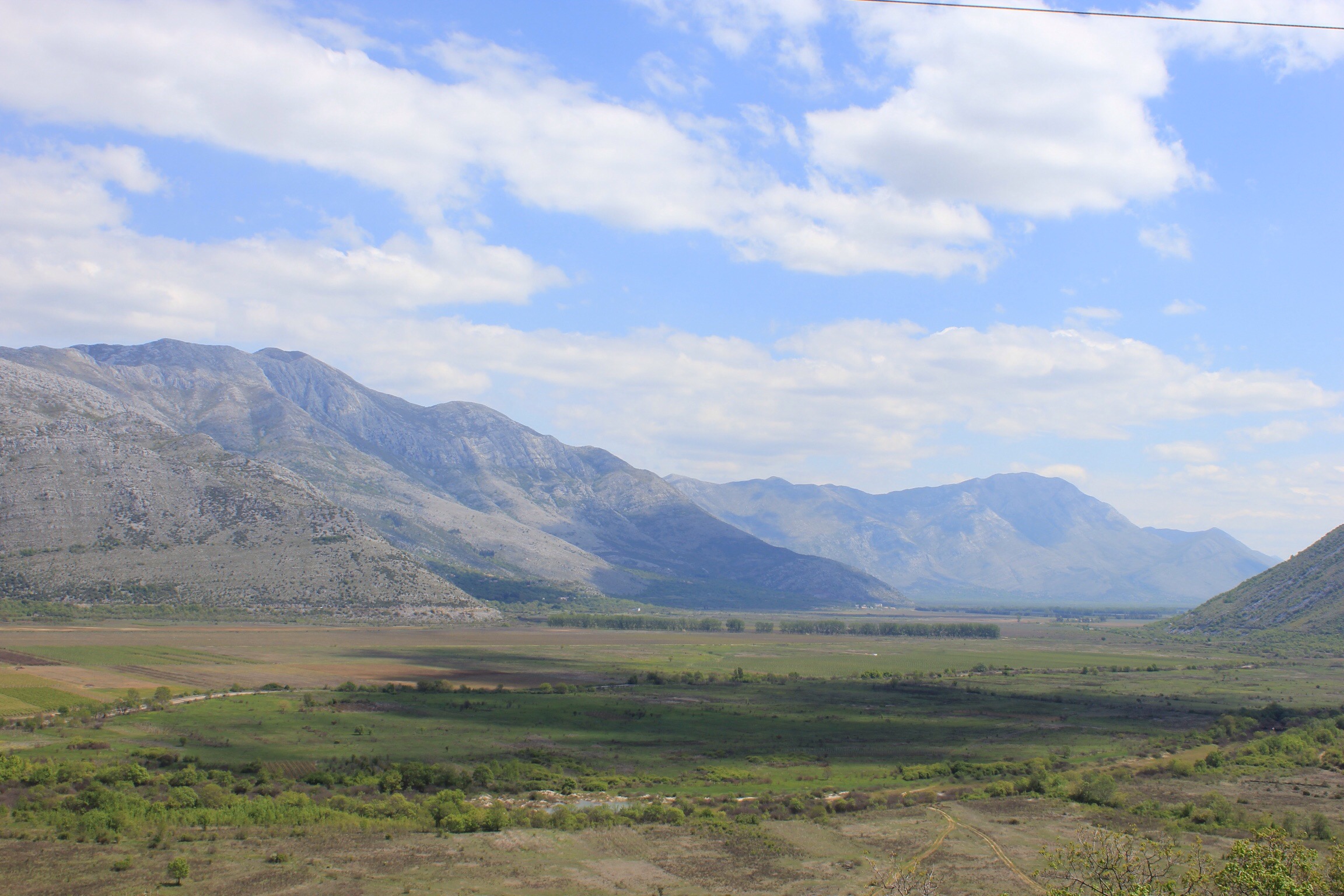
After lunch we have another steeper but shorter climb and the asphalt disappears and we have 20km of bumpy, stony track and there’s quite a bit of snow at the top. As we descend into the next valley the track overlooks an amazing gorge with a crystal blue lake and a picturesque town called Jezero at the bottom. 

Snow and more abandoned houses


We finally meet back up with the asphalt and freewheel down to a town called Konjic where we begin to look for a camp spot. We meet Philip a motorcyclist from Germany who coincidentally happens to be searching for somewhere to pitch his tent too! We end up choosing a nice grassy field at the top of the town next to a ploughed field and empty house. I go off to knock on a few of the nearby houses to check its all ok before we get set up.

It’s a cold night and our tents are stiff with frost and water half bottles frozen the next morning. We lie in bed waiting for the sun to pierce through the thick mist hanging in the valley. Fortunately a nice lady invites us in for coffee in her cosy sitting room and by the time we leave it’s warming up with plenty of sunshine. 

Over dinner the evening before, Phillip had told us about a sight of interest nearby which had been the secret location of Tito’s nuclear bunker. Naturally we were interested so we made plans to all head up together to check it out. Philip didn’t know much about it so it was a bit of an unknown and it wasn’t until we finally found the site that we realised the awesomeness of what we had stumbled across! 

During the height of the Cold War the leader of Yugoslavia Tito – like all the leaders at that time – believed that a nuclear war was teetering on the edge of becoming reality. And being a communist state who was not part of the Warsaw Pack Yugoslavia was in rather a precarious position! 

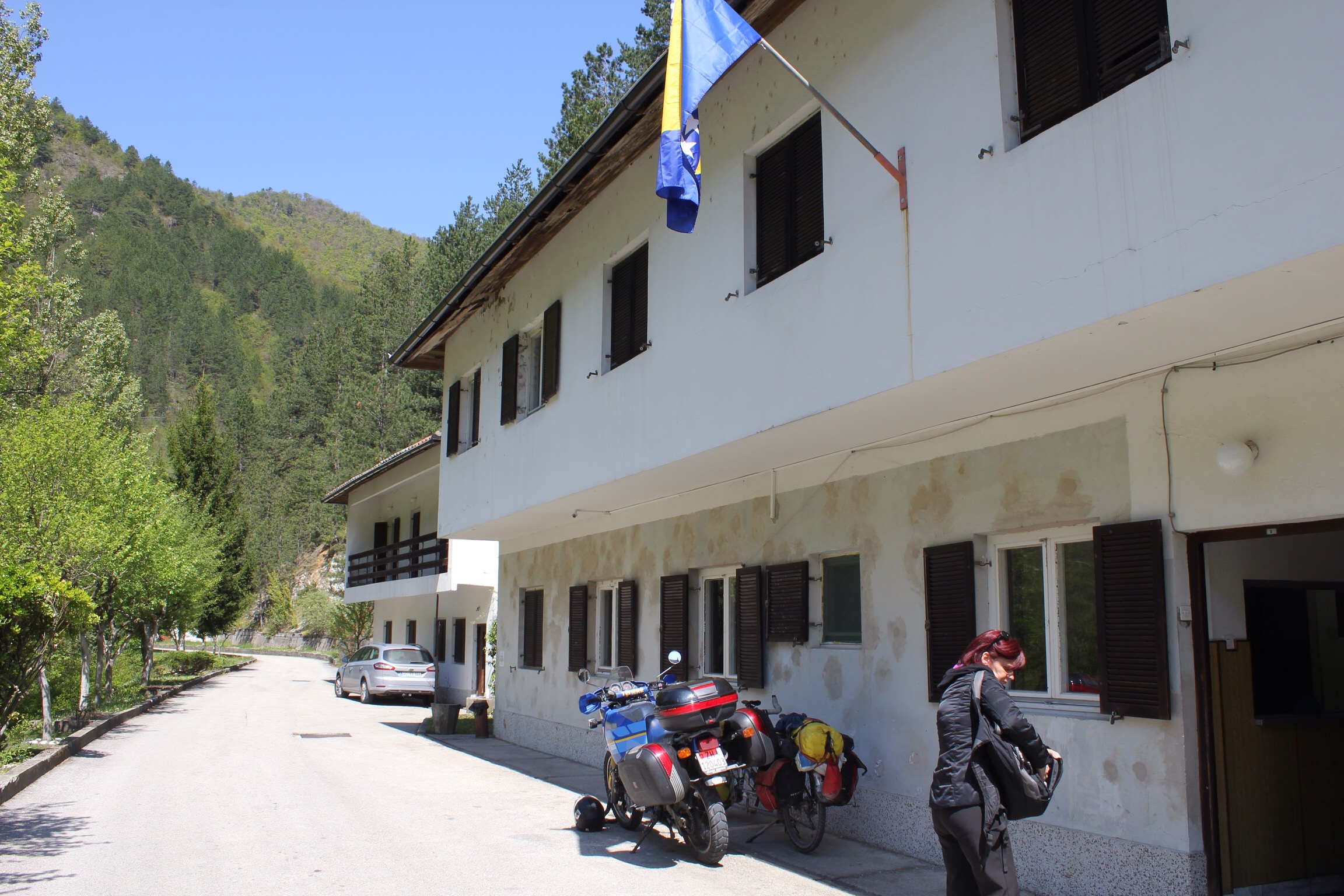
So Tito ordered for a state of the art top-secret bunker complex to be built deep underground. The site chosen was just outside this small quiet village of Konjic, set on the banks of a river from where the bunker was tunnelled deep into the mountainside. These two ordinary, very unassuming houses mark the entrance to the crazy military world within. It’s so well hidden that it took Paddy and I an hour to find the entrance! 

Leafy houses hiding the entrance
The tunnel to the bunker

The deepest rooms are 280m underground and could house 300 military personnel and a handful of Tito’s closest advisors and family members for up to 6 months. The extent of the complex just shows how real the threat must have felt and it makes you wander what kind of military complexes our current political leaders have incase amgeddon strikes! 

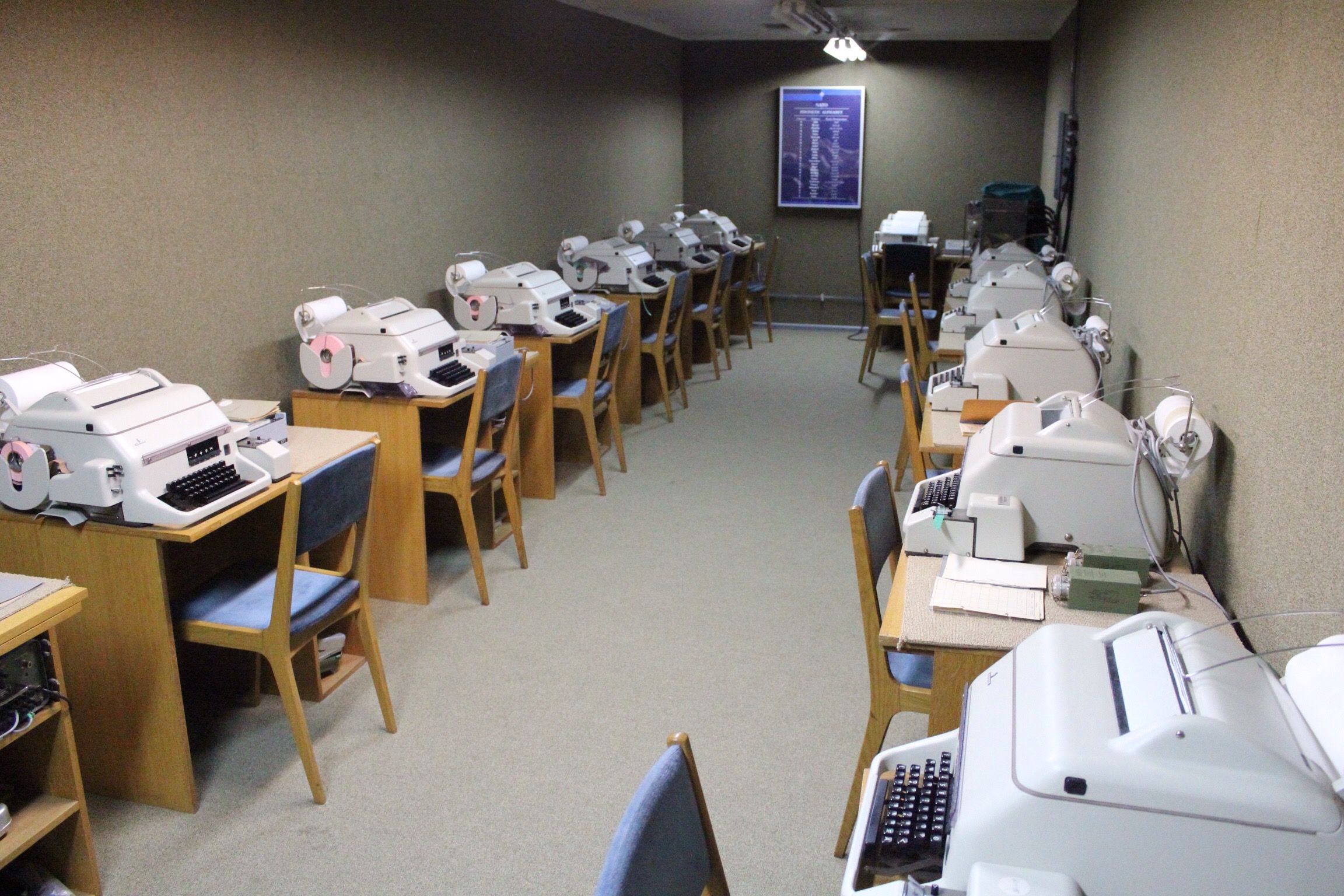
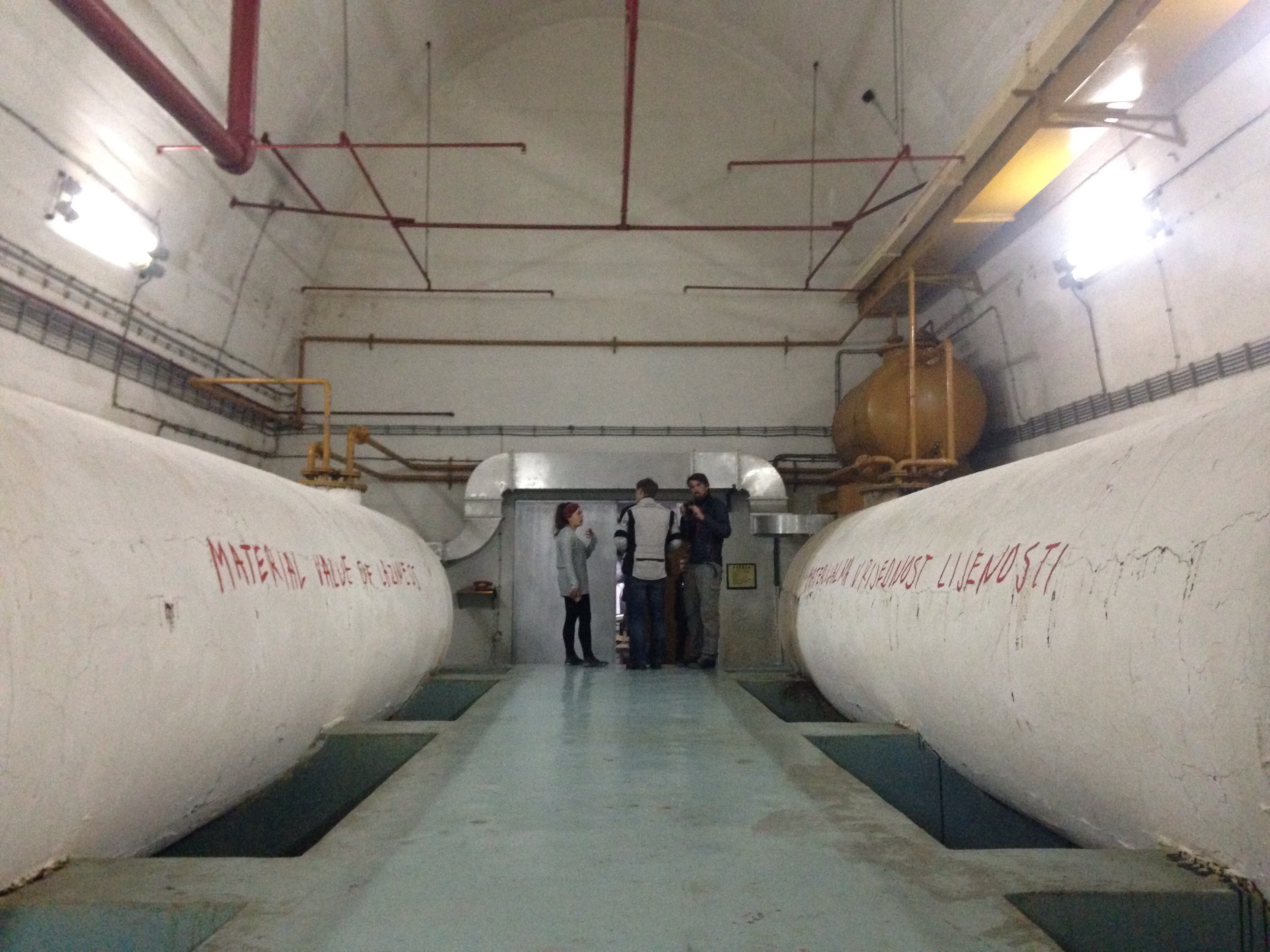
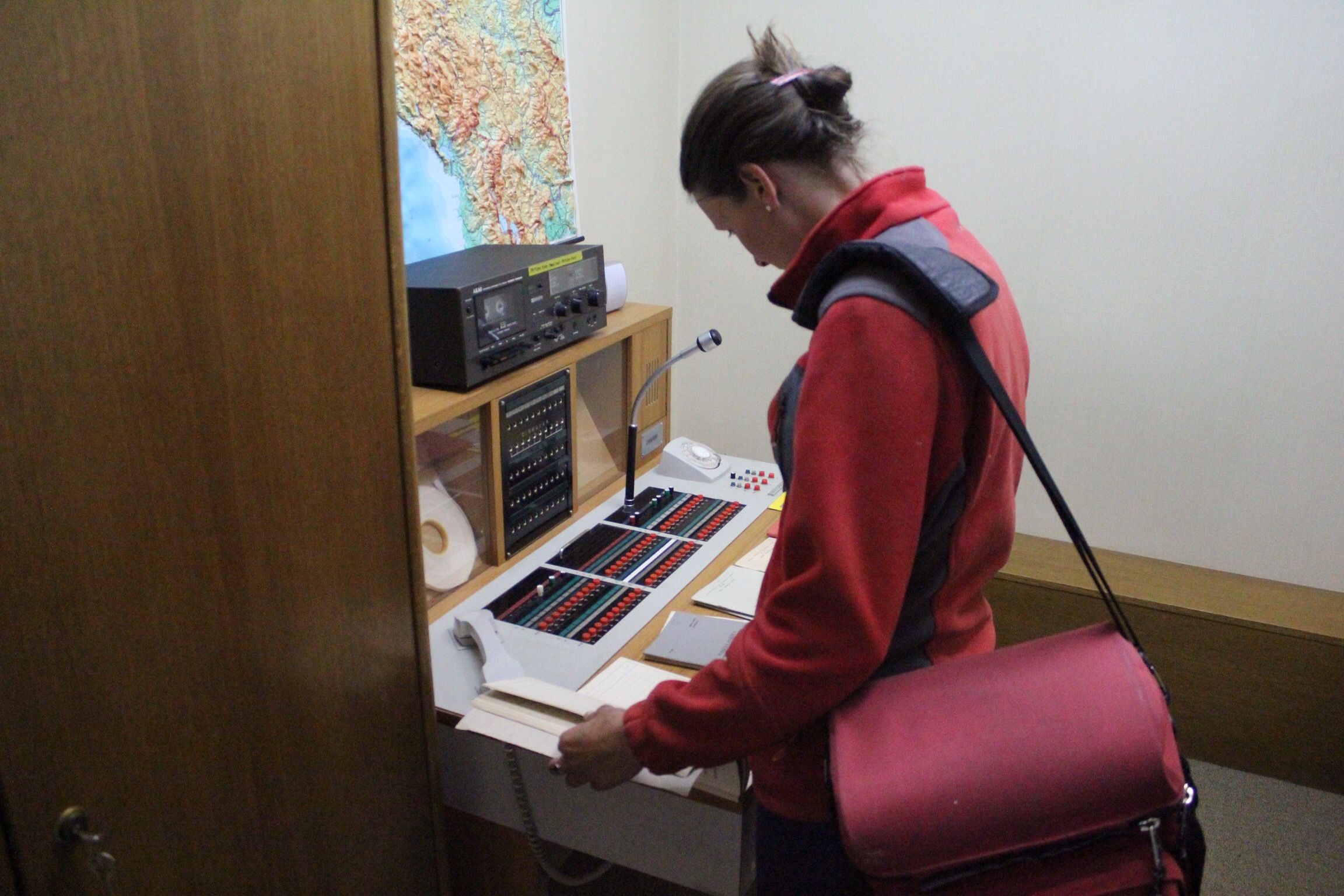
The tour of the bunker takes around 90 minutes. The whole area makes up 15,000 square meters and is complete with everything that 400 people might need to survive a nuclear attack. Fresh water, 2 huge oil tanks, a huge air conditioning system, a secret helipad and access tunnel and state of the art communication devices. The whole place feels like the interior of a large ship. 

Communication block
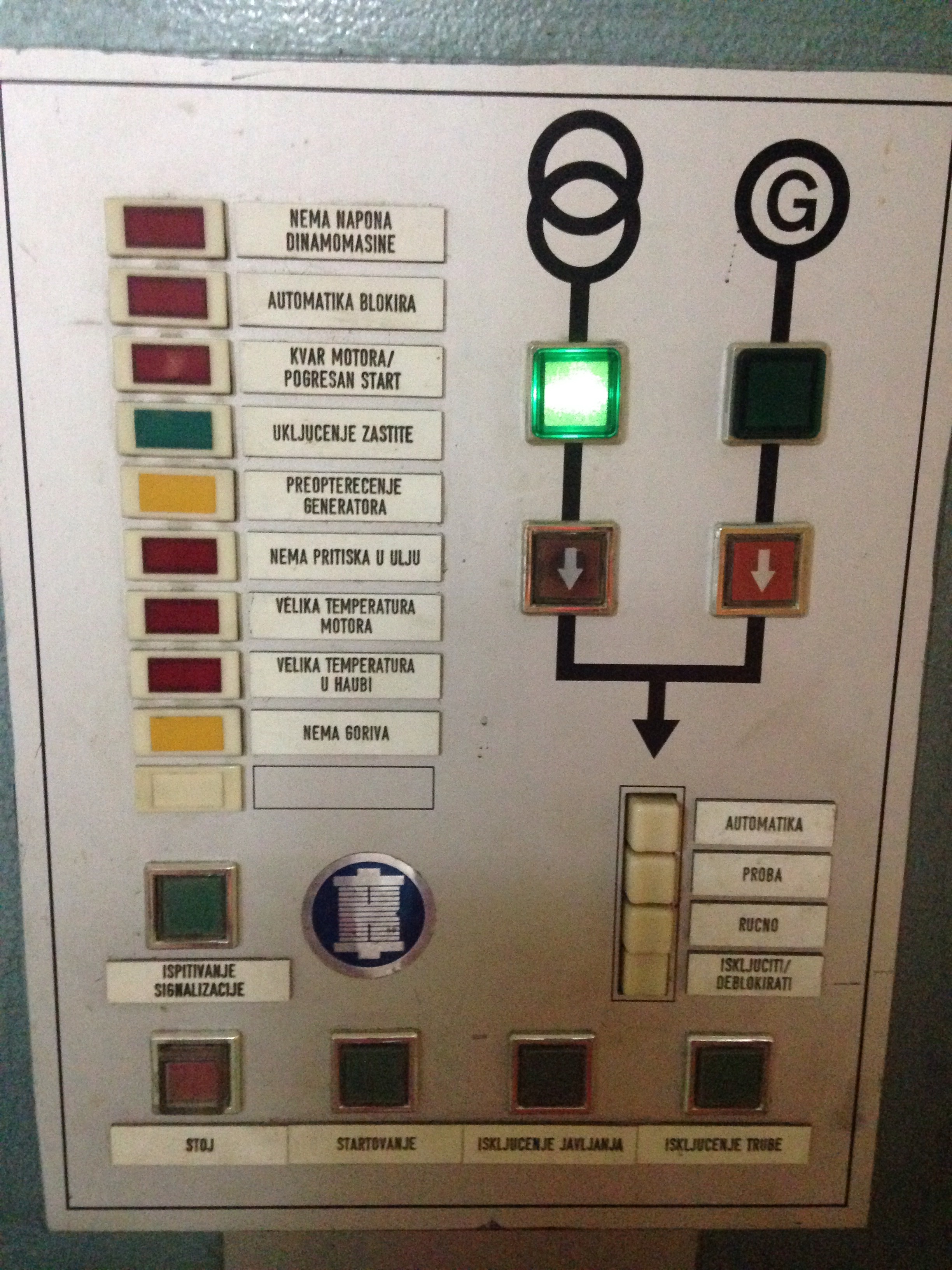
Controls
Oil tanks with fire hose system above
The bunker took 26 years to build and the engineers working on it were blind folded on their way in and out and sworn to total secrecy regarding their work. What is perhaps so surreal about this place is that it is totally unused – it was completed a year before Tito’s death in 1980 and has been left untouched until a few years ago. Everything is pristine and even some of the furniture still has its plastic wrapping on it. A perfectly preserved time capsule of the 60s and 70s. It is very very cool! 

Security poster
Tito’s bed!
Snooper control centre so Tito could track all internal conversations in the bunker too
To make the place feel even more surreal, the complex is also a curated exhibition space so as well as large portraits of Tito on the walls, there are over 100 art installations which you encounter along your way. They are all commentating on aspects of the Cold War and are works by artists from across Europe. 

Wall art

Me and Tito
We both had difficulty interpreting this

After the bunker we said our goodbyes to Phillip and cycled towards Sarajevo where we will stay for a few days before heading northwest into the Republika Srpska territory. 

Bosnia and Herzegovina – Country No.20!!!!! 

More Croatia to come but first we had a week or so to spend cycling across Bosnia and Herzegovnia. We were both keen to visit Sarajevo the capital before heading north to Banja Luka the capital of the separate mini state ‘Republika Srpska’ – more to come on that!

While my memories from the early 90s belong to the hazy past of my childhood I still remember news bulletins about Bosnia. Anyone a little older might just associate the country with two terrible things: War and Genocide. Since our travels through the Balkan states my understanding of the breakup of Yugoslavia and the wars which followed are much clearer than they ever were. What happened in Bosnia however is hard to comprehend due to the conflict being fuelled by longstanding ethnic tensions between the Croats (Catholic), Bosniaks (Muslim) and Serb (Orthodox) populations – there is no doubt about it though, the war which only ended in 1995 was brutal, and despite buildings having been rebuilt, towns re-established and peace celebrated for over 20 years now, the scars that this turbulent conflict have left are still there to see. 

We left our campspot near Dubrovnik and headed for one of the border crossings with Bosnia marked on our map. The harsh headwind that we had battled through the day persisted and we were keen to get away from the coastal road with its busy traffic and fast moving tour busses who always overtake too close! 

There were a few border crossings marked on the map and we chose the closest, Slano. It was a steep 15km climb up but we were both happy to be away from the main road. However, near the top we’re stopped by a nice Spanish family who tell us they were told it was closed to internationals. With only 3km left we decided we’d try anyway – we hope it was because they were in a car and walkers and cyclists were OK to cross here. Otherwise we would be forced to get back on the busy coastal road and cycle the 60km detour to . To our dismay the lone guard on duty at the top tells us we have to turn back. Paddy pleads but he doesn’t budge. There was one last thing we could try – for me to turn on the waterworks. I’m not proud of employing this tactic but sometimes it’s needed… It was time to put all those acting lessons to good use. 

As it turned out, I didn’t even have to cry, all it took was a wail of disbelief and a burying of my head in my hands for the guard’s eyes to soften and tell us we could cross… Trying to hide our glee and with lots of hurried thanks we jump quickly on the bike and whizz off down the hill before he can change his mind. Then we stop at the bottom to celebrate the rather overwhelming achievement of reaching our 20th country. Only 6 left! 

Our first glimpses of Bosnia – Paddy enjoyed this well kept football pitch in the mountains…

There was still a strong, cold headwind here but for now we were going downhill with the promise of some hilly terain through a big valley to come. As we get to this valley however we see signs for the Ciro bicycle trail which runs all the way from Mostar to Dubrovnik along an old railway line. The trail has recently opened with help from the EU and a cyclist had told us about it in Macedonia. We hadn’t been able to see it on our map though so we had given up hope of finding it. It was a stroke of luck that we had stumbled across it here. 

Because it runs along the old train track it would cut out the majority of those small climbs as well as promise to offer great views across the landscape from its elevated position. What’s more, the route has information points dotted along it which gives the rider snippets of information about the old stations and other points of interests. Bravo EU! 

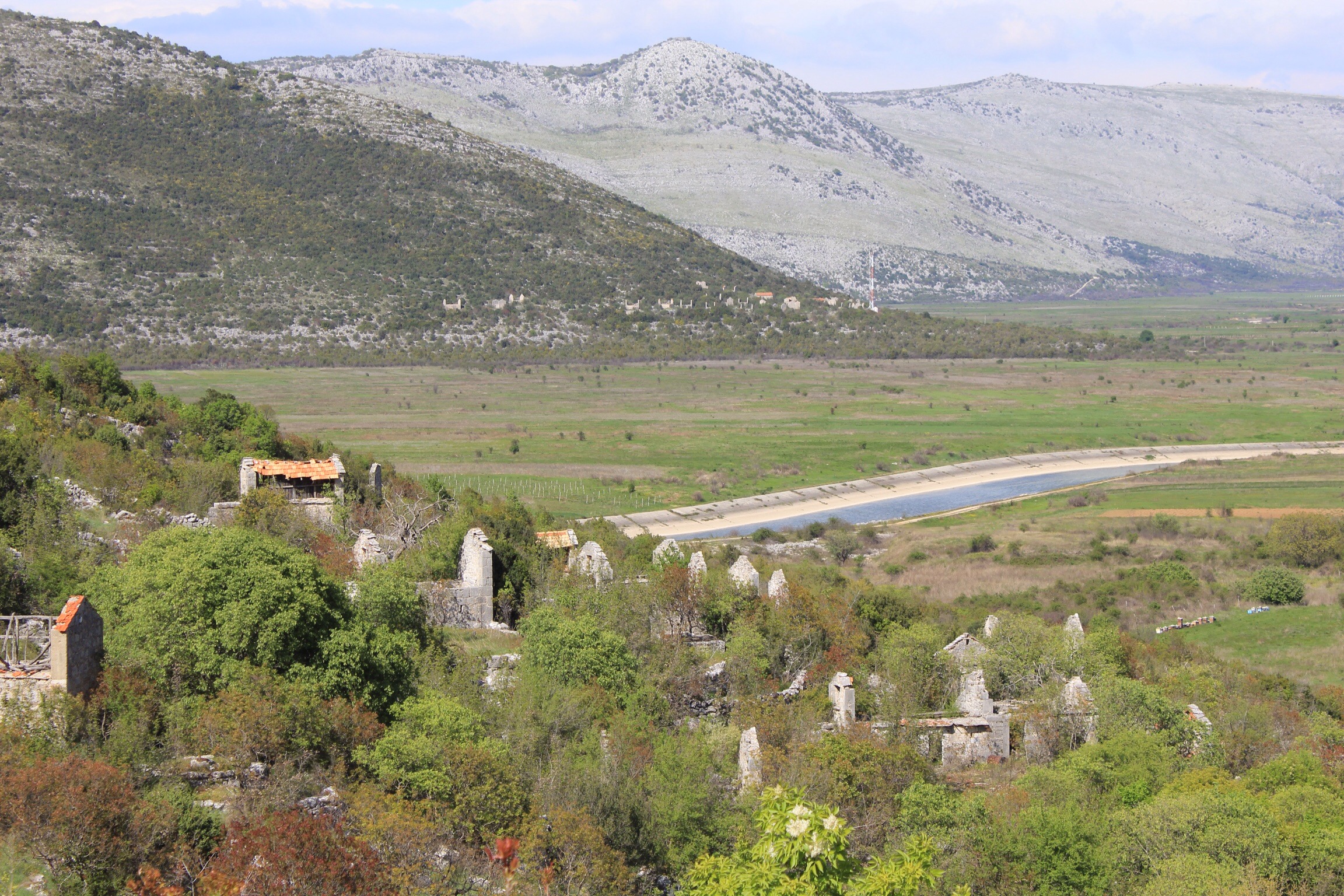
Once a front line but now just beautiful countryside

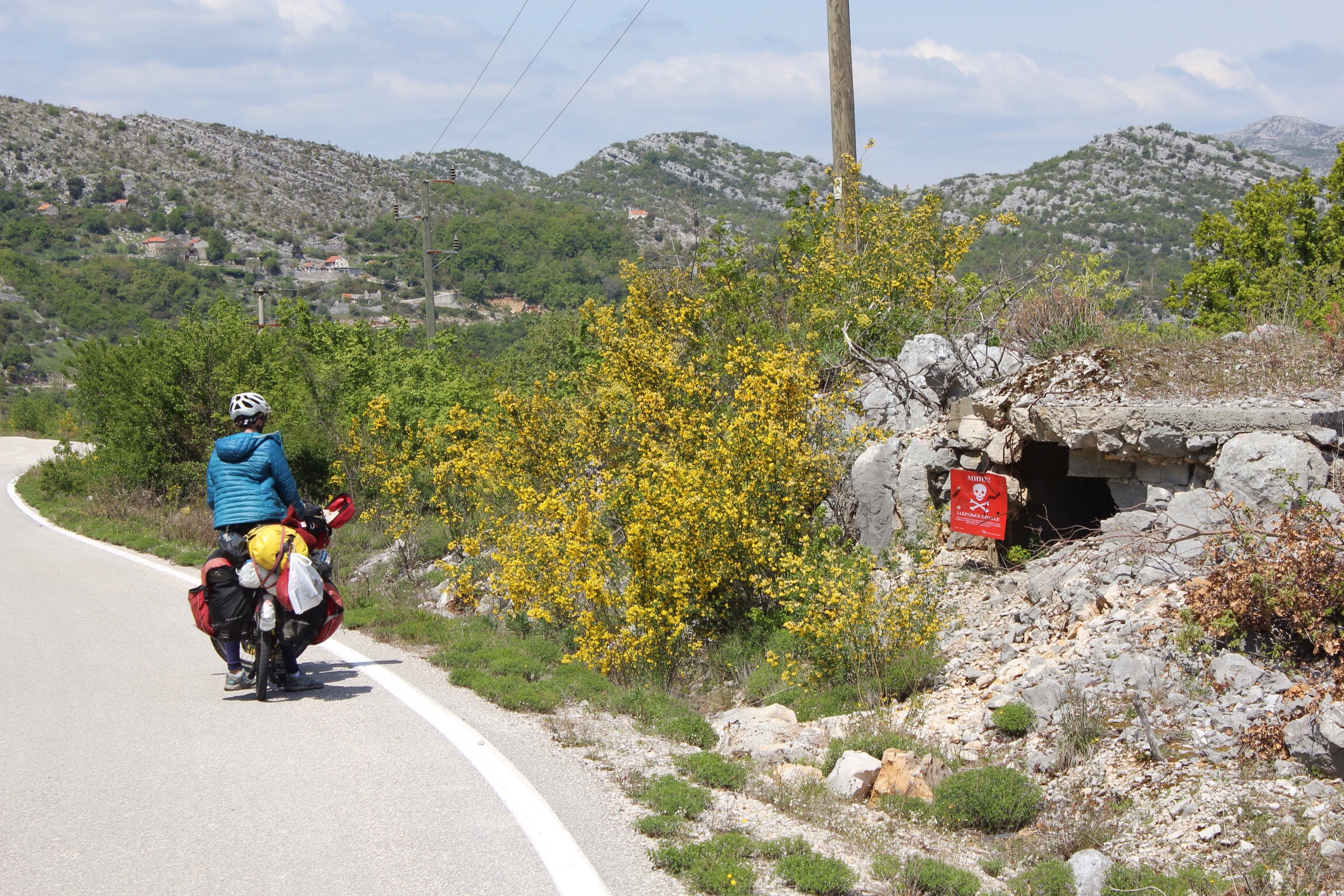
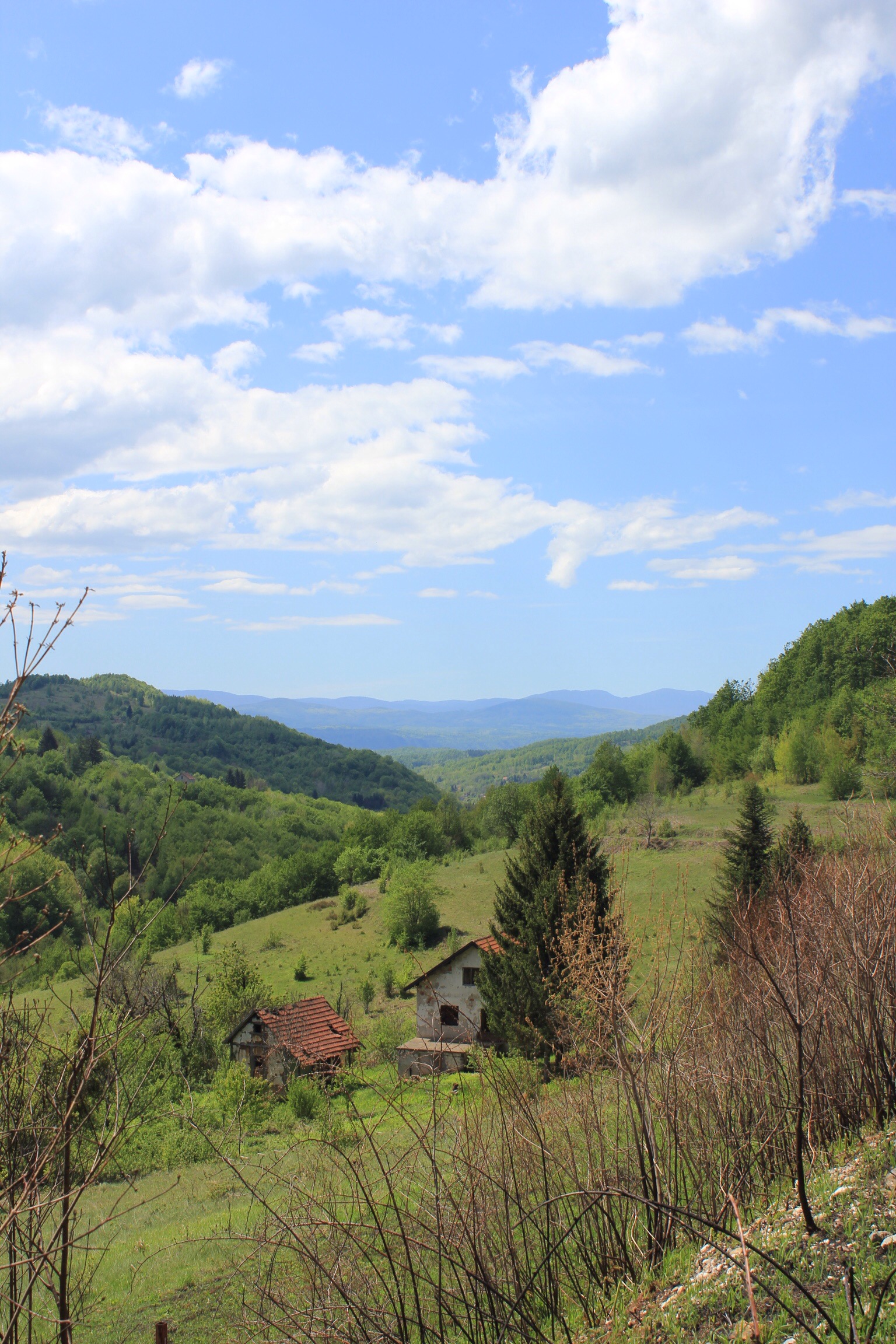
A little further along we see the first tell tails of the recent war. Whole villages of beautiful old stone houses abandoned with their wooden and terracotta roofs caved in or gone completely. Similar hamlets can be seen across the valley on the other side. We also cycle past our first land mine sign – literally on the side of the road… 

The red sign which we would become very familiar with


As we had cycled across the border with Bosnia we had seen warning signs about the potential land mines. We had also seen warning signs for large snakes; a danger that wouldn’t have resonated quite as much as the land mines except that I had crouched down and nearly weed on a huge black one just a few days before in Montenegro… Both would mean being extra sensible about where we camped with no straying from the road in remote areas! 
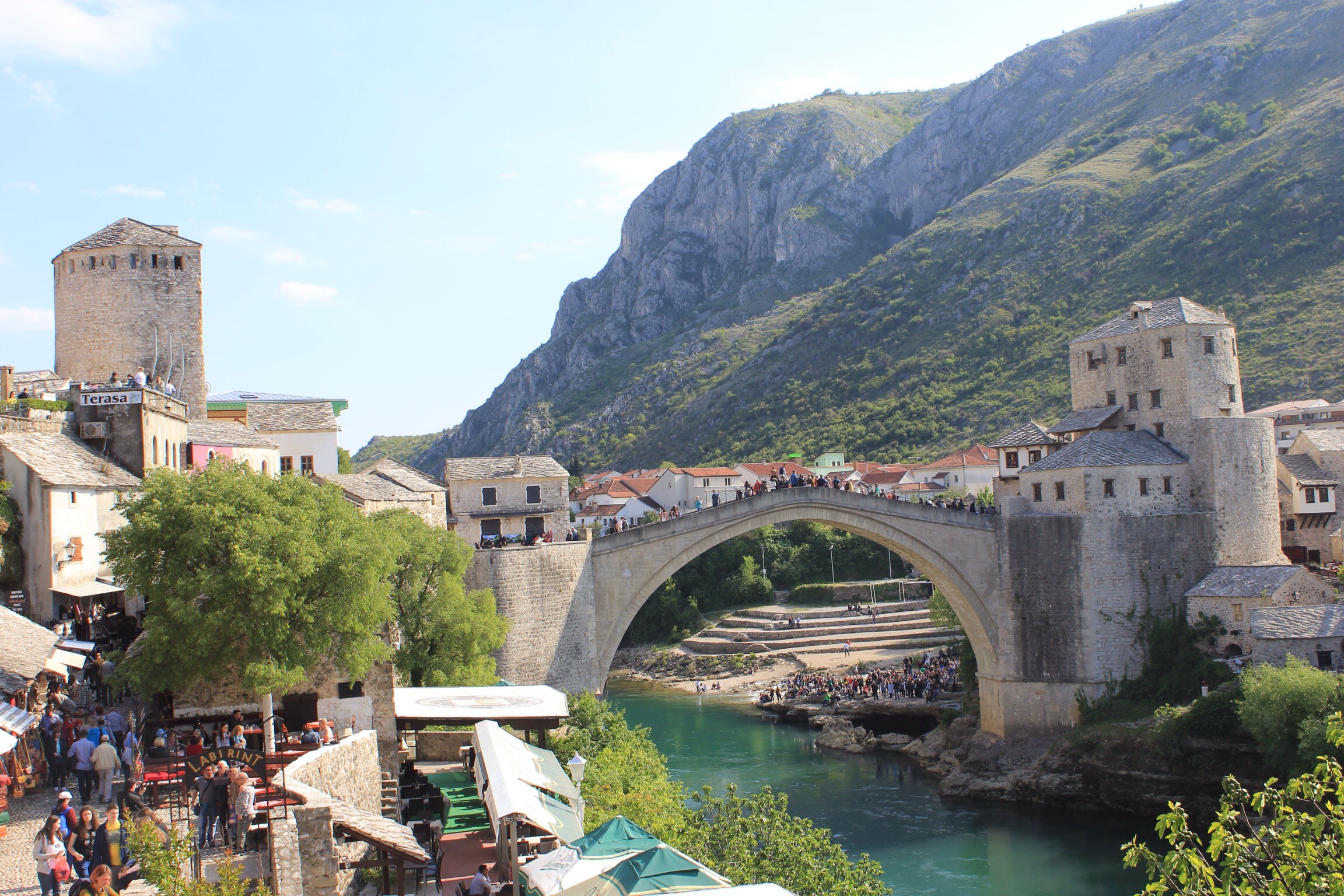
The next day we reached Mostar which isn’t much to write home about until you get to the centre which is home to the old town boasting some more lovely Ottoman architecture and the famous Stari Most bridge with its single high-reaching arch over the river. We don’t stay long – just enough time to wander about the cobbled streets with an ice cream and watch a member of the diving club jump off the bridge for tips!

We’ll cycle out of town to find a camp spot from here before making our way to Sarajevo. 

Quick hair wash in the crystal waters of the river next to the cycle trail. Freezing from the melting snow on the mountains!

Croatia – Country No.19!!

If you look at a map Croatia is a funny shape… It has a strange section of coastline sandwiched invetween Albania and Bosnia’s only port, Neum. 

There is an important and beautiful coastal port town in this tiny bit of Croatia called Dubrovnik. It has a fascinating maritime history although now it is more like a historic tourist town.

We’ll be cycling more of Croatia in a few weeks after we’ve wiggled our way up through Bosnia and Herzegovnia. 

Dubrovnik was a nice place to stop for an afternoon on our way into Bosnia. Here are some nice photos. 

Lunch stop view of old city with its amazing fortifications
The port – Dubrovnik suffered serious damage during the Yugoslav wars in the 90s
The whole town is a protected UNESCO heritage site
Troup of musicians heading home after playing for the swathes of tourists who arrive daily by cruise ship

Montenegro – Country No. 18!!!!! 

One might guess that the name Montenegro derives from the Latin words for ‘mountain’ and ‘black’. It lives up to this name very well – the entire country being made of very rugged mountainous terrain. We had some tough climbs in Albania but since then the inclines have been manageable. We hoped this trend would continue… 

We had done well during our first month – completing over 2000km in just 30 days! We think we are fitter now than we have ever been, what with the fewer rest days and longer distances per day. We’re managing to eat up 700m climbs before our morning tea break if we put our minds to it. The new lower gears are certainly helping as is the need to carry less water now that we can fill up pretty much anywhere. 

All the people in Montenegro are extremely tall. Tall and straight backed. This is no exaggeration, its successful basketball team is a good testament. 

Montenegro is very, very beautiful – a great place for outdoor lovers – and we enjoyed some really nice cycle days making our way down to Podorica, the capital. We didn’t have the best weather, the blue skies of Kosovo disappeared under thick grey clouds with us experiencing some epic thunderstorms later in the week. Fortunately we managed to escape most of the rain by strategically stopping in undercover spots and camping underneath bridges.

Quick stop after a morning shower
Good railway bridge
Morning calm after evening downpour
 We spent the Easter bank holiday here and as its a predominantly orthodox Christian country we recognised a few of the festivities. We were looking forward to buying a large chocolate Easter egg but they don’t have them here… The cadbury’s commercial takeover of Easter hasn’t reached here and instead they paint hard boiled eggs. We got given these beautiful ones by a family outside a shop on Easter Sunday. 

We still missed our chocolate eggs though… Maybe someone at home can buy one in the Easter sale and keep it for us for when we get home…. 🙂 

Because of its topography, Montenegro doesn’t boast any major dual carriageways or motorways. They have gotten very good at building small roads which twist and turn nicely up the side of a mountain but anything bigger than an A road has defeated them. To solve this problem they’ve turned to the Chinese government – Who better than the Chinese to sort this problem, we know from experience how good they are at building huge infrastructure projects in remote, rugged mountainous terrain. 

On our way down to Podorica we pass miles of construction and tunnel building all being worked by Chinese workers. The Mandarin signs and direction plaques coupled with the mountainous terrain made it feel we were back in Yunnan. It reminded us both of our two months in China, probably our best time of the trip and we both felt nostalgic for the delicious food, quirky people and epic scenery… 

It feels more Slavic here and the country has a subtle overlay of Russian culture about it. Montenegro sided with the Serbs after the breakup of Yugoslavia and for a time the two countries united under the banner of Federal Republic of Yugoslavia. Lots of people seem to speak German as a second language here, possibly because of the Austrio-German occupation of this area before the First World War. 

Podgorica the capital was once called Titograd has almost nothing to offer – harsh, but true – and all we did there was stop at the riverside park to eat lunch. It’s not much of a city, more of a town with plenty of concrete apartment blocks.

From here we climbed towards Kotor and took a detour to Montenero’s old capital Rijeka Crnojevica; a picturesque tiny village on lake Skadar which is an exceptionally amazing place. We were there during the thunderstorms which gave an awesome Jerrasic Park like feel to the landscape. 

The lake

Stopping at the famed bridge in the morning we then climbed out of this amazing valley over the mountains to Kotor, Montenegro’s tourist gem which sits nestled in a large natural inlet called a ria (not a fjord!). The road down to Kotor boasts no less than 29 hairpin bends and the panoramic views before you descend are something special – the Adriatic Sea sweeping round from the left and then the old town of Kotor protected by its castle walls nestled into that famous Ria to the right. The only thing to spoil the view was the cruise ship monstrosity sitting right outside the old town…. 

Kotor

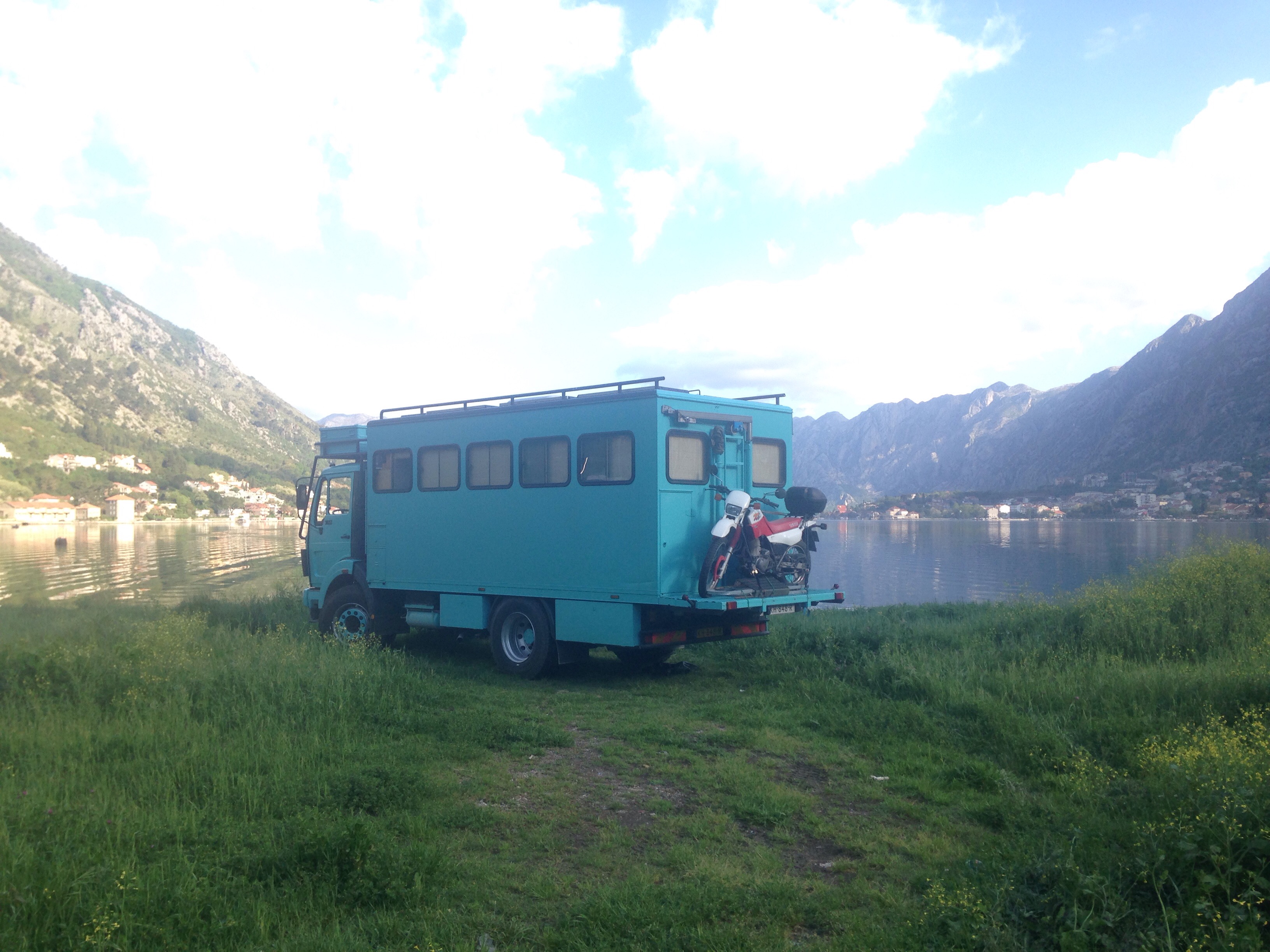
We get down to the waterfront and find a very special camp spot literally on the water in a grassy car park area. A Dutch couple in their camper-house are already stopped here for the night so we set up camp and, once the cruise ship finally takes off, enjoy probably the best viewing spot in the whole of the town…

Dutch couple who sold their house and bought this!
Perfect morning
 

We have a lazy morning because the sun is beating down and it’s lovely here. We need to recharge all our electrics, wash clothes and have our first warm shower in two weeks so the plan is to book into a hostel for one night here. The timing is good as it was due to rain HEAVILY overnight. We found a very good hostel and had a rare afternoon apart. Paddy sat in the reception on a borrowed computer to update his CV and I headed out to walk around town. Kotor is very lovely but touristy, even this early in the year. I think we’ve both been travelling for so long now that these sorts of places – particularly in the way that they are set up for you to spend as much money as possible – grate on us a little now. We’re in a different travelling mindset I guess. I’m sure if we were here for a week we’d be lapping up all the swanky restaurants and boutique shops! 
I had a nice stroll and then spotted a poster for a free classical concert taking place at 6pm. I turn up 10 minutes before the start time and there’s just a smattering of locals sitting under a huge glass chandelier in a beautiful new-classical reception hall waiting for it to start. From what I could gather, the players were a combination of students and teachers from Montenegro and Terana in Albania and they played a mixture of early Baroque and Romantic works. 

I felt pretty zen after the performance, that was until I walked outside to find the skies had opened and the promised downpour was in full swing. I didn’t have my rain coat and I got slightly lost in the narrow streets; by the time I get back I resemble a drowned rat. 

I find Paddy still beavering away in the busy hostel reception area. We had a fun night out with some other guests including a nice guy called John from London and we returned from the bar to our laundered clothes; presented in a tidy, folded pile smelling of washing powder and feeling all soft from having been tumble dried. Simple pleasures!! Paddy sleep walks that night and finds himself in the hostel corridor trying to find the bathroom (!) but other than that we have a good sleep in our beds. 

We spend the next day cycling to the border and camp right on the beachfront again. We make a friend who curls up outside our tent all night. I’m normally very anti-dogs because we’ve had one wee on our tent before, but he was too cute and docile for me to shoo him away. 

From here we will dip into Croatia for just a day to visit the famed maritime town of Dubrovnik before crossing into Bosnia and Herzegovina. 

Cycle Tourers Without Borders 

It took us a day to cross the flat plain. Our map showed two routes to Montenegro and we opted for what we thought would be the quieter road. It also promised to be a spectacular climb up through the Ragova canyon and we spotted that we would be able to make a quick detour to visit Visoki Decani – one of the ancient Serbian monasteries now guarded by UN peace keepers. 

It was a warm day with the midday temperatures working their way up to 25 degrees. Cycle touring is so much better when it’s sunny and warm; where there is no need for the incessant layering and de-layering of clothes all day. 

The monastery was interesting but we couldn’t take any photos due to the armed presence there. We didn’t linger, just a quick look at the famed 13th century frescos and a brief chat with the Italian guards at the gate before heading back along the road to scout out a camp spot. Here we cook up fajitas before settling down to sleep in our chosen spot – next to an old stone ruin in a roadside field.

The climb would take us the majority of the day – 25km of climbing – but just as we reach the start of the climb we spot a tourist information centre and decide to stop and use their bathroom. We get chatting to the attendant who tells us that in fact our intended route has no official border crossing and the road is now unused on the Montenegrin side. The open border is a further 20km up the road over a longer, steeper pass… We’re told its a beautiful cycle however and that we could play ignorant if we happen to meet anyone official on the other side.

It’s not keeping to border rules we know but the promise of a secluded beautiful cycle was too strong so we decide to try. We reason that if we hadn’t stopped we would have been non the wiser… Before we leave we gain assurance from him that there will be no snow at the top of the pass on the closed road (1500m).

Ragova canyon is an impressive gorge and the road is cut right into the sheer rock face – very cool. There is very little traffic and we really enjoy the cycle. Before lunch we reach the borderline and our road turns into a bumpy track before linking to the closed (but well paved) road on the Montenegrin side. We both feel a little uneasy about entering here but having come this far we recklessly cycle up the track and cross the border line.

Having just crossed the border line…

Here we stop to have lunch and consider our options. It wasn’t as if we were eager to cross the border illegally but any cyclist will know that turning your back on a climb which is 3/4 complete is psychological torture. While we’re weighing up the pros and cons of turning back to alternatively carrying on to find a police station in Montenegro two Kosovan border personnel appear as if by magic from the woods. They’re very friendly and explain we’ve crossed an unofficial borderline and the road is closed – all this we knew but we decided it was better to play the ignorant tourist at this point. They check our passports and inspect the bike before telling us we can keep going rather than turning back – just this once! Relieved we jump on the bike, keen to reach the top (12km away) in good time. 

The cycle continues to be stunning and because the road is closed we’re the only people for miles… As we’re nearing the top however our earlier fears about snow creep back. If the road is closed and we’re going over 1200m, and the slope is north facing (which it was) there was probably going to be snow. Sure enough, we turn a corner and the asphalt disappears under the familiar white carpet.

Dragging the bike through snow when it’s flat or downhill is hard enough but we had 5km of steep switchbacks before we would reach the top. Sometimes these decisions pay off and other times they don’t – admitting defeat we turn around and start the heart-wrenching decent back down. One more night in Kosovo to go then before we cross the border – this time sticking to the rules! 

Dinners in the Den 

So having crossed the border with Macedonia we kept climbing through a picturesque valley to the top of the pass before dropping down. There was a howling headwind at the border crossing but as we entered the country the sun came out and spilled out over the mountains. It stayed with us for our whole time in Kosovo! We received a passport stamp at the border which we were both excited about as we thought 2017 would be a stamp free year – another one to add to the growing collection! 

We dropped down into a place called Doganaj and treated ourselves to a meal in the local restaurant before cycling a few kilometres to a wooded area off the road where we pitched the tent. Just as we were drifting off to sleep we hear some shouting from the road. 

‘Hello?! Are you OK? We don’t want to hurt you, we just want to check you are OK!’ 

Paddy goes out to investigate and finds three 20 something year olds teetering on the edge of the wood. They were super friendly and asked if we wanted to come back to their house instead of camping but we declined explaining we were all set up and already in bed. 

The next morning we had a 1000m+ pass to cross. The inclines and roads are great here and we made good progress. The countryside is lovely around here and we pass through a number of towns including the Ski resort town of Brezovice – apparently the resort is a decent size with a good selection of runs. There’s no snow in the town now but the high mountains are still very much covered and the views were spectacular. We manage to reach the top before lunch. It was a Sunday and there were lots of families picnicking here at the top.

We then had a long down to the lovely town of Prizren which is full of old buildings and bridges and lots of restaurants which line the riverfront. The town is absolutely heaving and we stop to enjoy the atmosphere with an ice cream in one of the riverside squares. After enquiring at all three Hostels and being quoted overblown prices we decide to cycle back up the road and scout out a camp spot instead. A few kilometres from Prizren upriver there is a collection of allotments and homemade summerhouses. As we’re stopped on the road looking down at this potential camping spot a group of men call out to us. I run down to investigate and am greeted by Bardi who asks me if I speak French. Time to test that 13 year old GCSE I got!! 

After I cobble together a fragmented response he explains we are welcome to pitch our tent in their little garden as they were all planning to leave after having dinner together that evening. So began our two day hangout with Bardi and his gang of mates… 

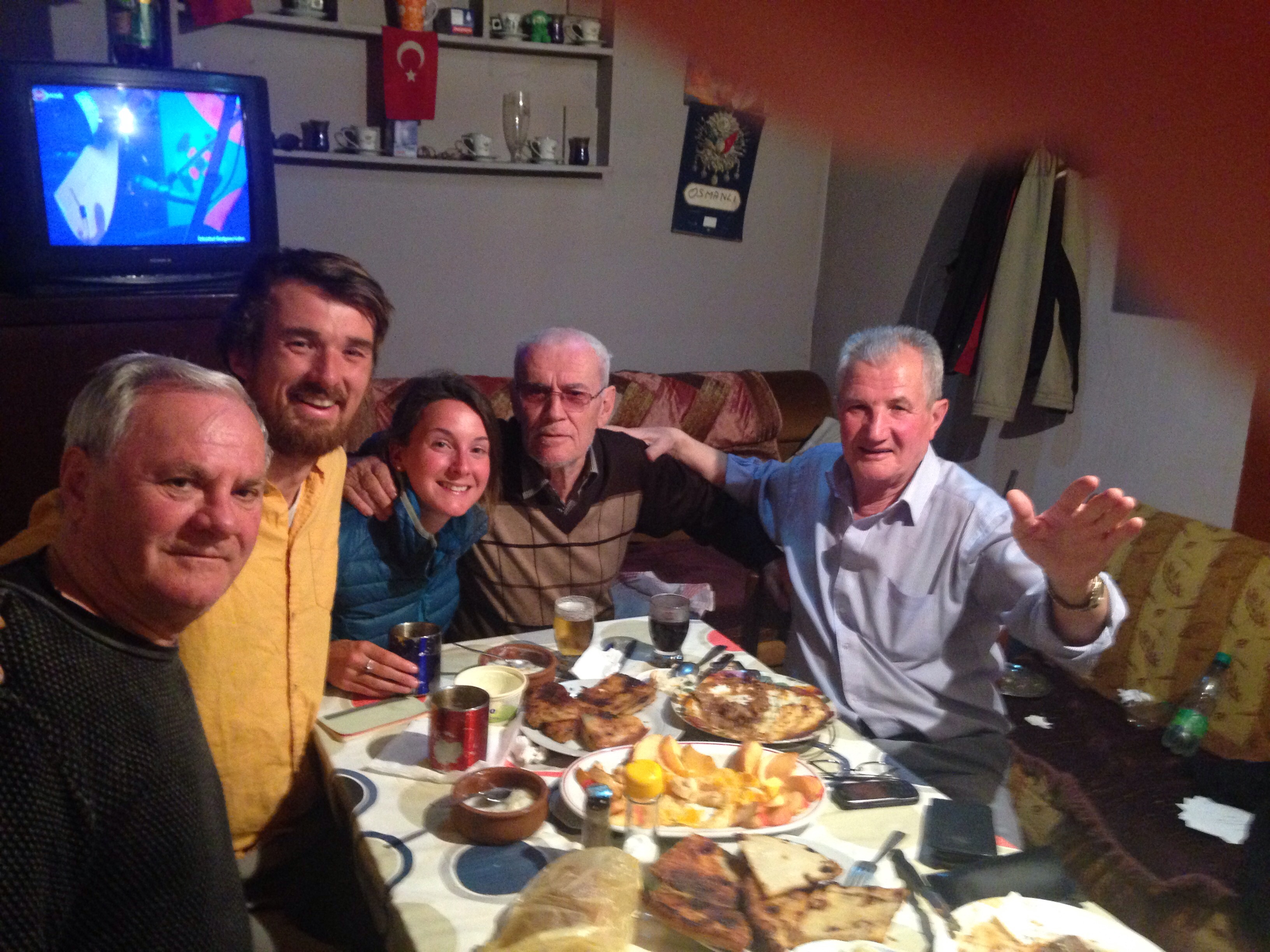
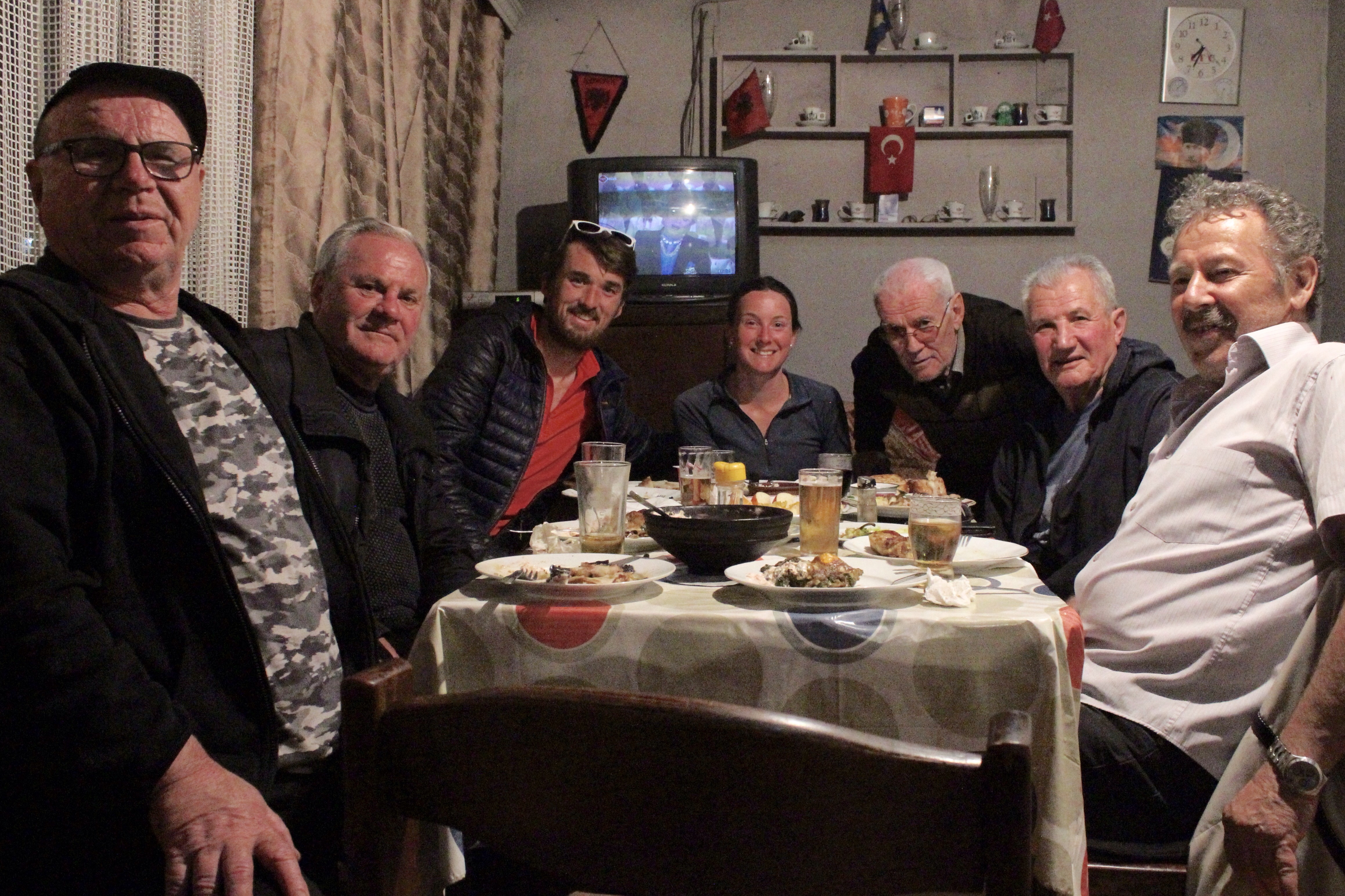
It turns out that the ‘garden’ was actually what Paddy and I came to call the homemade ‘man den’. It was brilliant! A lovely spot right by the river with a small garden, vine covered balcony, big barbecue, electric stove, running water and one inside room with sofas, tv and a big dining table. Bardi and his mates who are all in their 60s and 70s come here almost everyday to eat and hangout together. Many of them are still married but I didn’t like to get too much into what they get up to in the meantime… I like to think they’re having as much fun as Bardi and his mates have in the man den. 

Bardi spoke very good French which he learnt in school and perfected during a short stay in France in his youth. Before he retired he worked as the head receptionist and later the bookkeeper for the biggest hotel in Prizren. Naturally he was the accountant for the group and kept a little black book which detailed everything each of the guys owed for the food and upkeep of the man den.

They were great company and we ended up making this spot our home for the next two days, sleeping on the sofa bed at night and eating delicious home cooked food prepared by ‘Doktor Cusine’.

‘The Doktor’ as he was commonly know by the group was a lovely guy of Turkish decent in his 70s. He was the one who looked after everyone, preparing the food and constantly making us Turkish coffees. We concluded that the den was owned by The Doktor because there was always Turkish music programmes playing on the TV and Turkish flags hung up on the walls.

Then there was Ramke who was the quiet one. He was a lovely unassuming guy and it was only in the last 30 minutes of the second evening that we got to know him a bit. Skehder and Jalcih, who is Serbian, completed the group. We also assume that there are others who form an outer circle to this core group because we were shown lots of photos of them all holidaying together in Albania. ‘We’re a democracy here, no politics just life’ states Bardi. These guys have clearly seen enough politics in their lives…

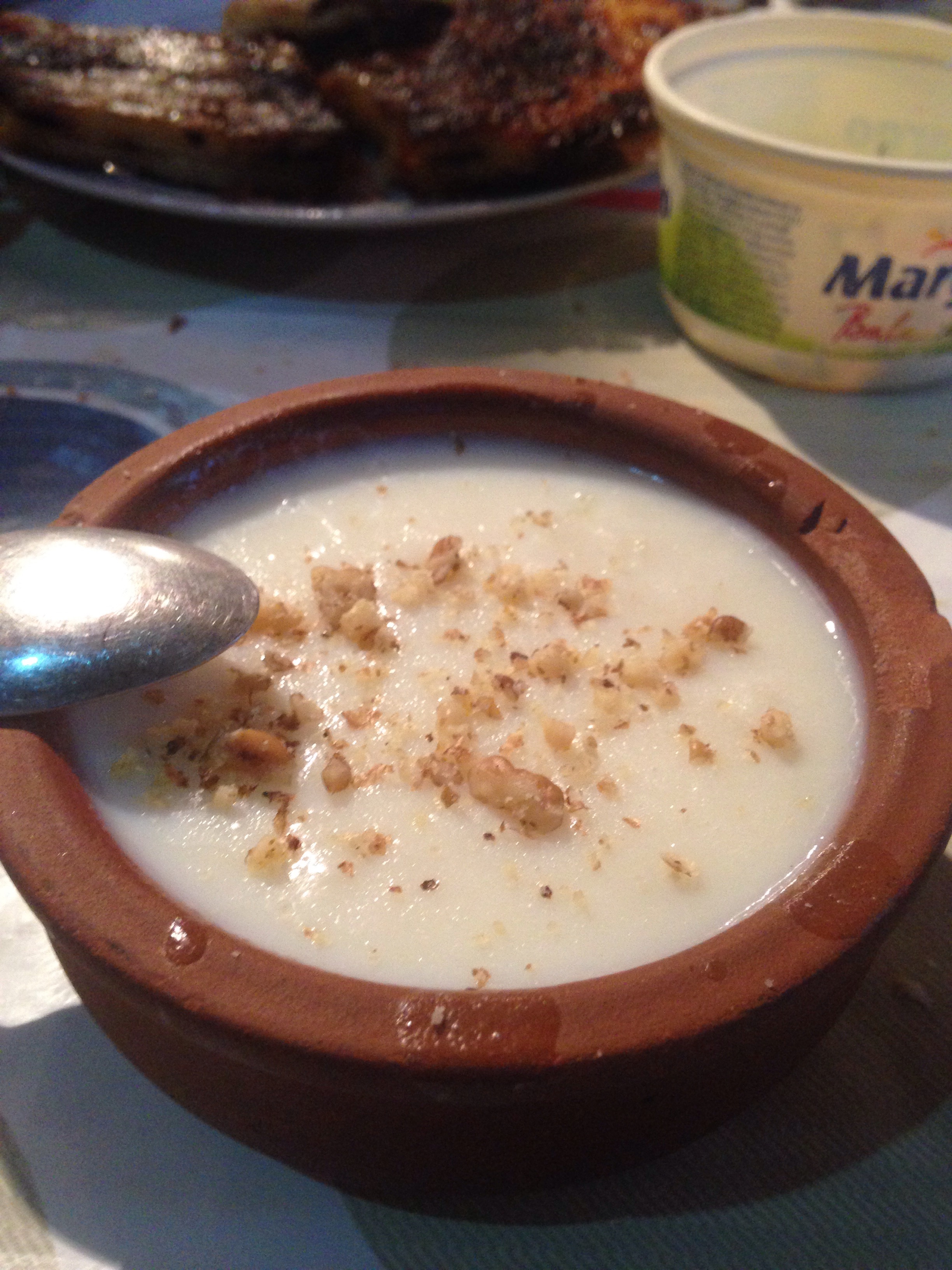
They were all so hospitable and welcoming to us and we enjoyed eating with them in the evenings. One very interesting difference between us and the gang was the speed in which we eat. Kosovans – it turns out – take a long time to eat a meal. Now, since being on the trip Paddy and I have probably developed a bad habit of engulfing our food as quickly as possible; but even taking this into account, the difference between our eating paces was incredible. In theory we can both get on board with this relaxed approach to dining, but in practice it’s goes completely against everything we know to let a plate of steaming, succulent beef stew and creamy mashed potato go cold. The lads took 90 minutes to finish this meal something we just couldn’t understand! We did manage to take our time over the homemade rice pudding. 

At the end of every evening each of them took a box of leftovers home with them and left us to snuggle down into our sleeping bag. In between these two enormous meals dished out by the Doktor, we had a lovely rest day washing the bike, ourselves and all our clothes before walking up to the castle fort which overlooks Prizren. We enjoyed clear blue skies and a picnic at the top before walking down to meet Bardi for coffee in the town.

Snuggling down…

From here we’re crossing the country across the flat plain towards the Montenegrin border. 

Kosovo – Country No.17!!!

Paddy and I both remember the Kosovan war from news bulletins; a conflict which was part of the wider Yugoslav wars and ended with UN airstricke intervention and the withdrawing of Yugoslav troops – but at the cost of thousands of lives and nearly a million people ending up displaced. It was only in 2008 the country declared independence.

The conflict harks back to cultural and religious divisions between the ethnic Albanian (Muslim) and Serbian (Orthodox) communities. Although I think it’s fair to say the rivalry goes far deeper than religion. Serbia gained control of Kosovo after the collapse of the Ottoman Empire while Albania declared independence in the same year and this created the divisions. Nothing was done to try and neutralise hostilities during the Yugoslav/Tito-era period and integration between communities in the form of marriages, schools remains rare to this day.

Serbian still does not accept Kosovo as an independent state. A big sticking point for Serbia is that Kosovo retains a huge slice of ancient Serbian orthodox heritage. Some of the most important Serbian churches and monasteries sit in what is now dominated Muslim Kosovo. In fact, Religious sites were easy targets on both sides during the conflict and many ancient mosques and churches were destroyed. As a result we still see signs for camera surveillance around religious sites and a number of important Serbian churches are still heavily guarded by UN troops.

We have already seen Polish, German and Swiss guards on duty during our short time here. Skirmishes still happen although the country is now on the whole very safe. It is however, vulnerable to organised crime and money laundering; as is the case in neighbouring Albania. In fact, ethnic Albanians are said to supply up to 20% of western Europe’s heroin.

This introduction all sounds a bit bleak but little Kosovo is far from it – we were both excited about visiting here and were keen not to let any preconceived ideas cloud our experience. What did little Kosovo have to offer despite its turbulent recent history? Well, we found a country full of some of the friendliest, pragmatic people we have met so far, picturesque little towns and villages and a lively outdoor tourism sector. Apart from the military presence there really isn’t much evidence that a war took place at all. Kosovo is prospering – it’s GDP was one of the few countries which continued to grow during the crash. 


They have the Euro here but prices are low and there seems to be two economies: urban and rural. All the towns and villages are filled with big modern houses, the roads are well maintained and community parks, and buildings nicely looked after. 
Although it would take years to fully understand the situation in Kosovo now – and we only have four days! – there does seem to still be a significant amount of segregation between the two rival communities – one town we pass through will have mosques and be flying the Albanian double eagled flag but the next village will have a church and versions of the Serbian flag will be flying. War tribute monuments are also common.