It’s all in the flag

Kyrgyzstan has a cool flag. It’s my favourite out of all the countries we have and will visit.

A country’s flag often tells you something about the political history of a country, but the Kyrgyzstan has more symbolism integrated into it than most. Perhaps an outcome of the country’s desperate cultural soul searching after independence from the USSR….

The red field background represents valour and bravery while the golden sun in the centre is said to symbolise peace. The sun has 40 uniformed rays which are said to represent the 40 Kyrgyz tribes who were united against the Mongols by the Kyrgyz hero Manas.

The Epic of Manas is the traditional epic trilogy poem of the Kyrgyz people. It is composed and performed orally by traditional singer-storytellers called Manasachi. This tradition is still very much alive.

The poem is unique it is length being twenty times longer than the combined texts of both Homer’s Illiad and Odyssey.

He is a very important national figure and every major towns has at least one statue of him.


Decorating the centre of the sun are three crossed lines which are said to represent the tunduk, the traditional crown of the Kyrgyz yurt. You can see lots of yurts decorated with this criss-cross pattern on the their tents.


We have also been told the centre represent the crossing of two roads symbolising the unity of the people and that the three red lines can also represent the the komuz, the three-stringed national instrument.

It’s amazing how much a piece of cloth can tell you…

Following the M41 north to Bishkek

We had a couple of days rest in Osh where there isn’t much to see. It was very hot and we mainly spent our time hanging out in the hostel researching all the visa requirements and planning our route. 
image

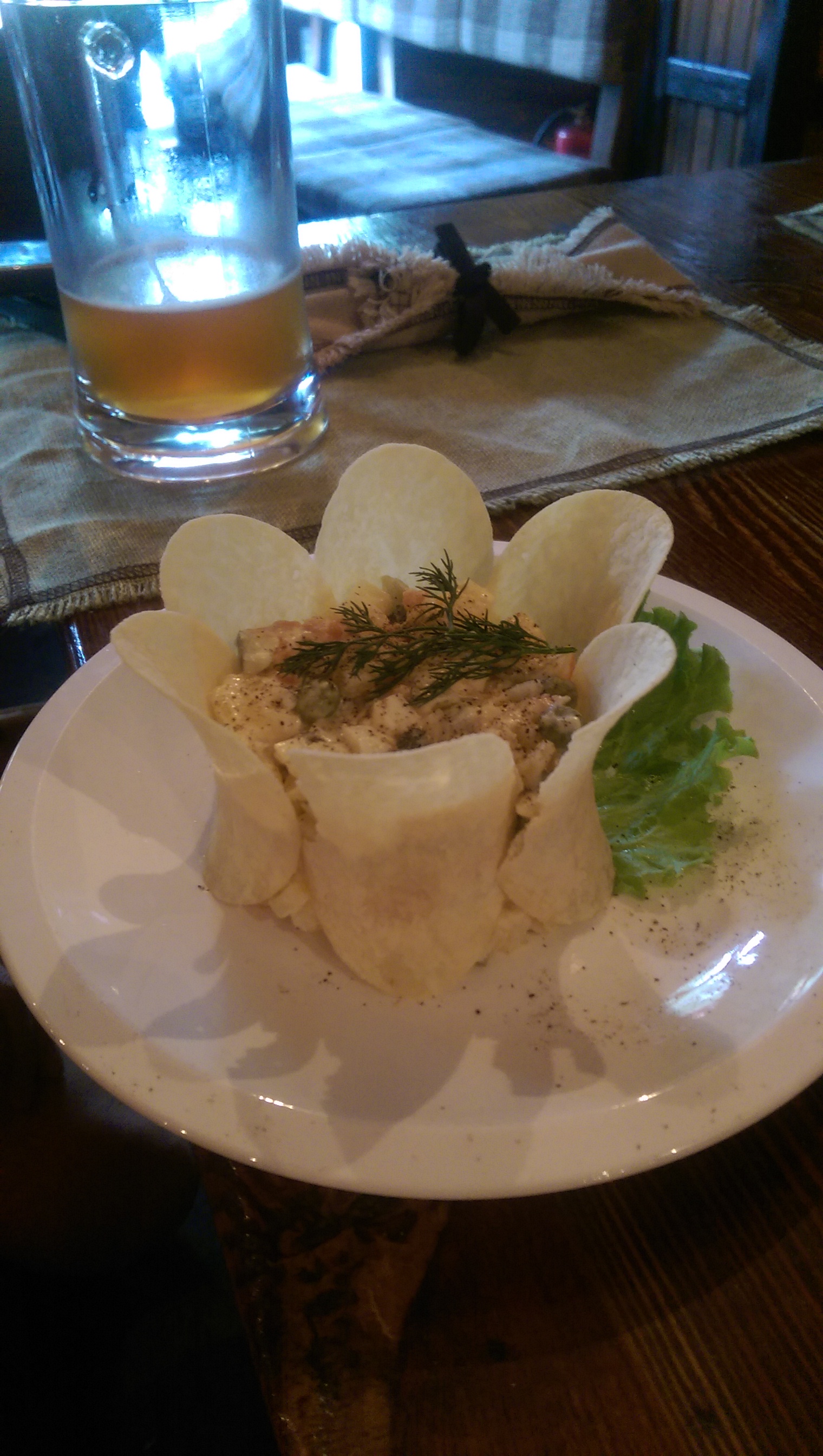
We also treated ourselves to some meals out and found a bar/restaurant we both liked. 

It has to be said, the food in Kyrgyzstan isn’t what you would call michelin star! Unlike China, where almost everything we ordered was mouth-wateringly delicious despite the menu being almost incomprehensible, all the dishes we have tried here have tasted and looked more or less identical. 

Firstly, dill features heavily in EVERY dish. You can’t avoid it, whether you’re after a quick pastry snack or a horse kebab, it’s mixed, sprinkled and garnished on everything!image

It’s not uncommon for your plate to include four types of carbohydrates – although this is great for us cyclists – and it’s very hard to find a dish that doesn’t contain meat. In one restaurant, we noticed that the vegetarian pizza was considered vegetarian because it only had one type of meat on it – sausage! 

Rice, potatos, bread, pasta and buckwheat – a cyclists dream!
Three things Kyrgyzstan does well are meat, bread and beer. It’s the first time pretty much we have been able to buy fresh milk and butter too, something we both missed in lactose intolerant Asia.

Naans fresh out of a road side clay oven are delicious and whatever meat you order it’s always juicy and tender. Draft beer is common but you have to watch for the alcoholic content, we absentmindedly drank 4 pints of 11% one evening. My beer always comes with a straw…

 
image

We’ve naturally eaten a lot of horse which is very rich but delicious! 

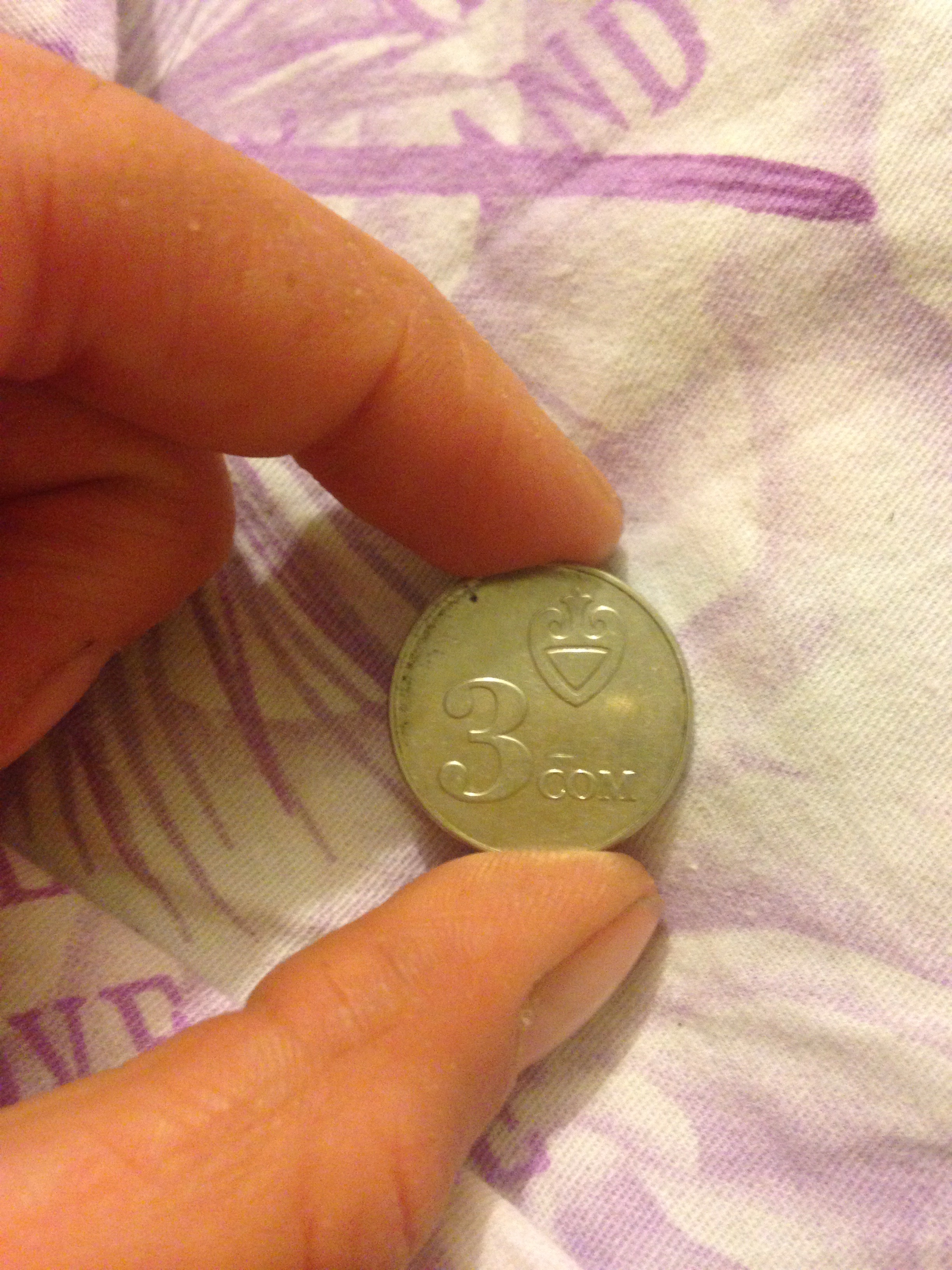
Food ranges from very cheap to average. Kyrgyzstan currency is the com (som) and it’s the first currency where we have used a 3 piece coin! 

After our rest days in Osh we pushed onwards north to Bishkek. 
image

We would be following the main highway the M41, all the way. 
Despite its name, the Kyrgyzstan M41 bares no relation to the M41 motorway in the UK. It’s more like a potted A road where you often have to navigate your way through large herds of sheep, horses and cattle. 

It can get fairly busy with traffic but we were avoiding a lot of this by waking up very early, siestering in the afternoon and cycling late into the evening. Kyrgyzstan drivers are some of the worst we have encountered – they get very close and they drive fast but a lot of the time the road was pretty quiet. 

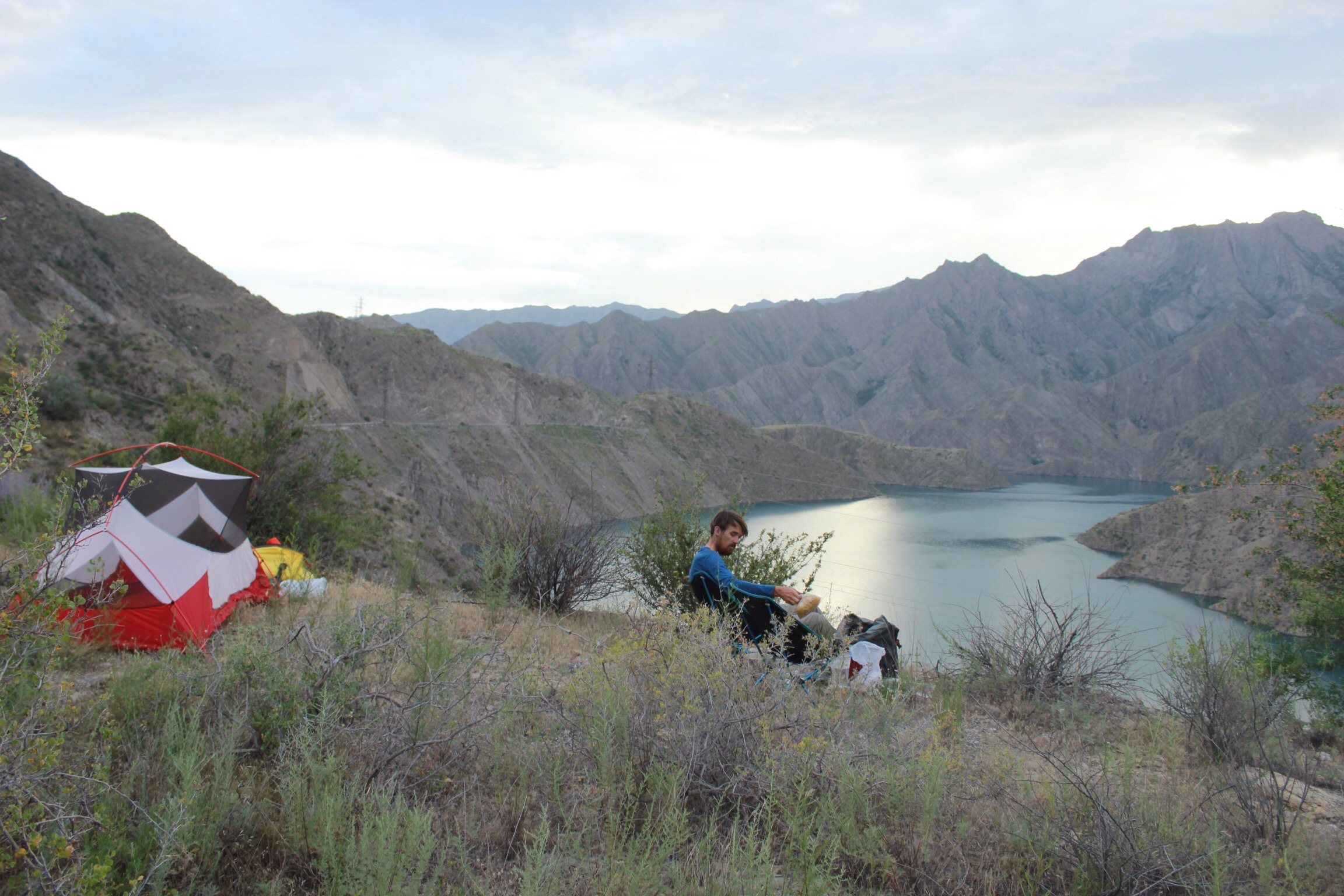
Again we did a lot of wild camping.

battling heat rash by washing our cycling gear ready for the next days ride

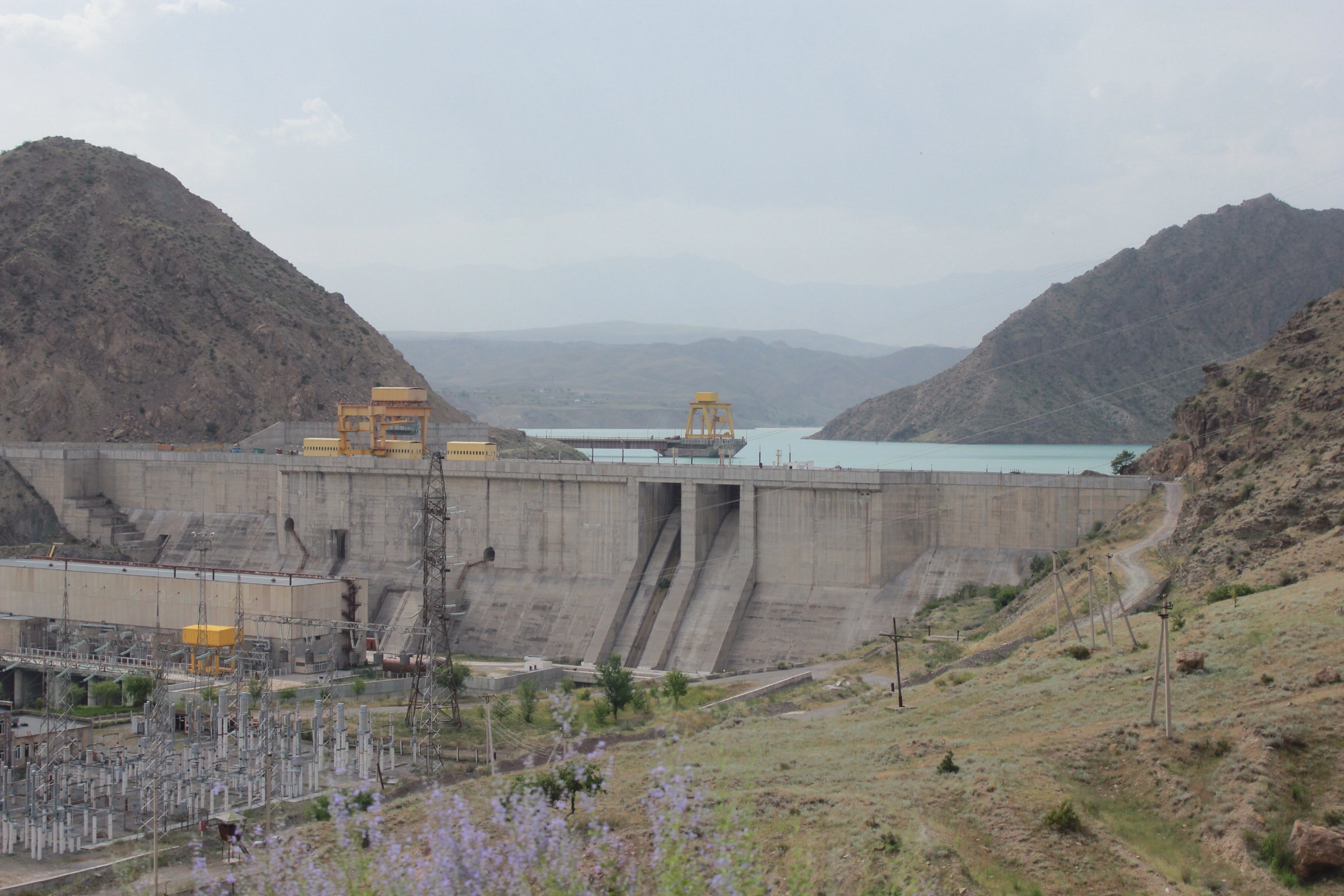
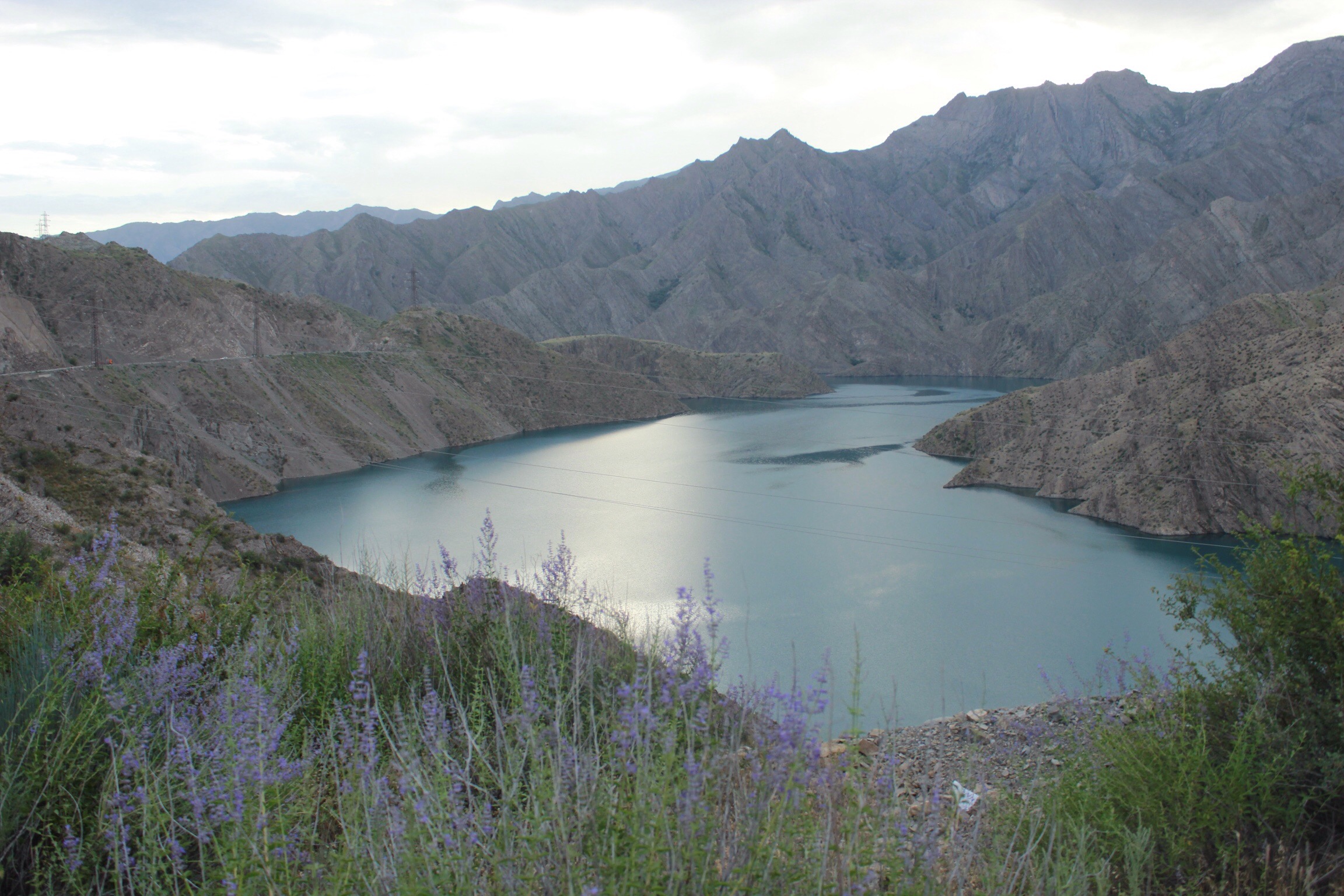
Some of the cycle was very beautiful, particularly the stretch following the river which is dammed the whole way along ending in the huge Toktogul reservoir. 

Whatever you think about hydroelectric dams and their affect on the local environment, they can create some pretty spectacular lake views further up stream!!

I find  Paddy busy cooking dinner after I get back from the best lake swim I’ve ever had.

We cycle through a lot of towns and villages on our way. One in three people here drive a retro Lada car and this along with the shabby soviet buildings and shop fronts makes rural Kyrgyzstan feel a little bit like a 1970s film set. I even saw a small scruffy dog trotting down a street with a string of sausages clamped it its mouth.image

It reminds me a lot of a family holiday in Bulgaria I had in my teens.

We continued to experience the warm hospitality of the Kyrgyz people on our journey north. 

One evening we stayed with a family who were teaching some visiting kids from Osh how to ride. We both got a go too. In my excitement I slightly ‘overdid’ my mount and nearly completed a full somersault over the poor creature! 
image

Once on, all was ok! 

Another evening we pitch our tent near some yurts and are presented with a pot of fresh hand-churned clotted cream. After our horse meat chilli (a dish we cook a lot) we had it with biscuits and our honey glazed peanuts. 

It’s the best meal we’ve had so far!


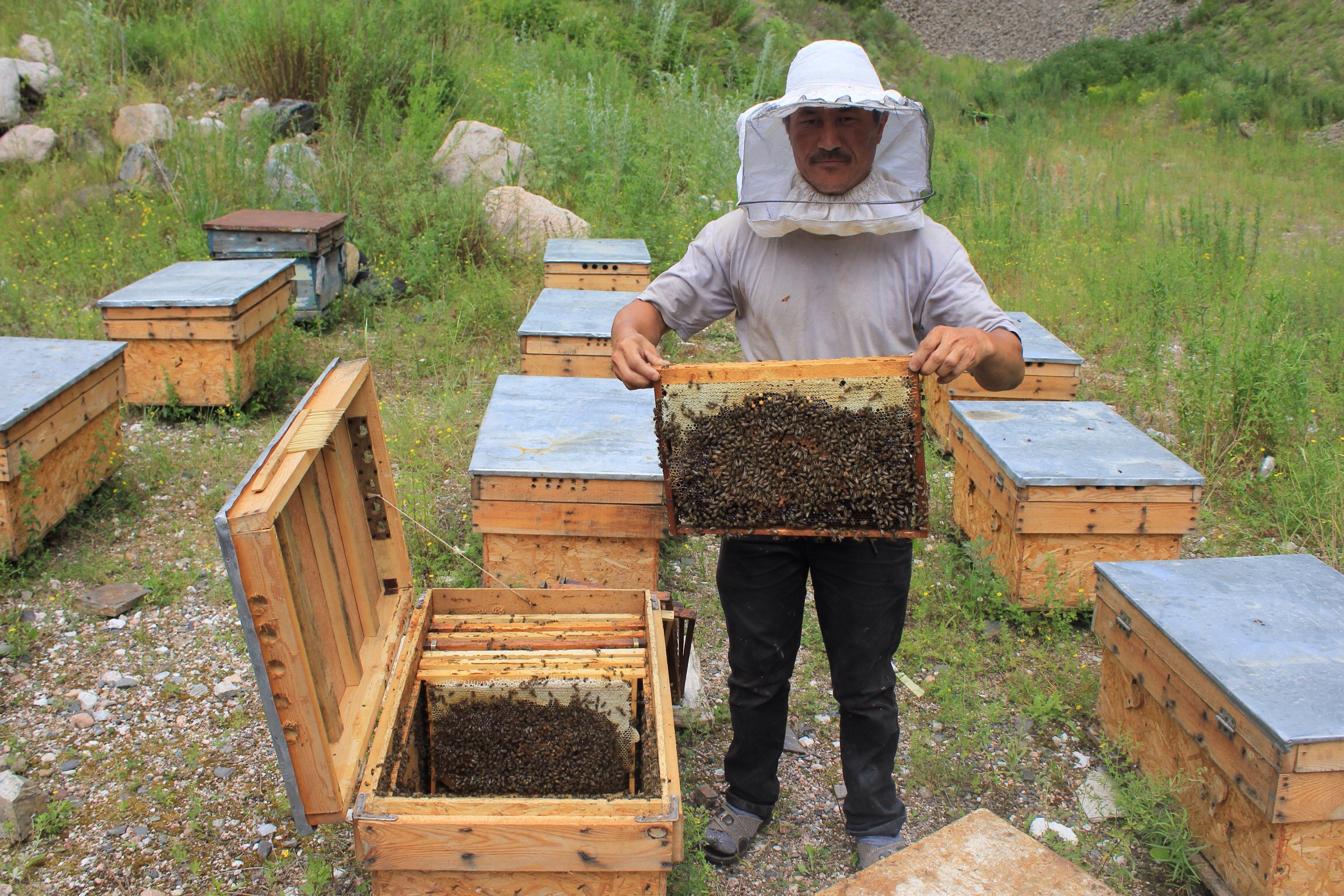
Paddy also treated himself to a bottle of honey which was extracted fresh from the hive in front of him. 

We are also taking advantage of the abundance of seasonal fruits available to have with our porridge in the morning.

So, despite the poor food in restaurants we’re certainly not going hungry!

The hot weather disappeared on the last day and we found ourselves sheltering under a lot of trees to escape the heavy rainstorms. 

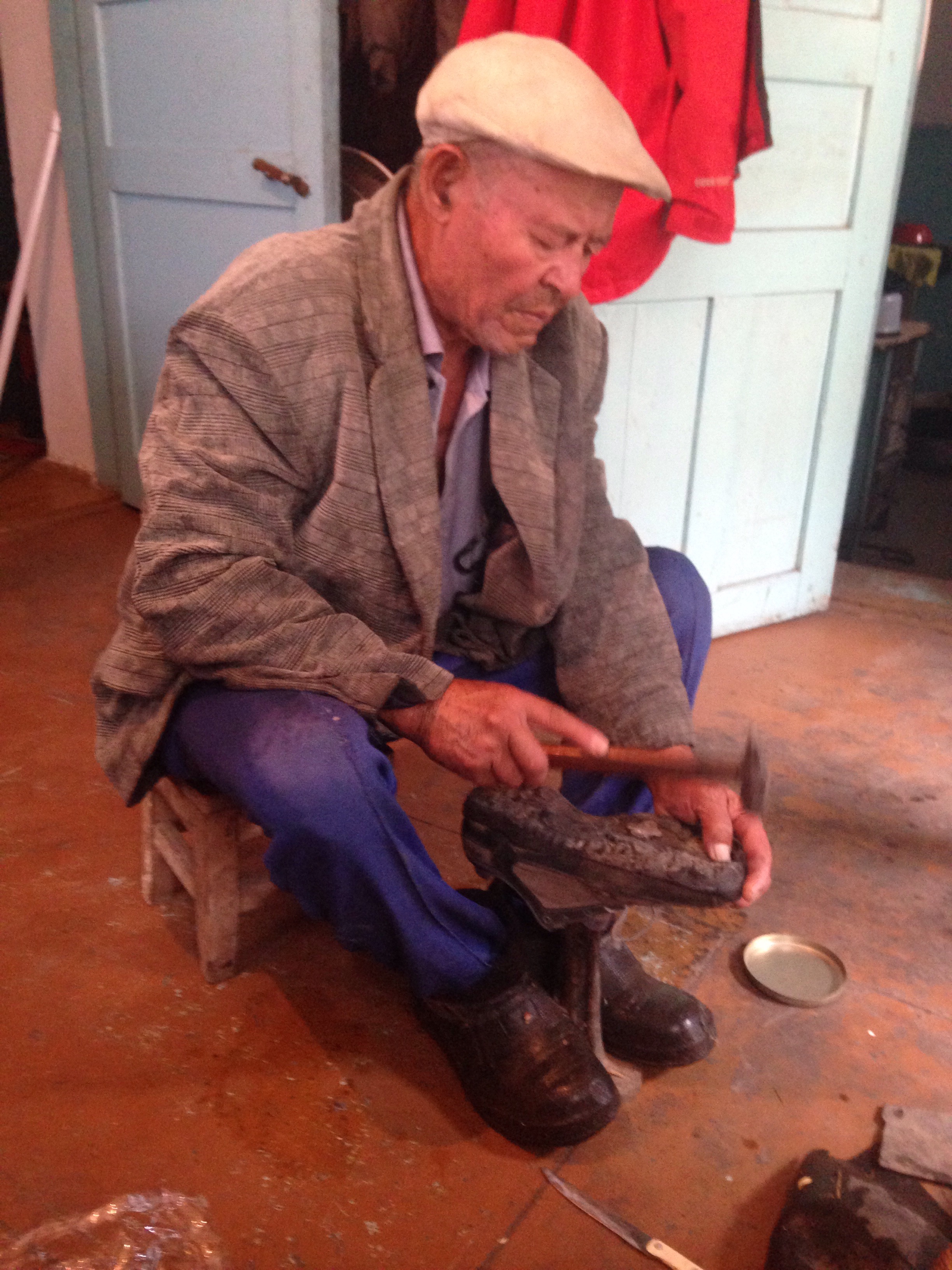
On one such stop we were invited in for ‘chai’ by an elderly man.

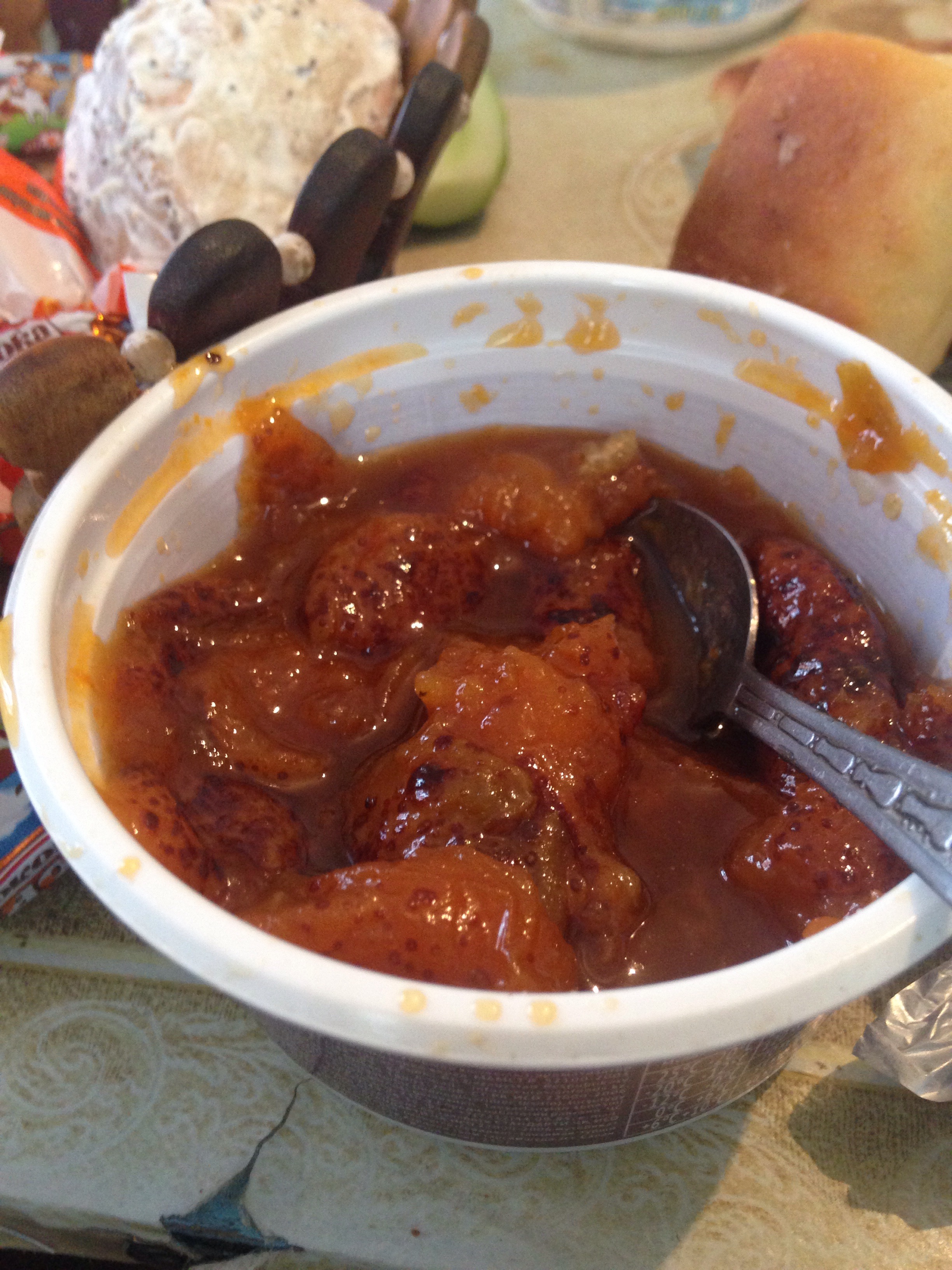
He plied us with his homemade brandy, bread and his own freshly prepared apricot jam.

While we ate he told us (all through eloquent gestures and sign language) that he was 76 years old, his wife had passed away 10 years ago, that he had 4 children and 8 grandchildren  and that he had a bad heart for which he was taking 8 different kinds of medication.

He then got out his world map to see where we had cycled from.

After hearing about our trip Paddy showed him his taped together shoe to give him a laugh. 

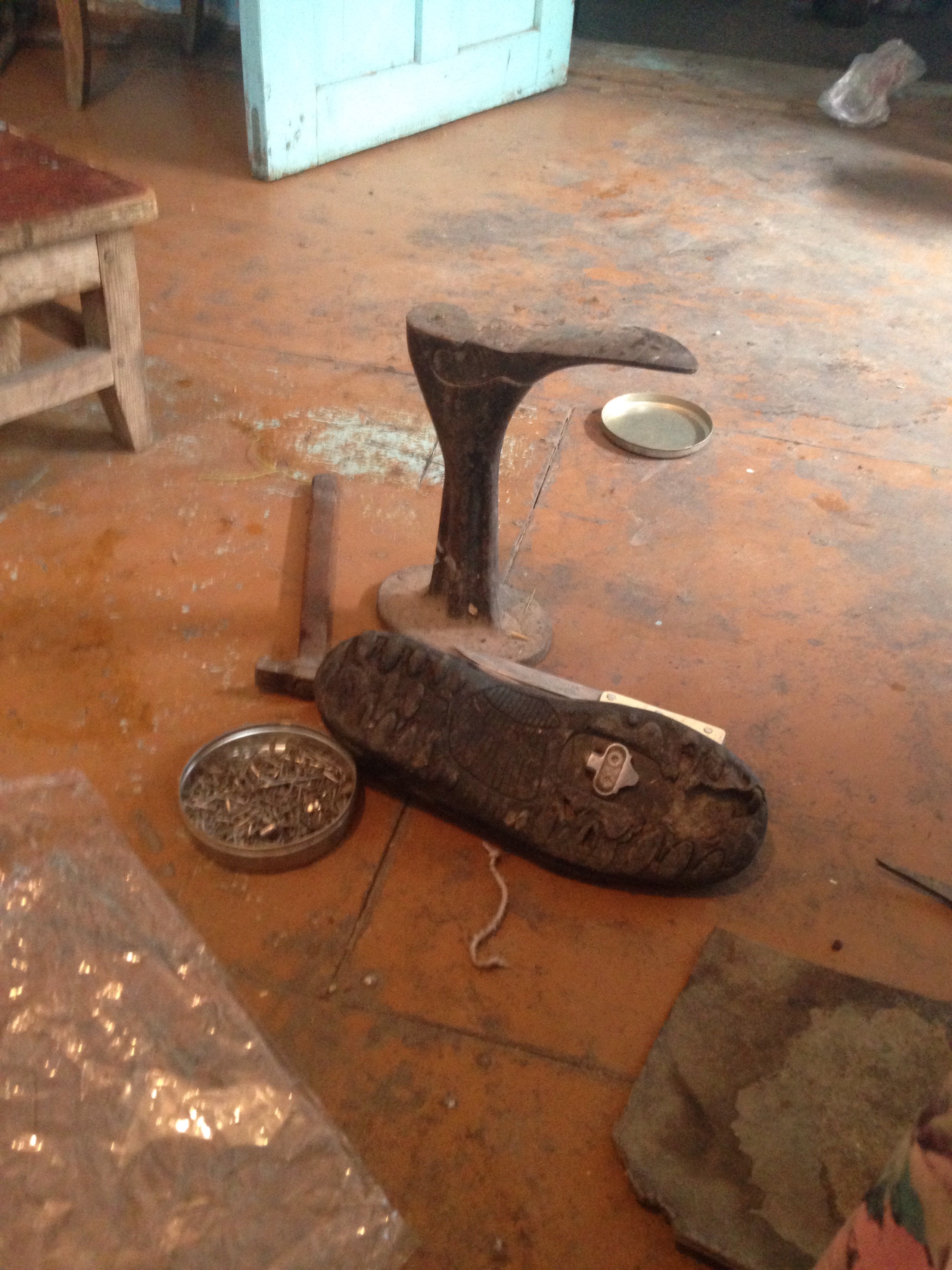
He didn’t find the broken shoe very amusing. Instead he disappeared for a few minutes. He came back with his cobblers kit…


And proceeded to first tack paddy’s soles back in place and then sow the holes in the fraying fabric. 


This is the kind of kindness you experience in Kyrgystan.

An Introduction to Kyrgyzstan!

So it’s just under 2 weeks since we crossed the border into country number 6, Kyrgyzstan. 

Updating the blog has been tricky as we’ve been doing a lot of cycling and camping.

Neither of us knew much about this country before we arrived. Sandwiched between Kazakhstan, Uzbekistan, Tajikistan and China it has a population of just 6 million; a dwarf in comparison to its neighbours. 

Our plan was to head up to the capital Bishkek where we would spend a good stretch organising our visas for the next stage and then loop back down towards Tajikistan. All in all, taking around 5 weeks.

Formerly part of the Soviet Union until independance in 1991, little Kyrgyzstan is a relatively new country. 

Naturally, almost everyone speaks Russian but the Kyrgyz language remains very strong, particularly in the southern part of the country where the people are more Persian looking and Islam is practiced more widely. 

We crossed the border without knowing much of this at the time. We knew no Russian or Kyrgyz words and we even forgot to exchange our Chinese currency for Kyrgysz Som at the border… We were woefully underprepared for our venture into a new country… 

It’s 4pm before we reach the first border town. There’s a strong headwind and just passed the town we see our road snaking up a very stiff gradient – neither of us fancy doing much climbing today. 

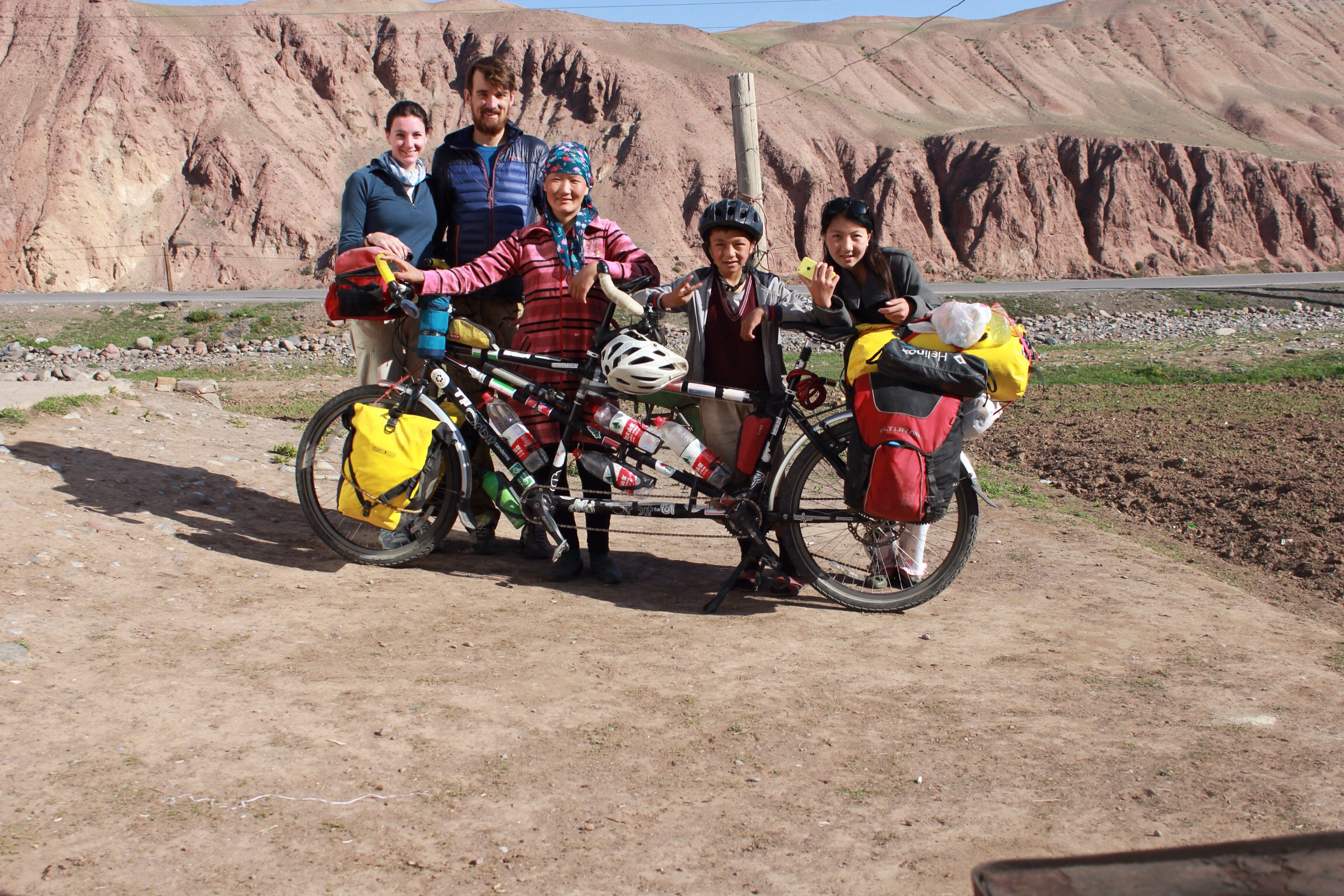
We stop just outside the town and contemplate where we can pitch up. A girl of around 14 rushes out of the first house shakes our hands and beckons us inside. We are fed bread, jam and tea and told we can pitch our tent in the garden. We spend the rest of the afternoon playing with the many local kids who like climbing the bike and using our tent as a den. 

Before bed a dinner of fried liver, dill risotto and a kind of homemade fudge is presented to us. This is our first taste of  Kyrgyz hospitality and we feel very humbled.

The next morning we rise early and say our goodbyes to our hosts. The daughter requests we pay something towards the food. The small sum of 400 is suggested but we remind ourselves we don’t have any local currency. We readily hand over 5 USD instead which is accepted with thanks.

This first experience of Kyrgyz hospitality was tainted slightly after we reached the next town where we discovered that someone had stolen money from our bag during our stay in the house. It wasn’t a lot (the equivalent of around £40) but we felt sad it had happened after having had such a nice evening. 

Something like this was bound to happen at least once and there was no point obsessing over who we thought might have taken it…. It was a good lesson that we should never leave our handlebar bag somewhere, even for 10 minutes in the living room of a friendly local family…

Our next destination was the town of Sary-tash roughly 75km away. From there we would cycle the remaining 175km East to the southern city of Osh where we would enjoy a well deserved rest day. 

There would be some big climbs involved and we soon discover the blissfully easy gradients of Chinese roads are a thing of the past. 

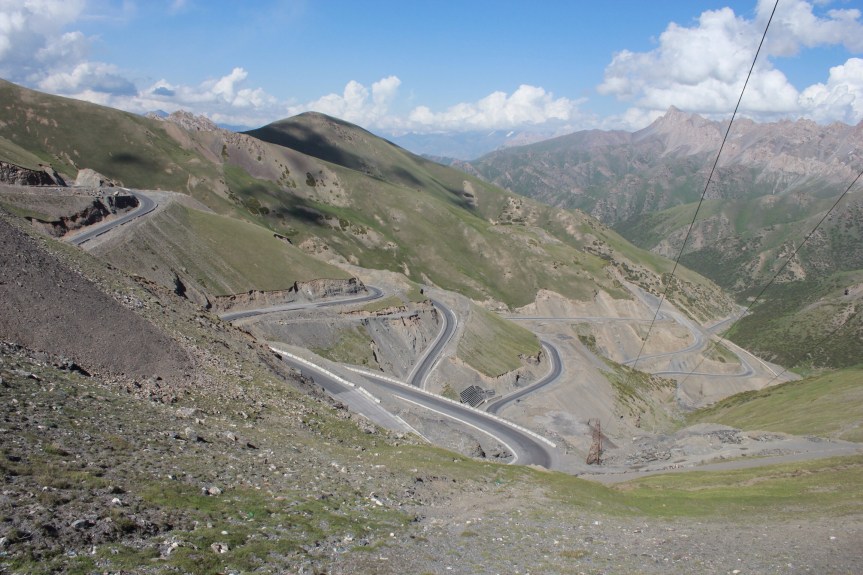
Russian/Kyrgyz road builders love a good gradient. There are often signs telling you how steep the next section will be, but as Paddy and I soon discovered, these hold little relation to the true gradient. The signs almost always read either 12% or 8% and we’ve now learnt that their purpose is to simply let you know a climb is coming… a REALLY steep climb!
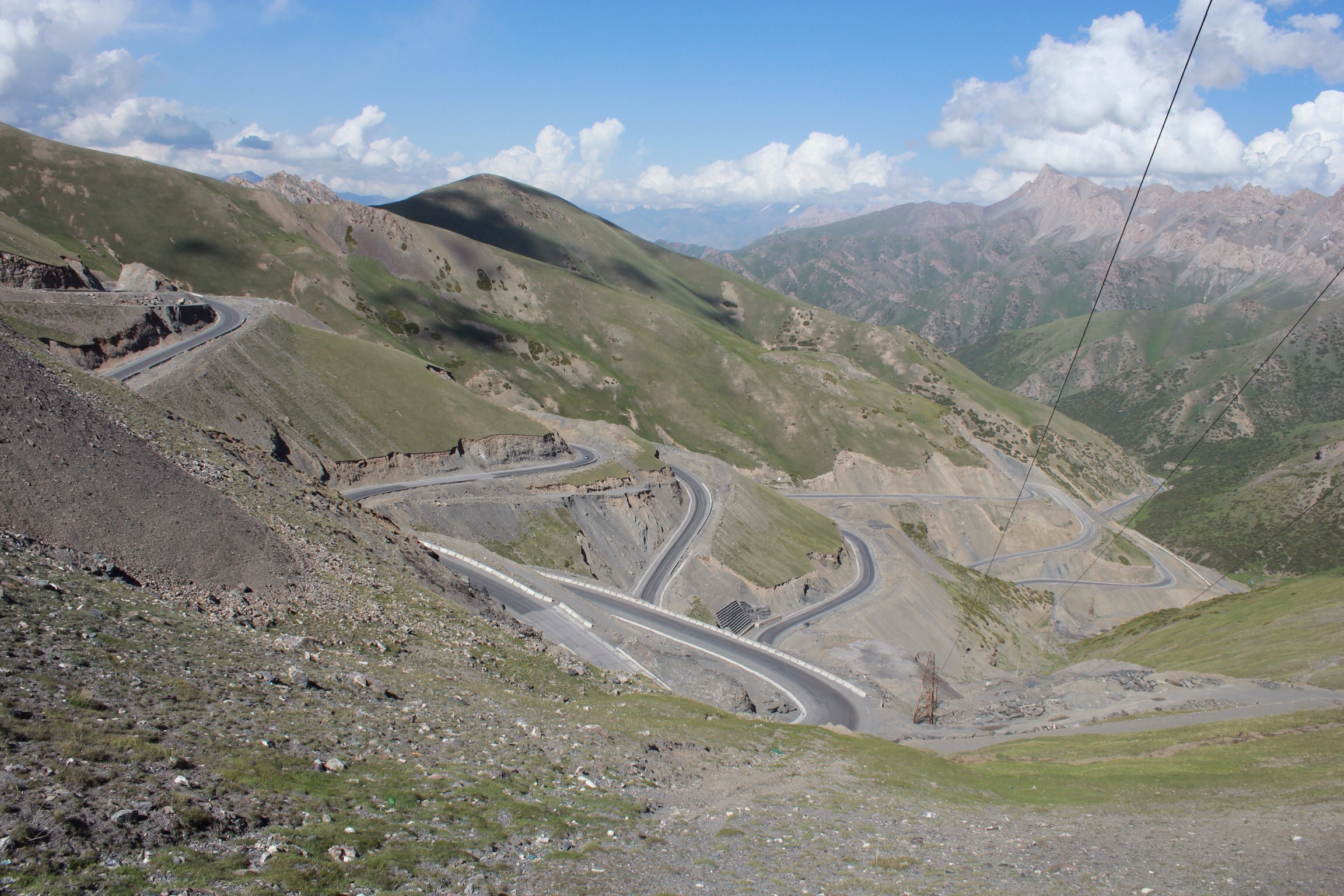
I was convinced that we wouldn’t find scenery and countryside nicer than we saw in China but that was before I cycled in Kyrgyzstan. 

The cycle between the border and Osh was spectacular, and for me personally, its some of the most rewarding and nourishing countryside we’ve camped in.

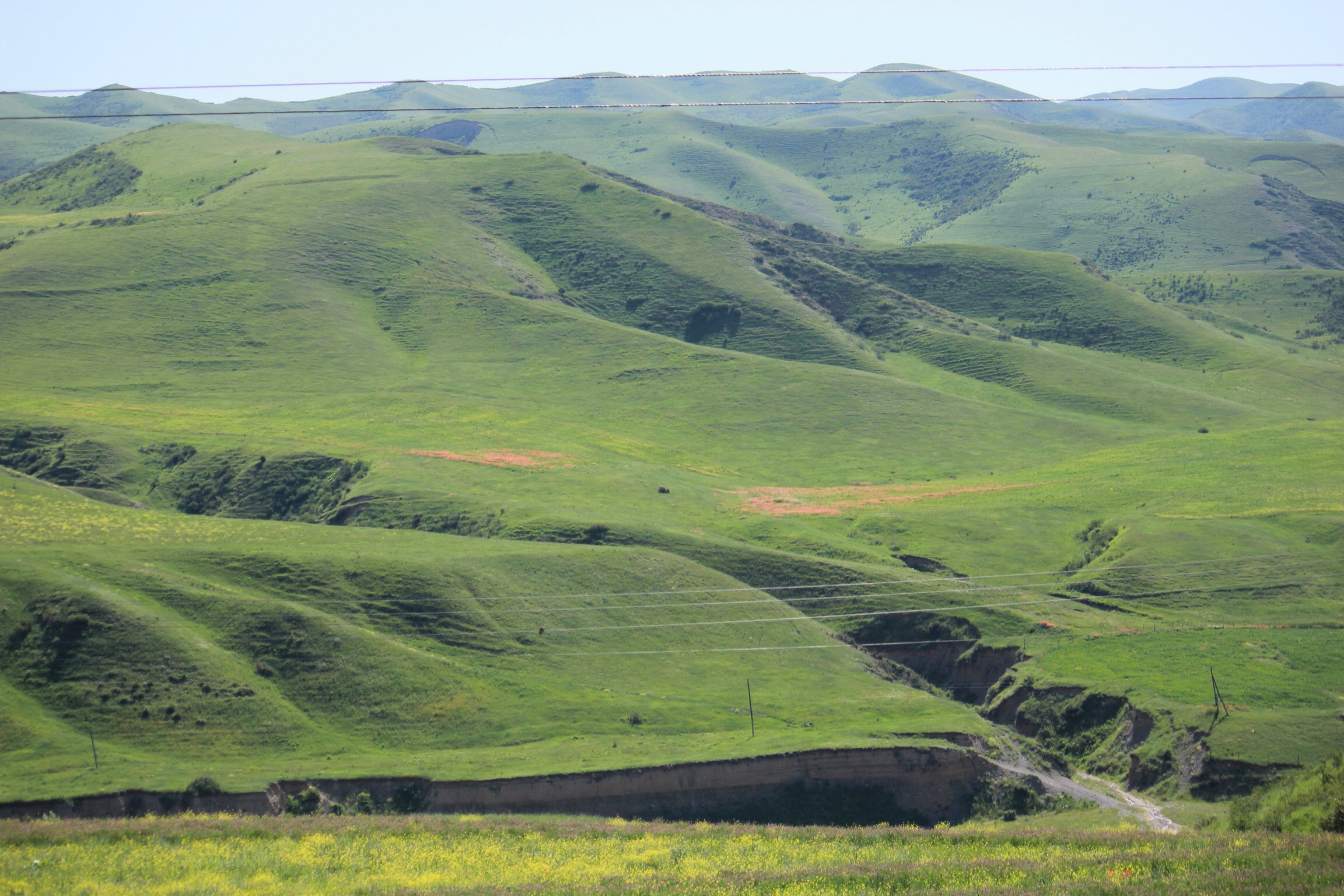
Stunning snowy mountain ranges which give way to the greenest, richest rolling hills you have ever seen. As we lose height, these, in turn, give way to sweeping meadows of long grass and hundreds of species of wild flowers. 

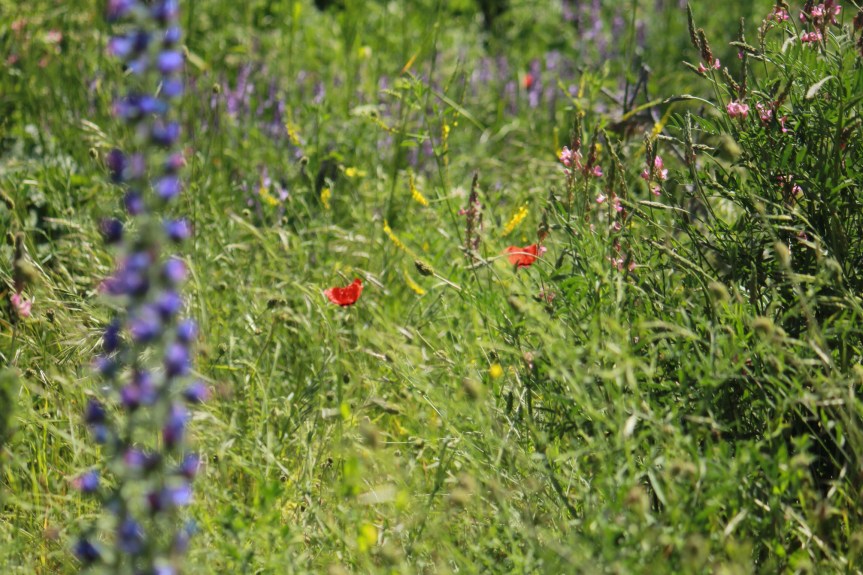
Some fields are literally stained bright red with wild poppies while others are home to a thick tapestry of yellow, pink and blue. 
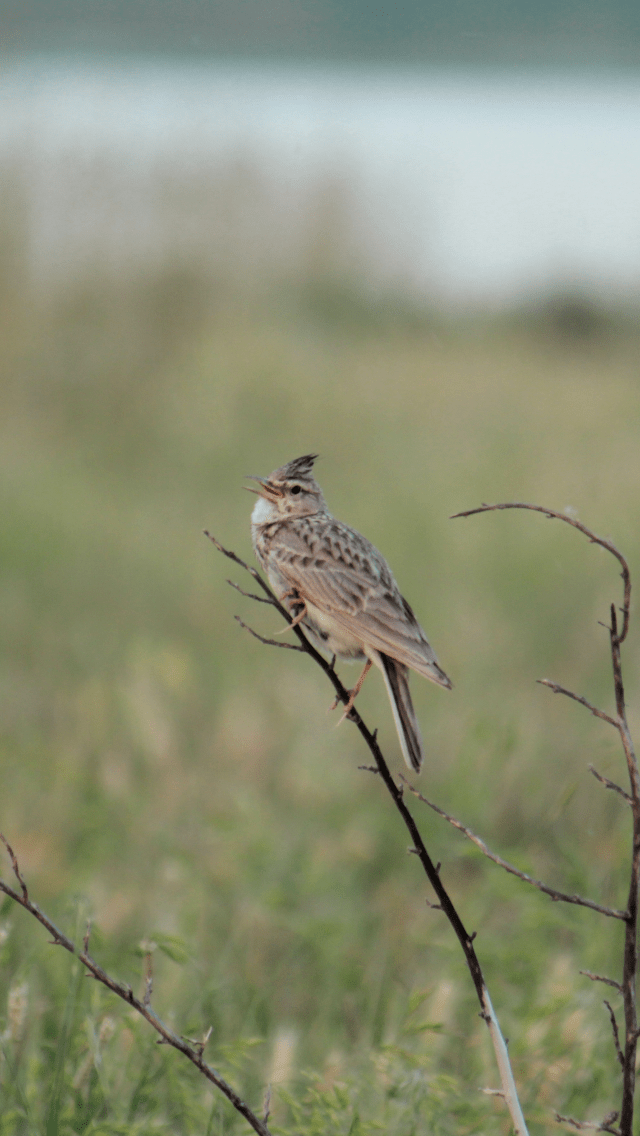
We have also seen some stunning bird life including bright blue rollers (thanks D&P!), hunting kestrals, huge eagles, nesting storks, swathes of swallows 

and this little lark who sat close, serenading us one evening. 
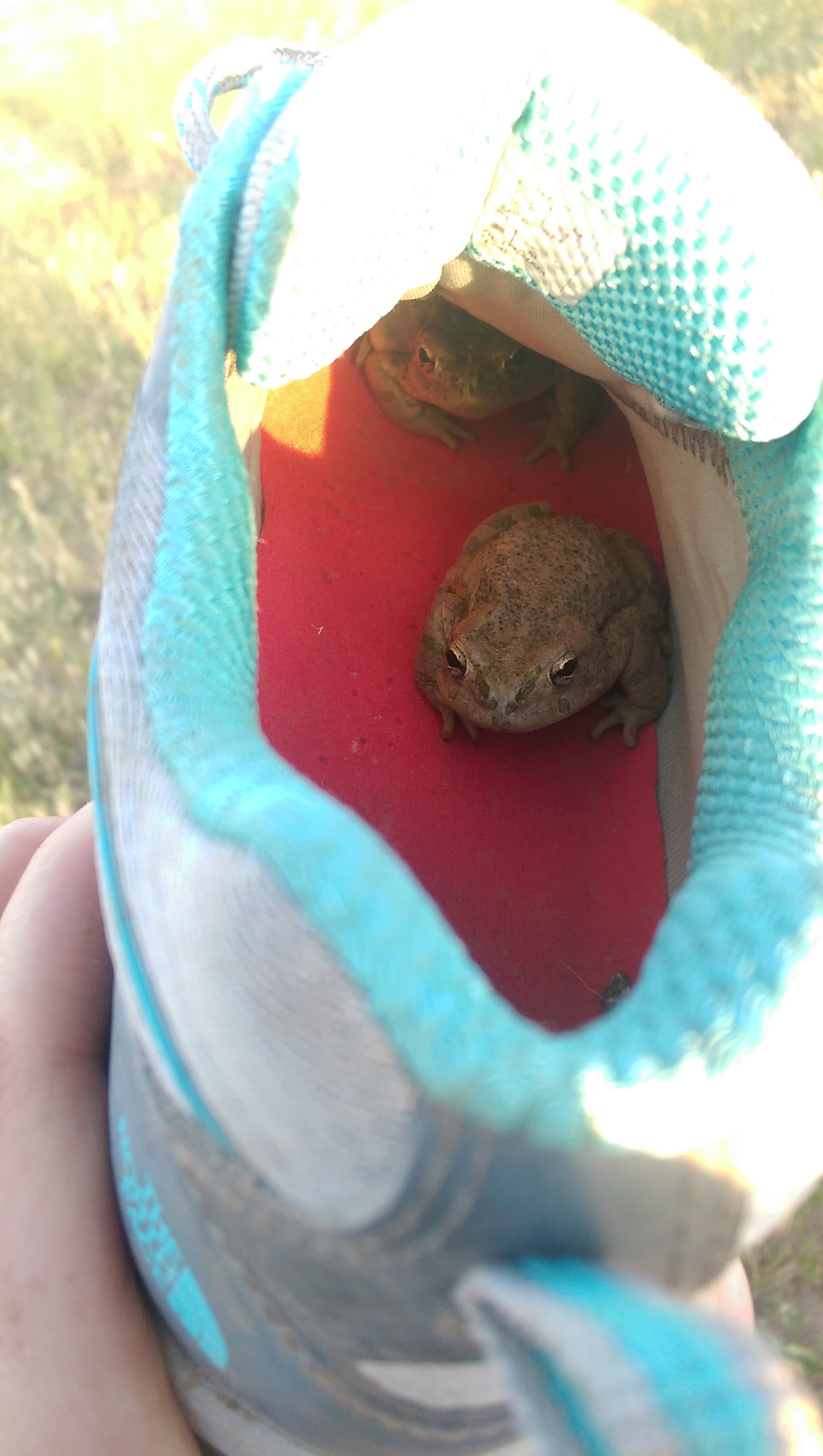
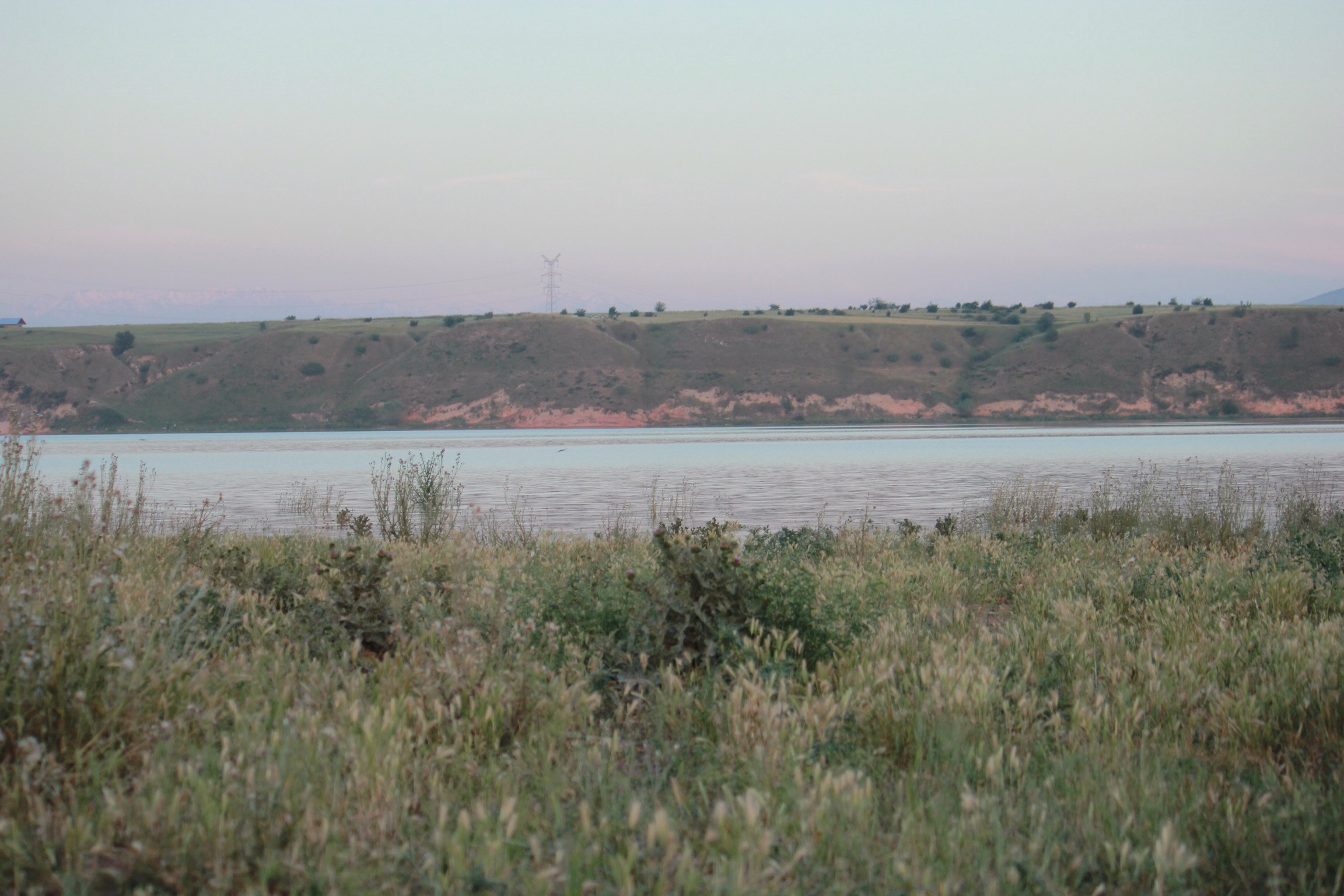
The vast lakes and clear streams have meant we’ve rarely had to buy water and we’ve enjoyed a shower and a sunbathe in the warm evening weather. One morning I wake to find these two toady subjects making their own camp in my shoe! I contemplate keeping them as bicycle pets while one of them permits me to hold him for a while before hopping away.
image

All in all its perfect camping weather!


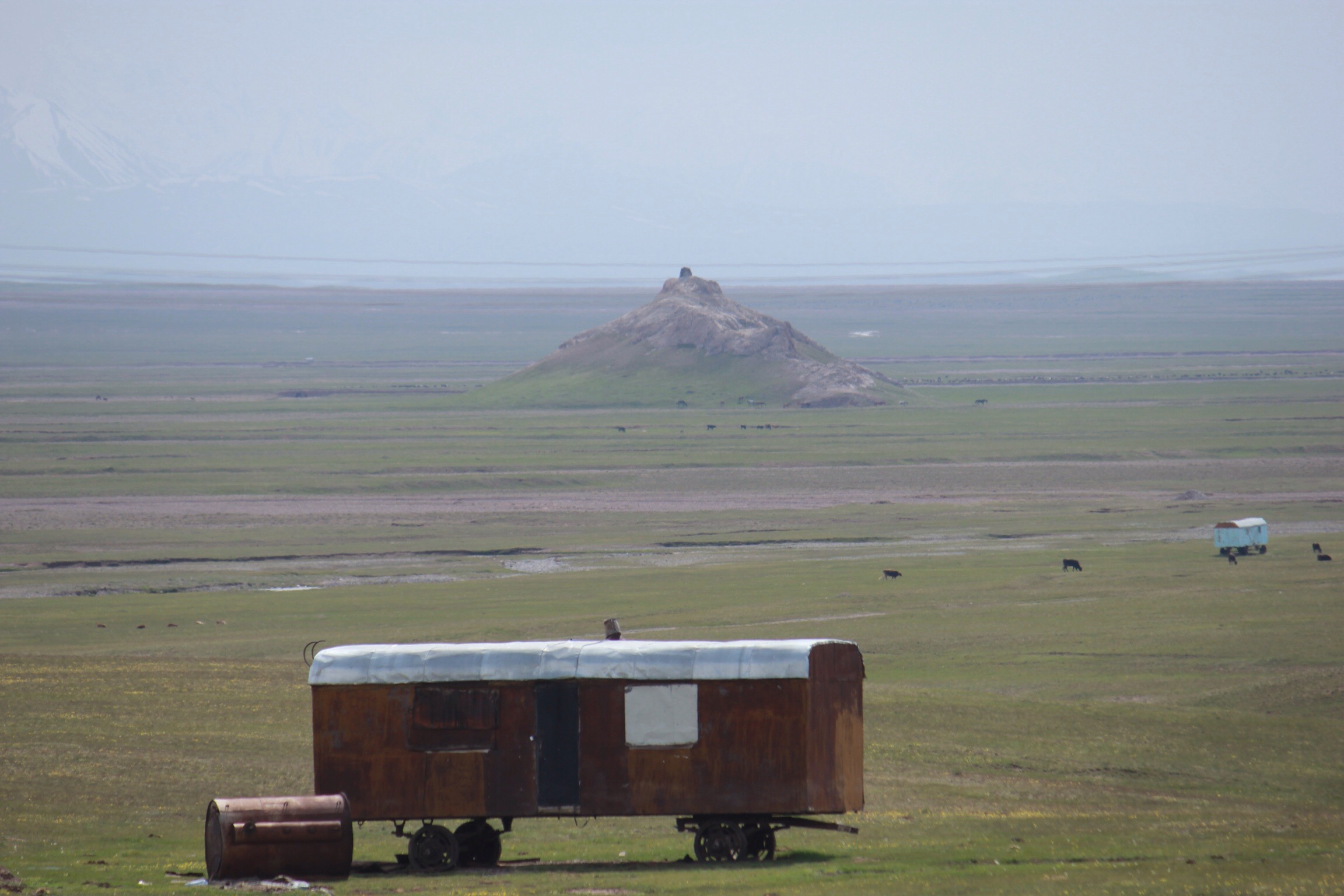
Onto this bucolic backdrop you pass collections of traditional yurts and caravans, momentous herds of cattle, groups of men harvesting hay by hand and children racing around on their pet donkeys. 
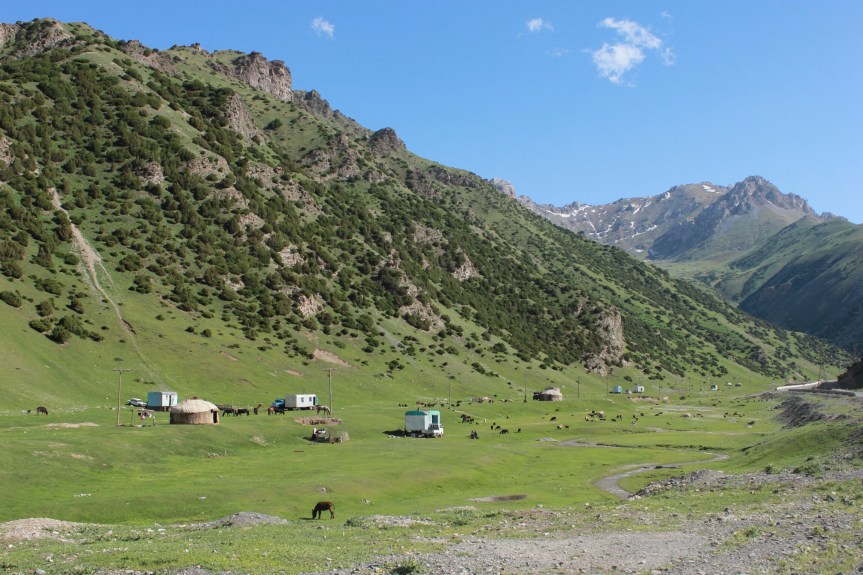


Having travelled to find new pastures for their herds, nomad families sit on large rugs in the shade of trees next to their open backed trucks which they will later unload. 

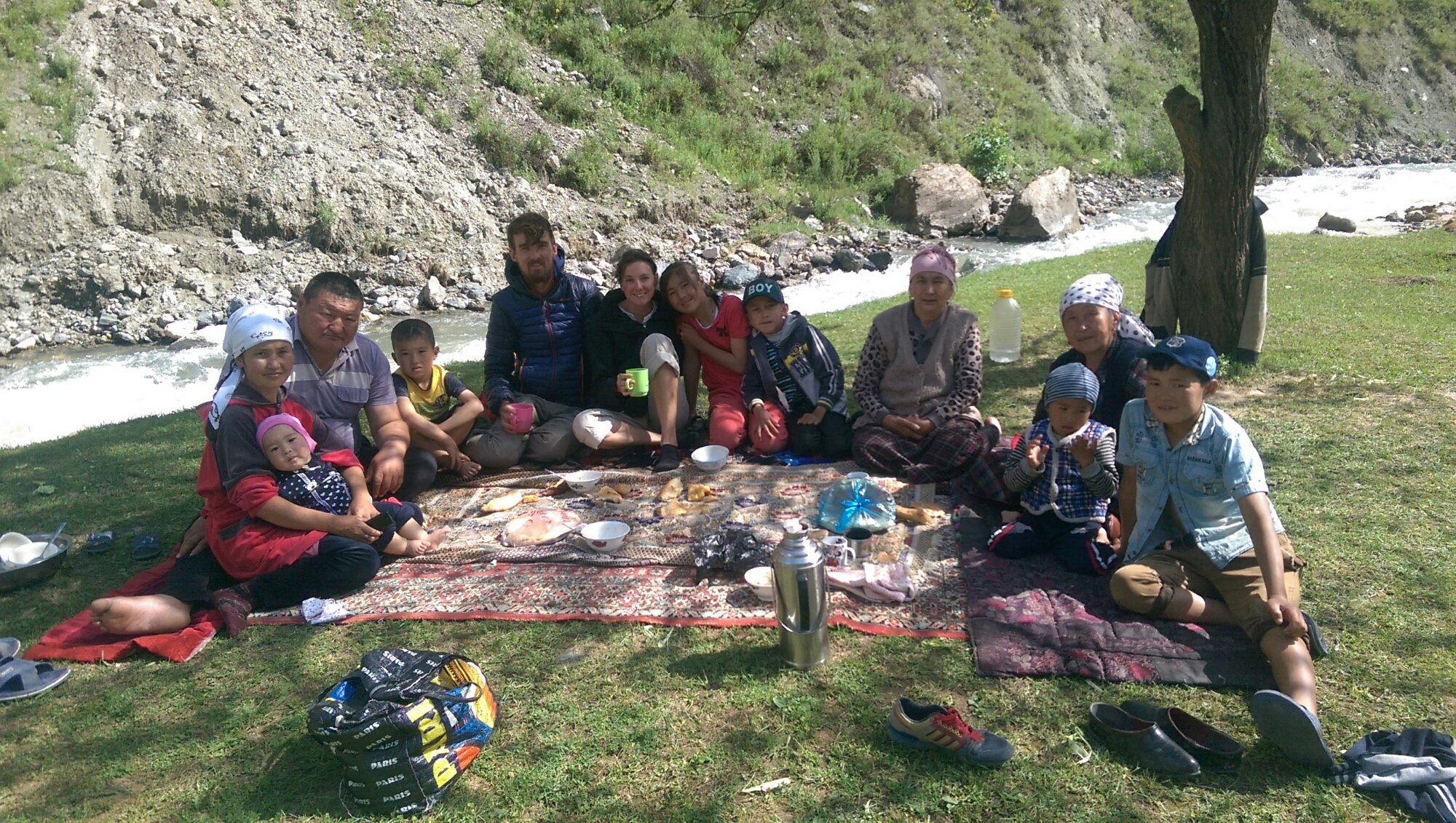
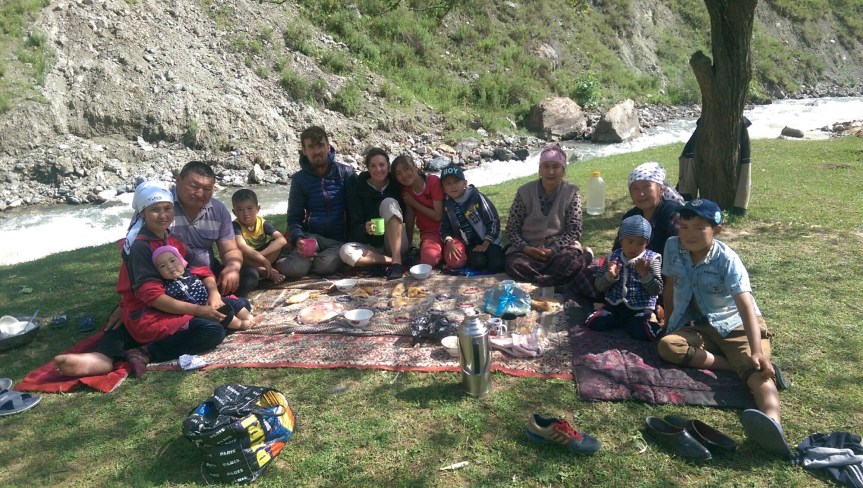
While stopping for our afternoon siesta (it’s too hot to cycle between 2-4.30) this travelling family of three generations invite us over for lentil soup and tea. 
image

Their old-school truck complete with sleeping grandmother in the back, excitable kids and practical mother figure reminded me of the Joad family in The Grapes of Wrath – the difference here of course is that they choose their travelling lifestyle.

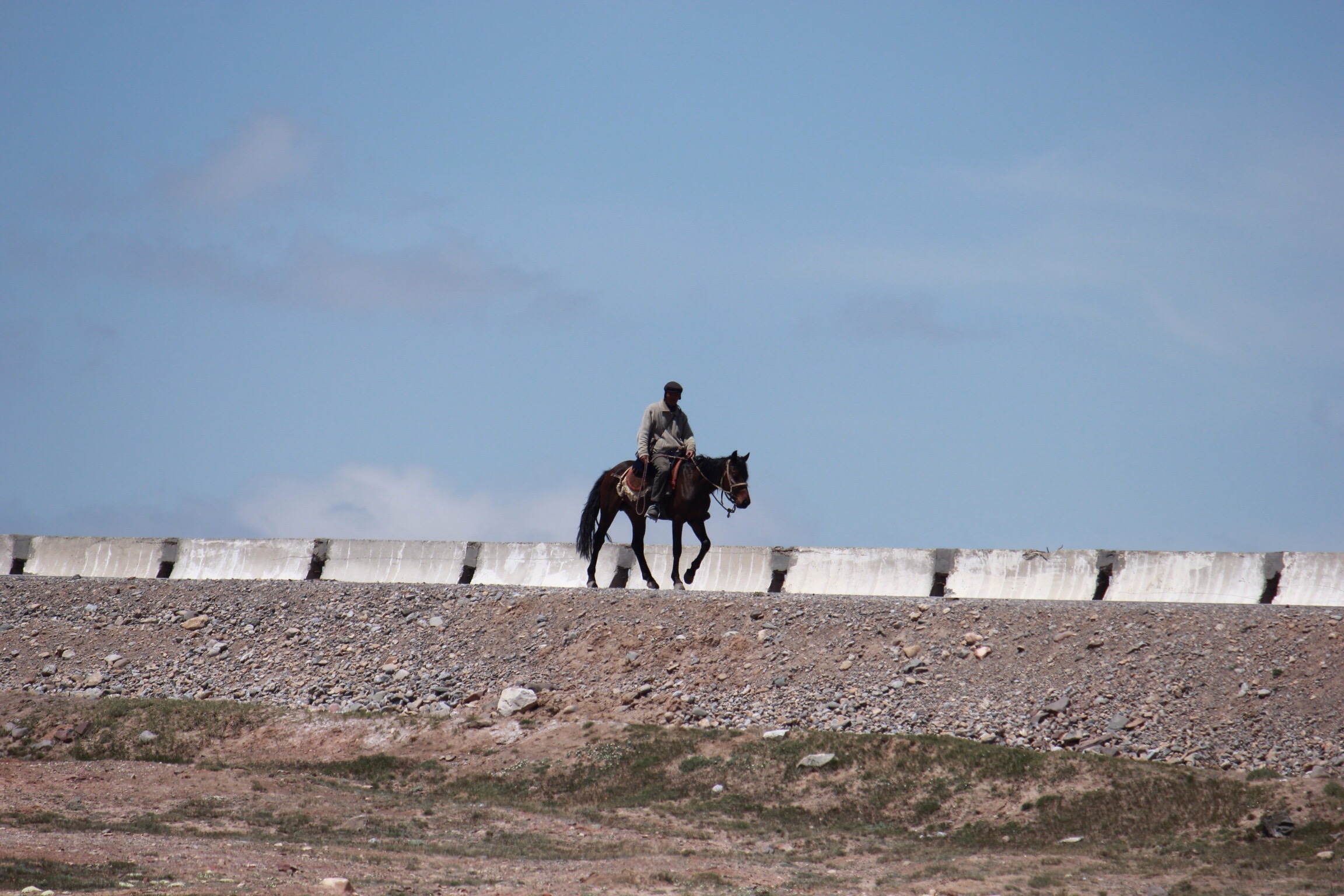
The most important lifeline for these people are of course their horses. The Kyrgyz people are reportedly the best horesemen in the world and they have been breeding and domesticating horses here for well over 4000 years. 

Kyrgyz horses are known for their speed and endurance and are also raised for their meat. They are big beasts averaging between 13.2-14.2 hands. 

It’s pretty magical seeing a huge herd of these beautiful creatures cantering across a field in front of you as you sit eating your breakfast. 
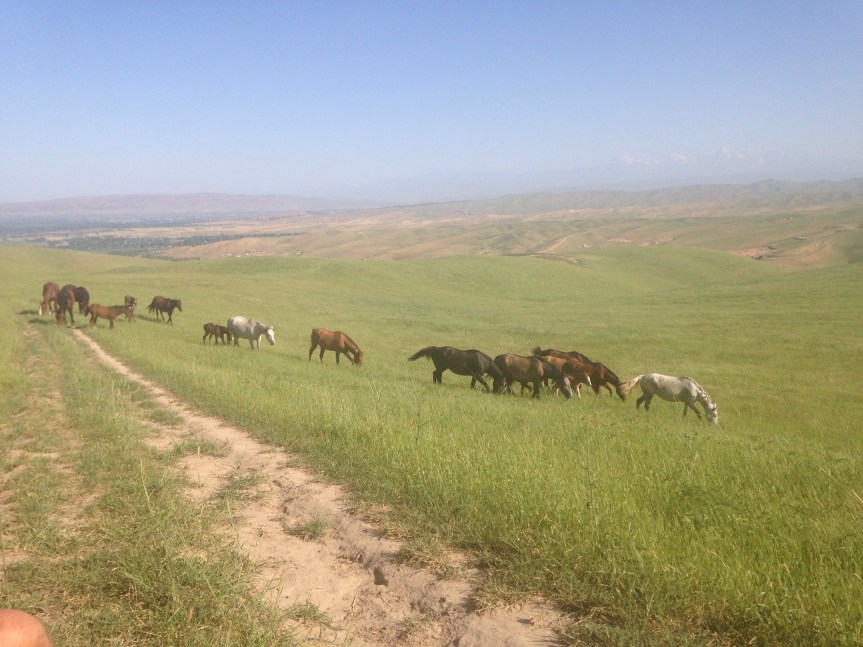
This happend so often, our cycle between the border and Osh began to feel like we were on some fantastical journey across the lands of Rohan in The Lord of the Rings

Being here in June has meant witnessing the start of the foaling season. Not only is it nice to see these bandy legged arrivals jumping about in the sunshine, it has also meant we have been able to witness the skilful talent that is mare milking. 
image

The people of Kyrgyzstan love drinking mare milk which they ferment to create a tangy, slightly alcoholic drink called Kumis. They also dry it into hard, Bon-Bon like sour snacks called kurut. Makeshift stalls are set up all along the road to sell both throughout the summer. 

We were given a 2L bottle of kumis by a friendly lady who was waiting for a bus. Put it this way, it is an acquired taste and I’m not a fan!!

image

Paddy drank quite a bit that evening but this was after the bottle had been sitting in the sun all day and he had a dodgy tummy the next morning.

So our first week in Kyrgysztan has been a pastoral paradise really!

The people in Kyrgyzstan are amazingly friendly and hospitable but they also respect your personal space and privacy. They are naturally interested in you but after coming to say hello, shaking your hand and asking where you are from they leave you to get sorted, calling their children away too so you are not gawped at while trying to change out of your sweaty cycling shorts or set up camp. 

This was a nice change from China, where the people are undoubtedly friendly and generous, but at times, a bit brazen! There was often a lot of staring, fiddling with the bike and routing through our bags without permission in China! You also get photographed A LOT in China (this really started to irritate Paddy after a while) but people here generally ask permission before they snap you which is a nice change. 

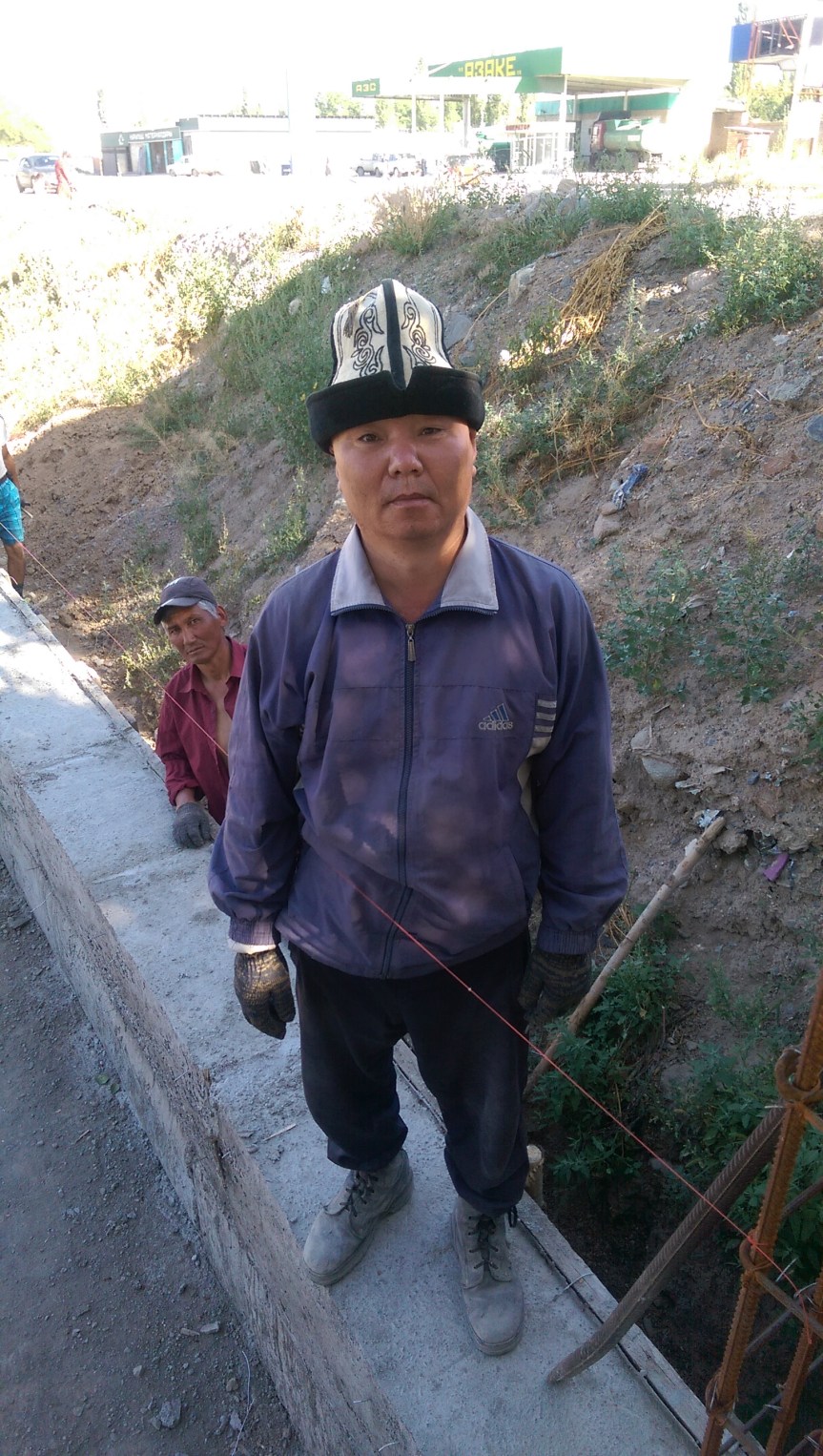
Many men still wear the traditional Kolpok tall woollen hat which is often decorated with black or brown embroidery. Even this builder was wearing one while laying a wall in the beating sun! 
image

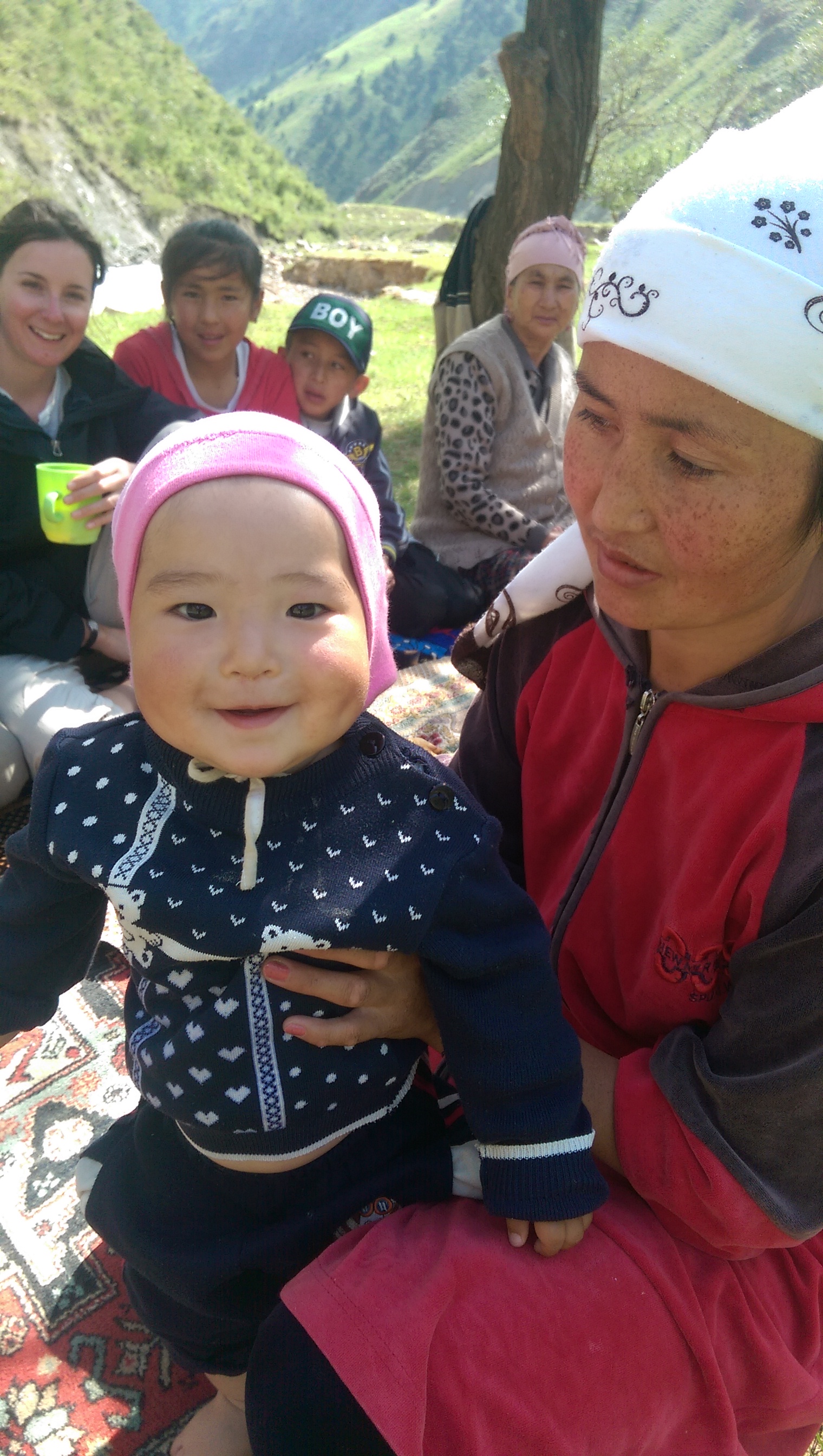
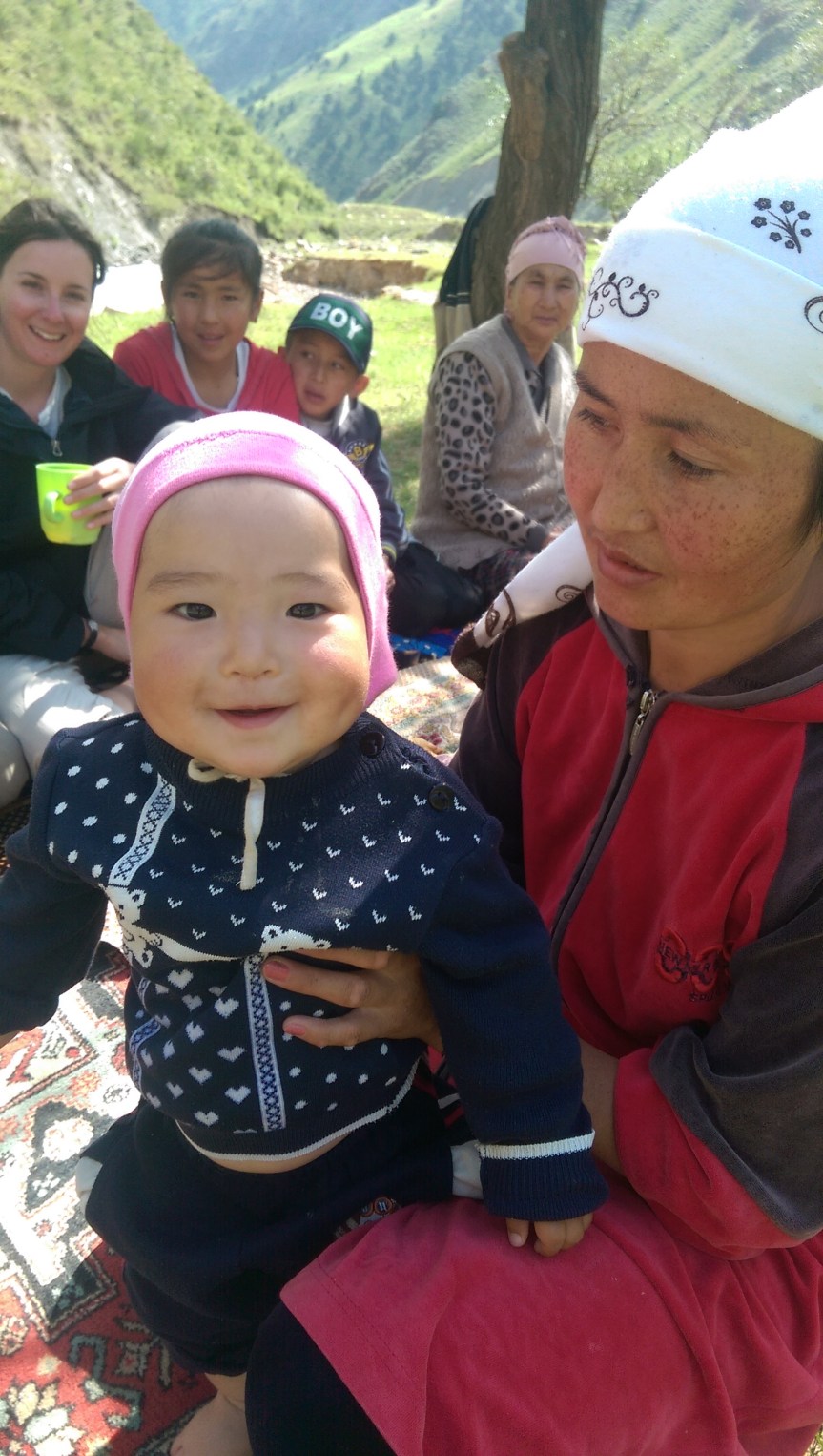
The women here are beautiful and (in the South in any case) wear tied head scarfs and love wearing elaborately embroidered clothes. It’s very common to see both sexes sporting a few gold teeth.
image

It took us 4 days to cycle to Osh. Here we will have a rest day before cycling north to Bishkek.

Meeting Paddy’s doppelgänger, a visit to the tallest natural arch in the world and a race across the desert – our final days in China!

Our visa extension for China ended on the 5th June so we planned to leave Kashgar on the 1st giving ourselves a very leisurely cycle to the border with a day or two to spare if we needed it for any reason.

Unfortunately, we had both failed to notice that the 5th was actually a Sunday, and the Irkeshtam border is closed on weekends. Luckily we realised on the eve of leaving following a conversation with Michaelangelo, our Spanish friend. Unlike some other countries, there are heavy fines for overstaying in China so this was not an option. 

We were also told that we probably wouldn’t be able to cycle the full distance to the border as China (for some random, unknown reason) built their checkpoint 180km from the actual border line, and they make all travellers take a taxi to the Kyrgyzstan checkpoint. 

All this meant that instead of having five days to reach the border we now only had two, leaving a day to get through customs, find a taxi who would carry the tandem, and cross the border before the weekend. All still doable but it wouldn’t be as leisurely as we’d hoped.

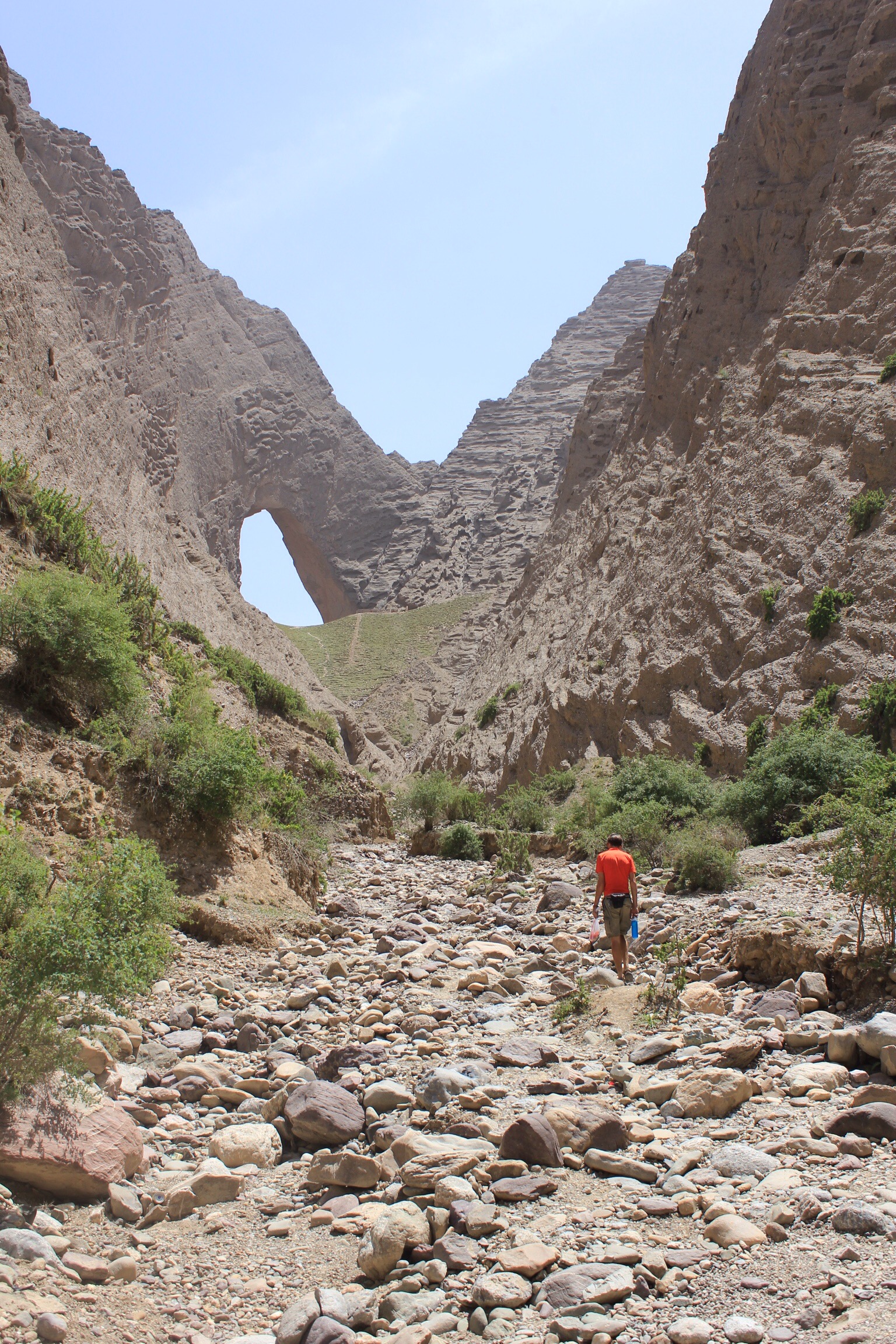
We were well stocked up for our cycle through the desert and we still hoped we’d have time to make an afternoon detour up to Shipton’s Arch – reportedly the highest natural arch in the world according to National Geographic who rediscovered its whereabouts in 2007.

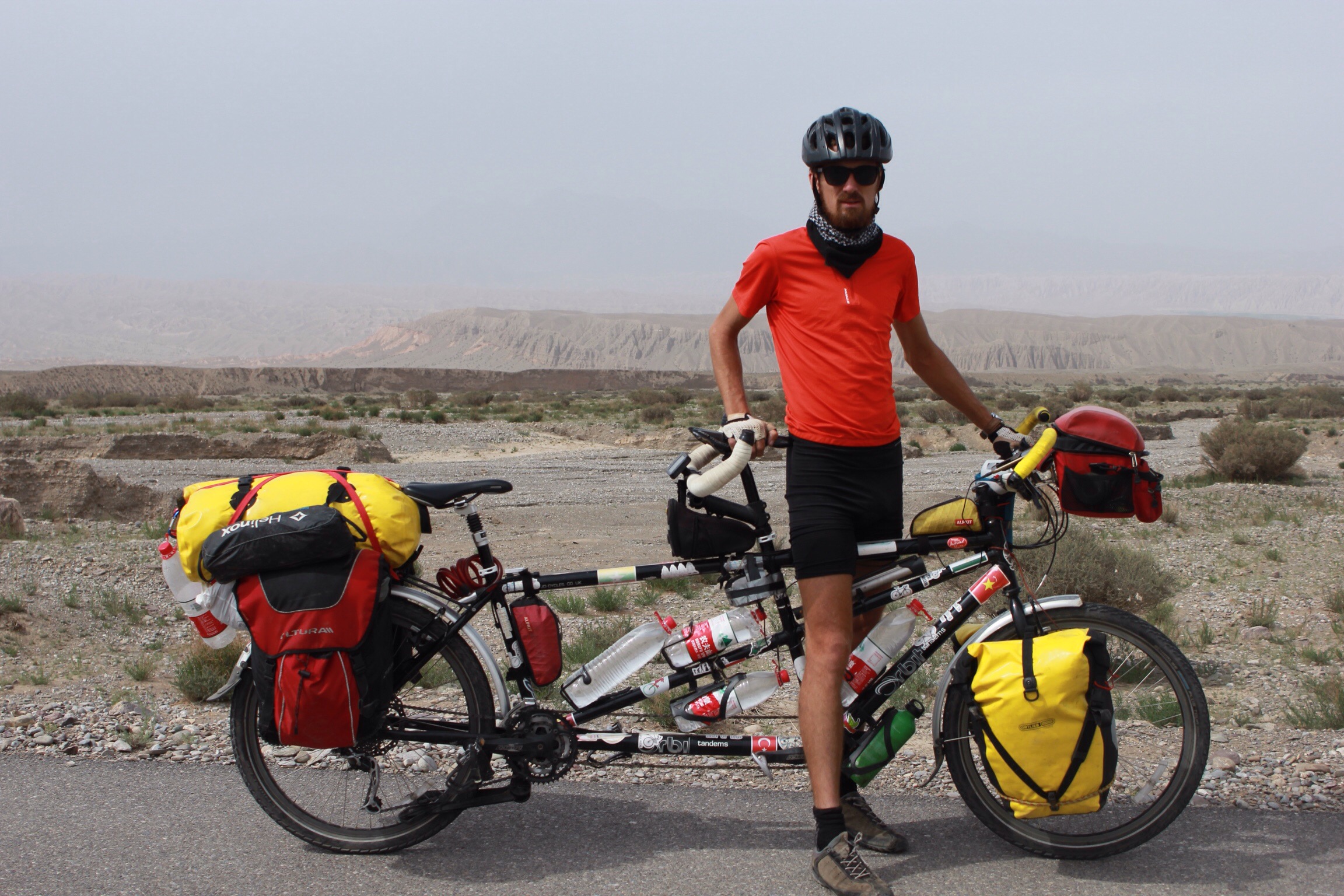
So we set off through the hot barren landscape and on the afternoon of the first day we meet Stephen cycling the other way. Stephen is also from Dublin and I could tell that both him and Paddy we’re delighted at meeting a fellow countryman. 

Stephen is the first Irish cyclist we have met and him and Paddy looked pretty identical. Weirdly identical actually….
image

Having met Paddy’s doppelgänger we keep going and set up camp in a village off the road. A nice family lets us camp in their garden.

The strangest thing about this part of the world is the time zone. All of China officially sets its clocks to Beijing time, but as you might have gathered already, China is a big country and Kashgar is actually 2 hours behind Beijing in real time. 

Paddy and I were still on Beijing time when we disembarked the train in Kashgar and it was rather weird experiencing a sunset at 10:30pm.! 

Kashgar and the surrounding area works on two time zones – government buildings such as banks and the post office work on Beijing time, but local businesses tend to keep to local time. All this can be rather confusing and its important for travellers to clarify which time they mean when booking stuff! 

During our ride through the desert Paddy and I kept our body clocks working on Beijing time – this worked well for our final few days cycle as it meant we were packing up the tent and jumping on the bike at 9am but in terms of daylight it was really 7am. This was perfect for the desert conditions as it meant we could afford a siesta during the hottest part of the day and carry on cycling until late into the evening.

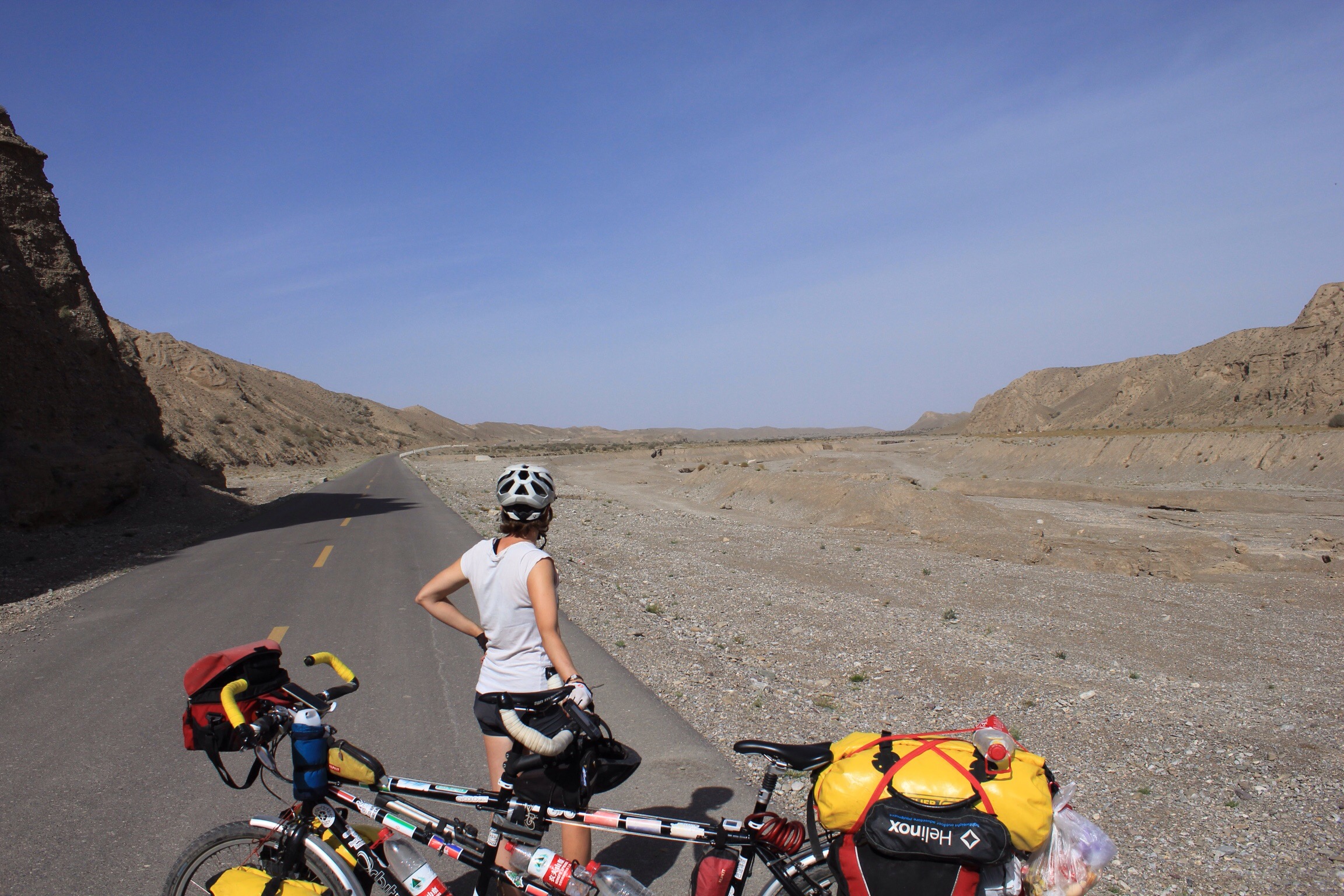
The desert has a kind of beauty to it, nothing like the sweeping sand dunes of the Sahara we have both visited in Morocco, but there were still camels… We are on the famous old Silk Road after all! 

This landscape is much rockier with some impressive mountain ranges and the odd green oasis every 20 kilometres.

Despite the heat we make good progress and do have time to take a detour up towards Shipton’s Arch. It’s a pretty tough 3 hour cycle in the heat with no shade but we’ve filled up on lots of water from a tap in the last town which Paddy sterilises using his new toy – our new UV pen. This, along with our gravity water filter, should mean we shouldn’t need to buy bottled water ever again!

The arch is another 35 minute walk from the road and involves a pretty spectacular trek through this dry gorge and up some rickety metal steps. 

When you first catch sight of it you find yourself slightly disappointed because it doesn’t look as tall as you’d expect. 

Once up the final set of steps though you realise it arches over a very deep valley which drops directly down on the other side. We spend a fun 10 minutes dropping large stones into the gorge and listening to the echo as they tumble down to the bottom. It’s pretty cool and we contemplate how on earth it’s been formed…. Lindsay Sheen might be able to offer some insights here… 

Pictures really don’t do it justice…

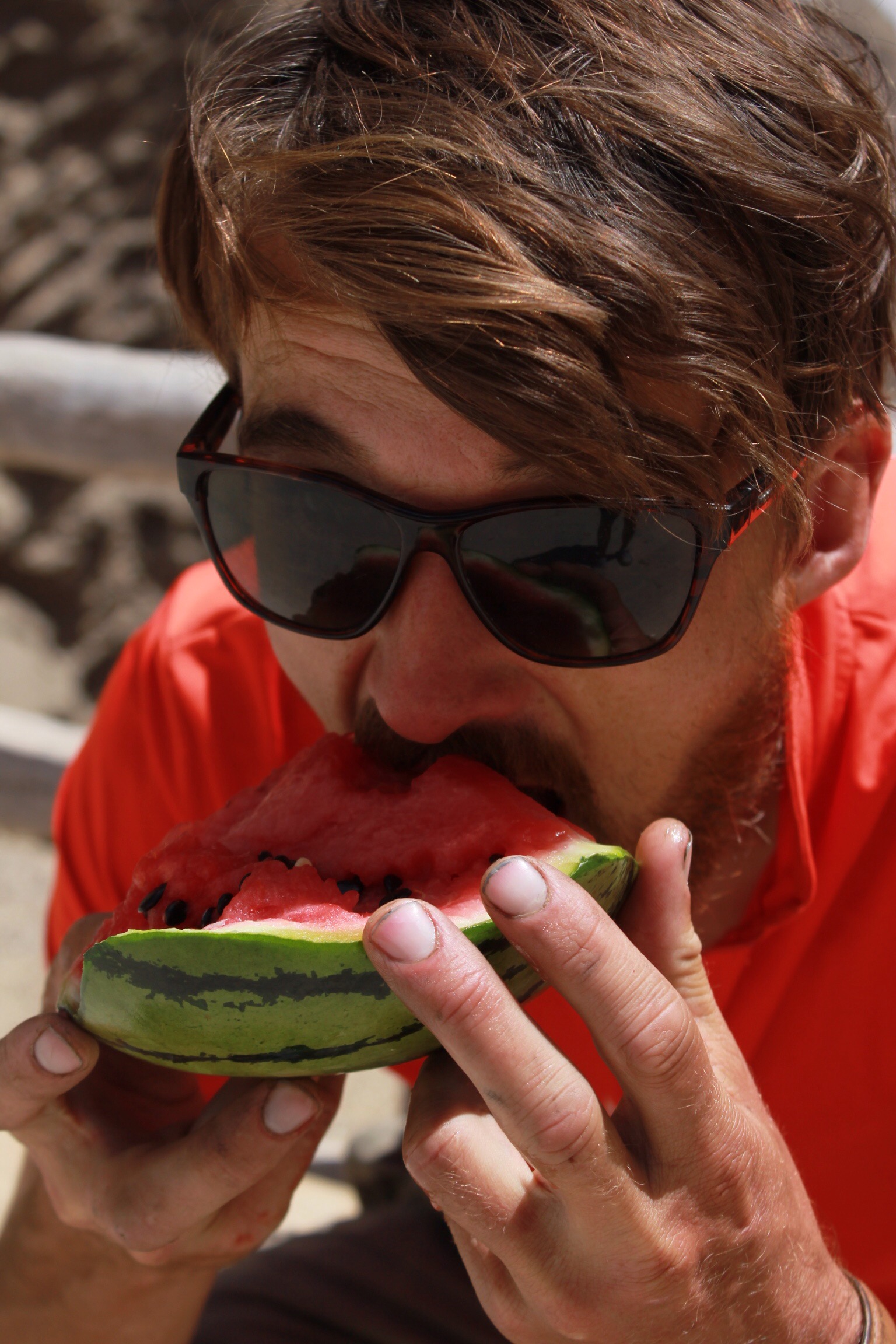
Here is Paddy scoffing his face on a refreshing watermelon at the top. Kashgar is famous for its delicious harvest of melons at this time of year.

The ride back down to the road is very quick and great fun. 


We camp with the sun setting behind some impressive mountains with a view across this eerie barren landscape. 

The next day we completed the 30km to the border town of Ulugqat where we spend an age trying to find the market so we can stock up on food before crossing the border. (For future reference it’s located in an underground car park a few blocks down from the main Central Park.)

It’s 12:30 by the time we reach the border control building which is really poorly signposted. We try our luck with the guards regarding cycling the remainder of the way to the border but they insist that we have to take a taxi. We ask why we can’t cycle but all they can tell us is that it’s the rules. 

We’re shocked when the taxi driver tells us it’ll be 400Y to take us and the bike (drivers always try to charge more when they see the tandem!). We plead with the border guard, explaining that this is a real expense for us and he manages to negotiate a 100Y ‘discount’ for us.

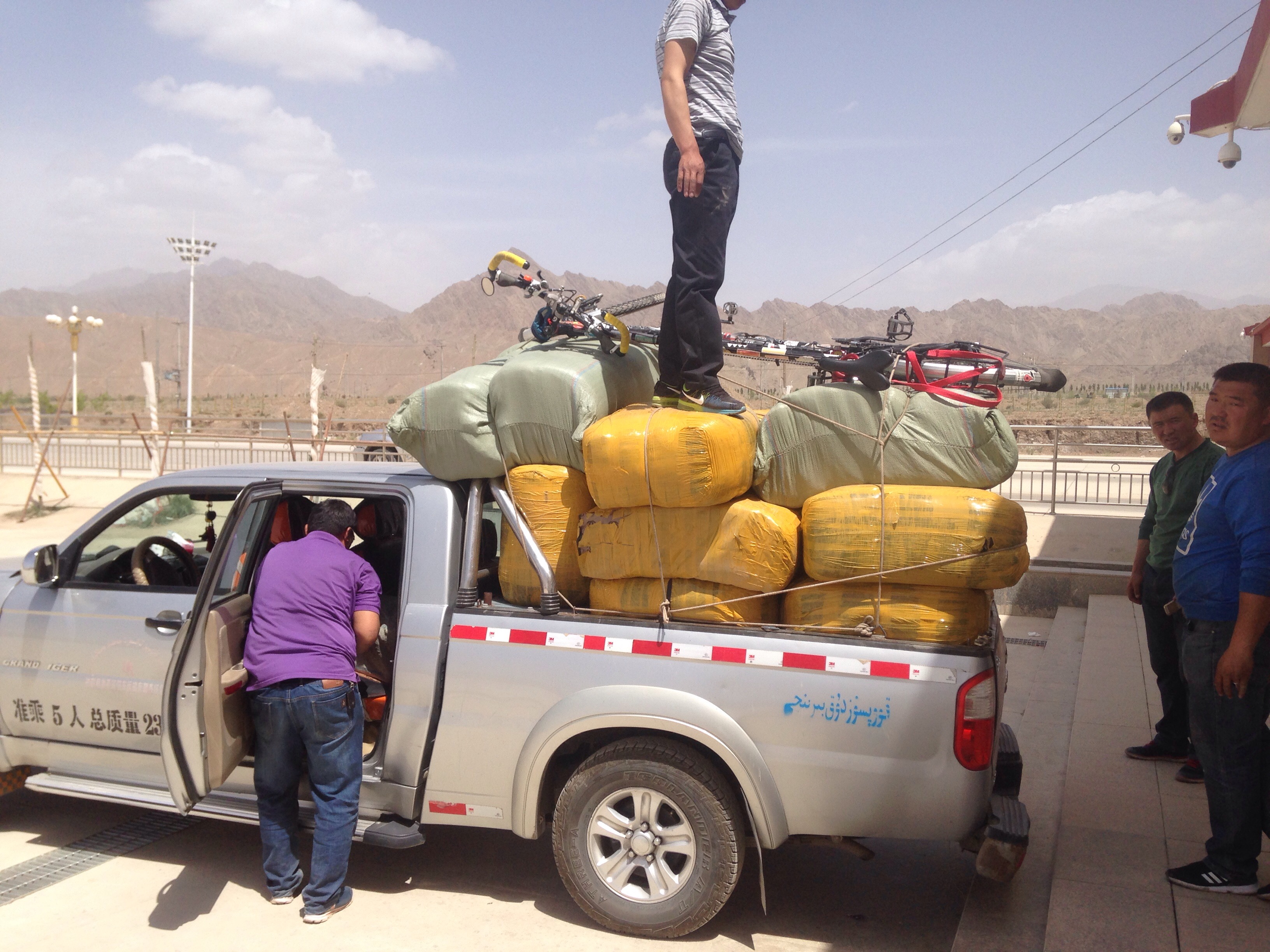
Without any other option we load the bike on top of a big stack of suitcases. When I ask what’s in the suitcases the driver tells me they are Gucci hats!


As we sit in the truck on our way to the border the only pragmatic reasoning I can put to this strange border set up is the 2 hour time zone difference. Naturally the border authorities want you to enter and exit the country the same day and near the same time you receive your exit/entry stamp. There is a two hour time difference between the two borders and it’s about a two hour drive… So if you exit China at 2pm and then drive to the Kyrgyz side, by the time you get there you will be stamped in at 2pm. 

I suspect that this is just me trying to assign some logic to something that just isn’t logical however… There’s a lot of stuff about China that isn’t logical and we’ve learnt to accept (and to an extent love) the randomness of this crazy country. 

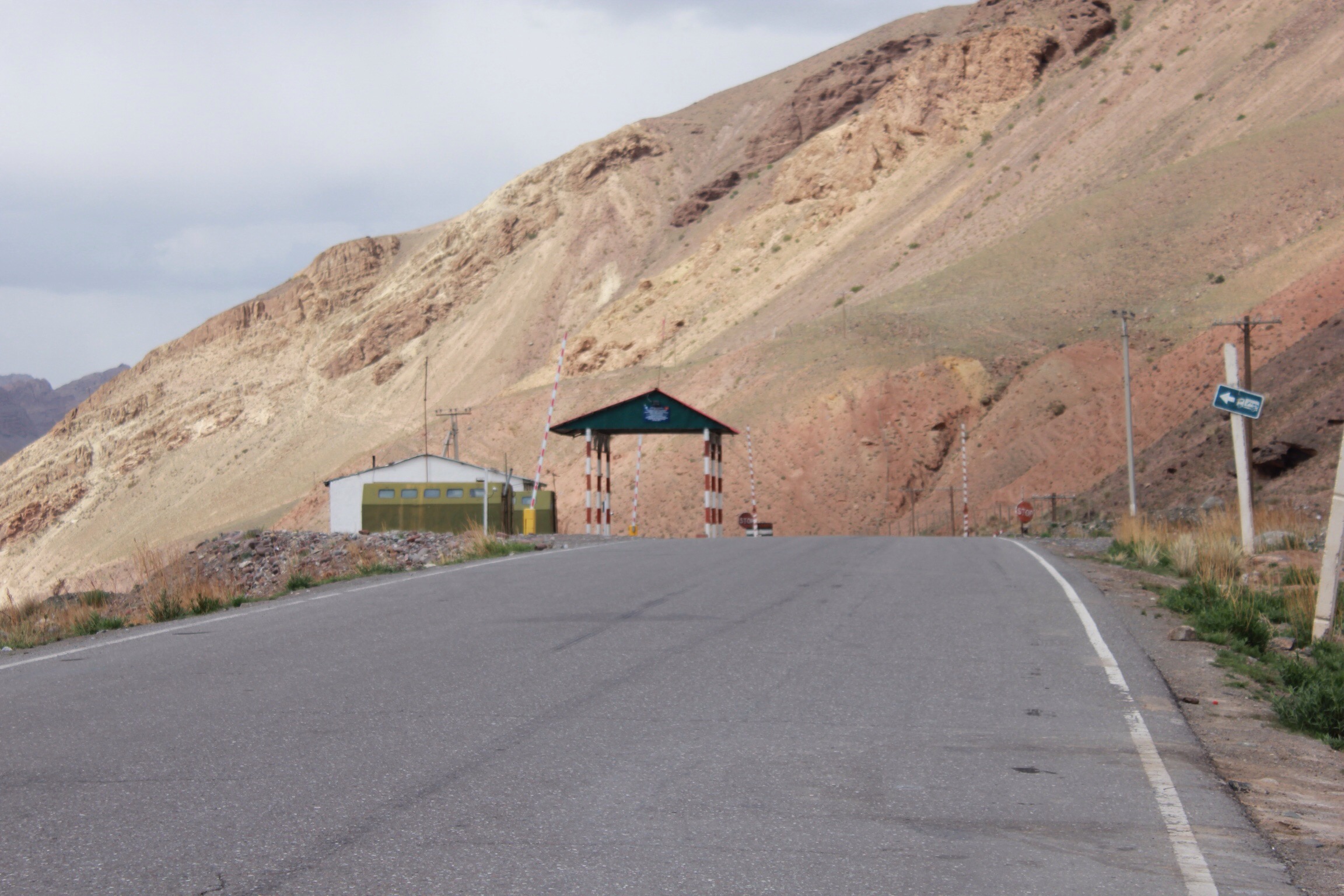
The Kyrgyzstan side couldn’t be more different to the Chinese side. We’re greeted by a VERY friendly guard sitting in a tiny wooden hut next to the roadside. 


‘Welcome to Kyrgyzstan!’ He cries.

‘Please cycle down the road and report to the border control to receive your stamps.’ 

At the border control the guards make a joke at our different nationalities and our two country’s history. 

‘A girl from United Kingdom and a boy from Ireland, together, on a bicycle?! How can this be!?’ He says, while winking at us. 

We receive our stamps with no trouble and we cycle on down to start a new journey in country number 6. We have a pretty good feeling about this one already! 

Time to explore the land of the great horsemen. Our Central Asian adventure awaits!