An Insight into Chinese Family Life

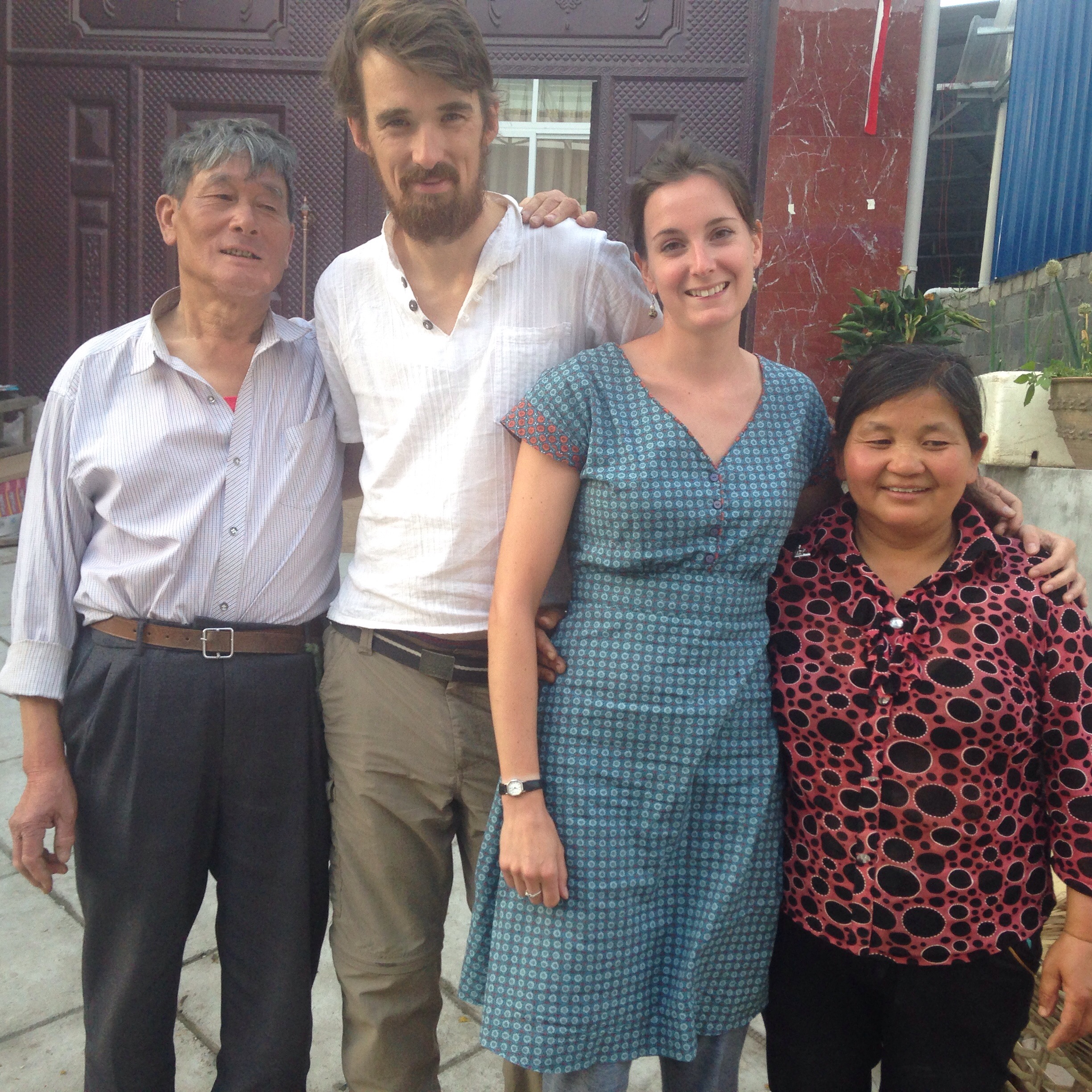
Our plan was to only stay in Zhen’an one night and continue on our way down towards the Nu Jiang River. That was until we met Huang Wen Sheng (translating to: yellow, culture, strong) and got invited to spend the weekend with him and his extended family.

We met Huang after attempting to get a Chinese SIM card in the local phone shop. The woman who owned the shop couldn’t speak any English so she phoned her little brother – Huang – and he very kindly came over to help us.

Huang’s English is very very good and after an hour of chatting and sharing tea and beers he told us he would like to invite us to stay with him in his house and to meet his family. 

They were spending the weekend altogether along with friends in a kind of special memorial commemoration to the family’s relatives who were no longer with them on earth. There would be lots of eating and drinking and a visit to the family grave up on the mountain.

We were touched by Huang’s offer and keen to meet his friends and family and gain an insight into Chinese family life. We promised to be at his house for 8.30am the next morning.

Huang grew up in Zhen’an but studied computing in Kunming where he met his lovely wife who is originally from a town near Beijing. After they got married and had their first daughter the couple moved back to Zhen’an where Huang built a house for his new family and his parents. They have all lived together in this new house for about ten months.
image

Huang told us that he always loved English in school but we were the first foreigners he’d ever seen in Zhen’an and that he was very glad to practise the language again.

Not long after we had arrived, more of Huang’s extended family and friends arrive too (most of them live in Zhen’an too). 

We all eat breakfast together (about 25 of us). Served up is a custard like soup called Dou Fen which is made from a kind of pea. 
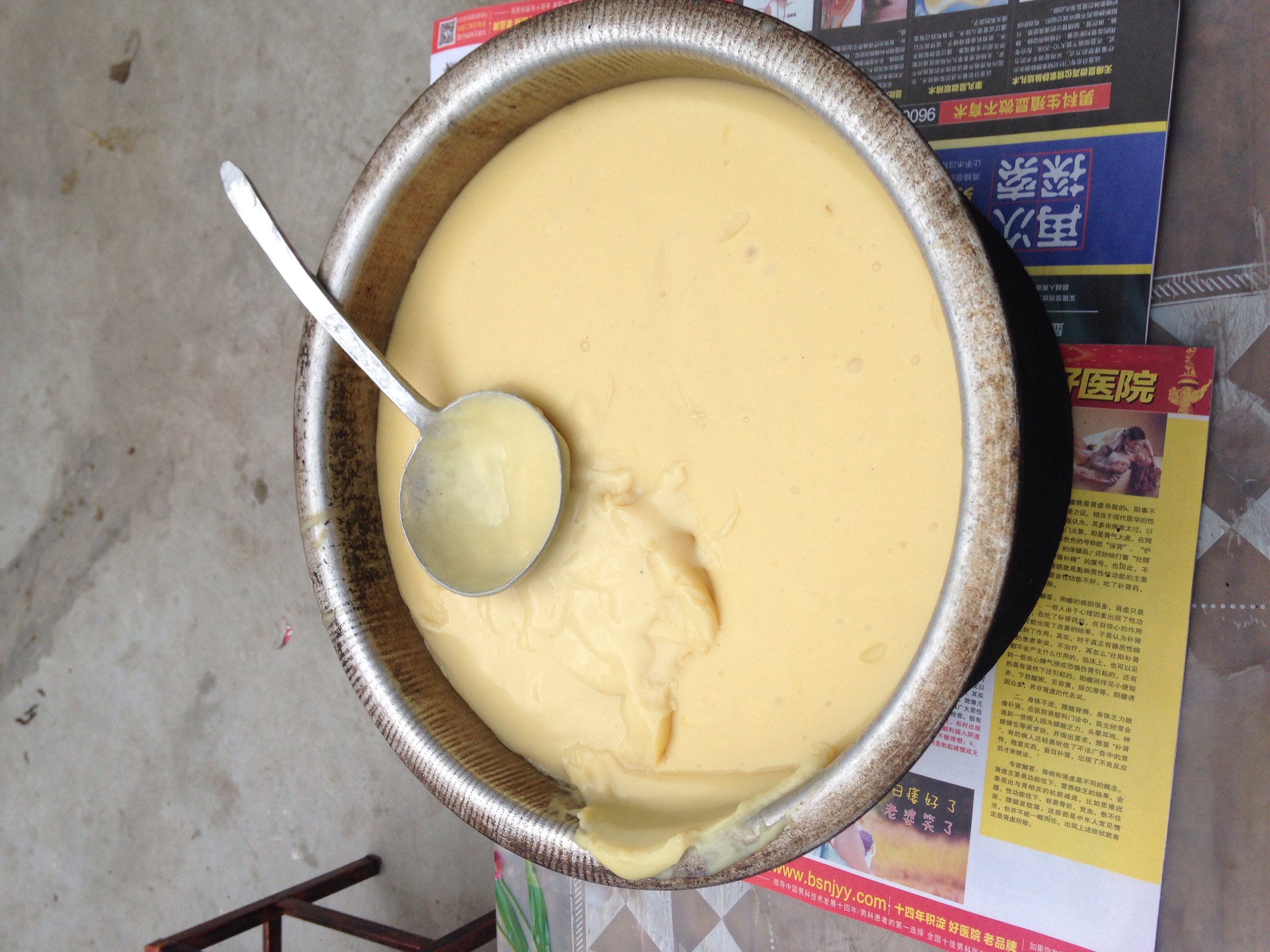
   
This is mixed with rice noodles and a number of different condiments which the eater adds themselves according to their taste – chilli, a delicious peanut and sesame seed mix, dill, spring onion and salt.

After breakfast a party of us jump in the car and drive up the mountain overlooking the town. We park and then walk 7mins through the woods up to the family grave. 
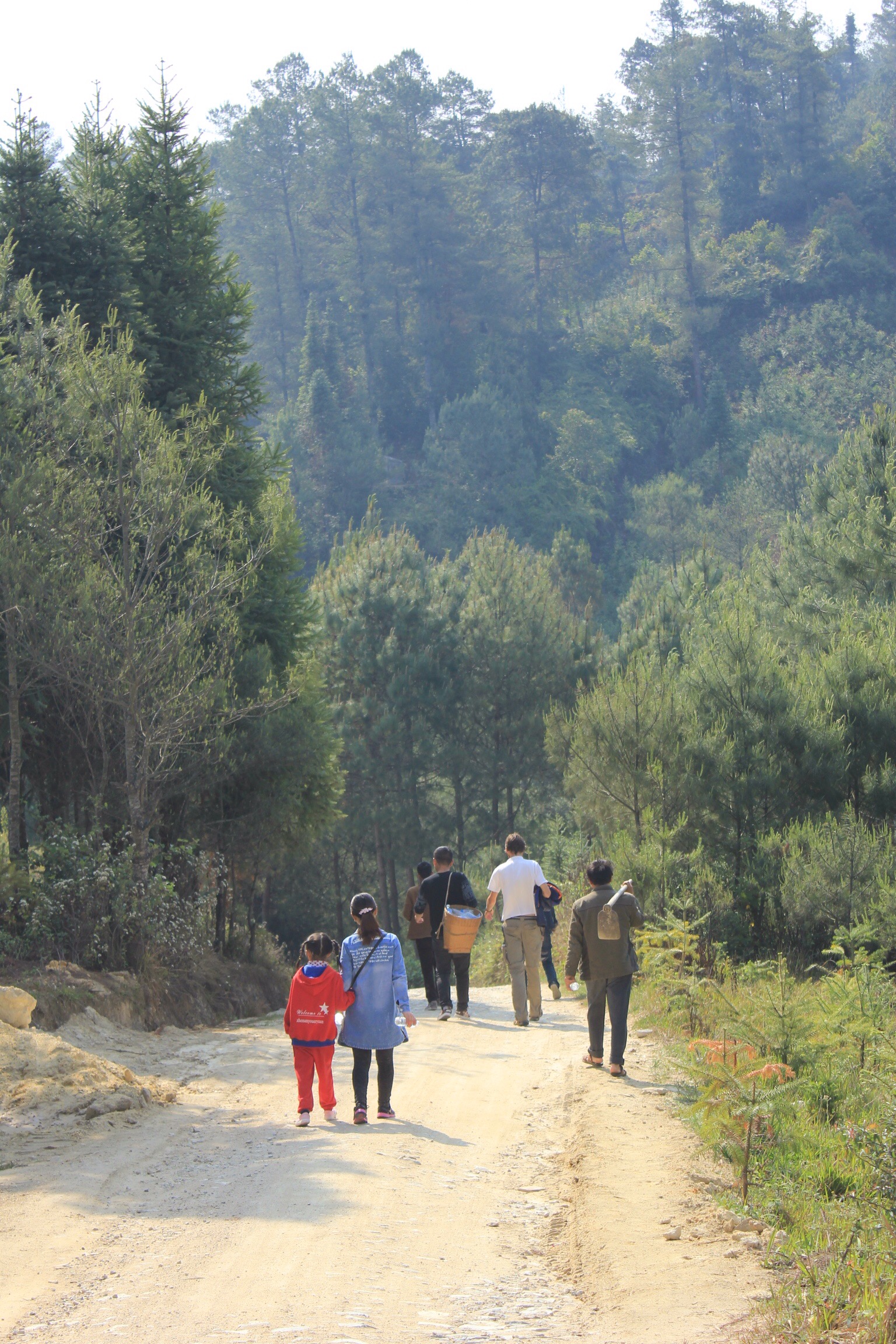
  The views are beautiful and over the valley we can see other graves peppering the mountain side. 

The family grave is quite a big one, a large stone tomb made of grey stone, decorated with carvings of scenes from old Chinese fables and the 12 animals of the different Chinese new year. Birds, dragons, horses and a large yinyang symbol decorate the front.

We clear the encroaching weeds and long grass from the tomb and then each family member lights some incense and kowtows to the grave. We also light a small fire to offer our thanks to the mountain spirit who looks after the area. Huang explains that this commemoration takes place every year. Every Chinese family will choose a weekend to hold their commemoration within a 20 day period in April. We were very lucky that Huang’s family had chosen to hold theirs the weekend we were passing through Zhen’an.

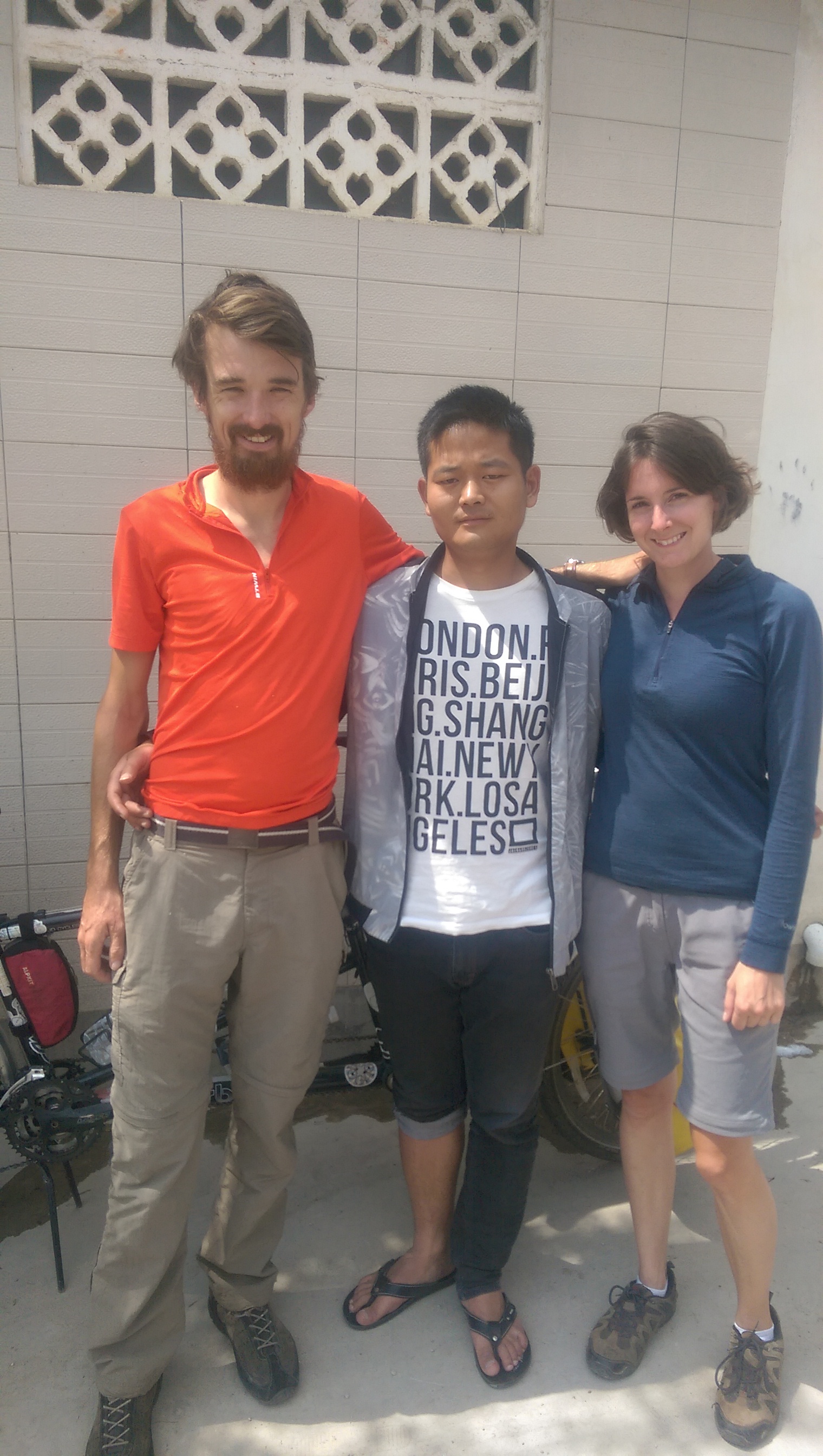
After this ritual we make our way back to the house. Friendship and family ties are obviously very strong. Everyone lives close by so it’s easy to get together for special occasions like this. Huang has a strong network around him and we instantly feel part of this network. Everyone is so welcoming and the children are encouraged to call us aunty and uncle right from the first meeting.

Huang explains that life is very much centred around the family. He shows us the red plaques on his lounge wall which detail his complex ancestry. 

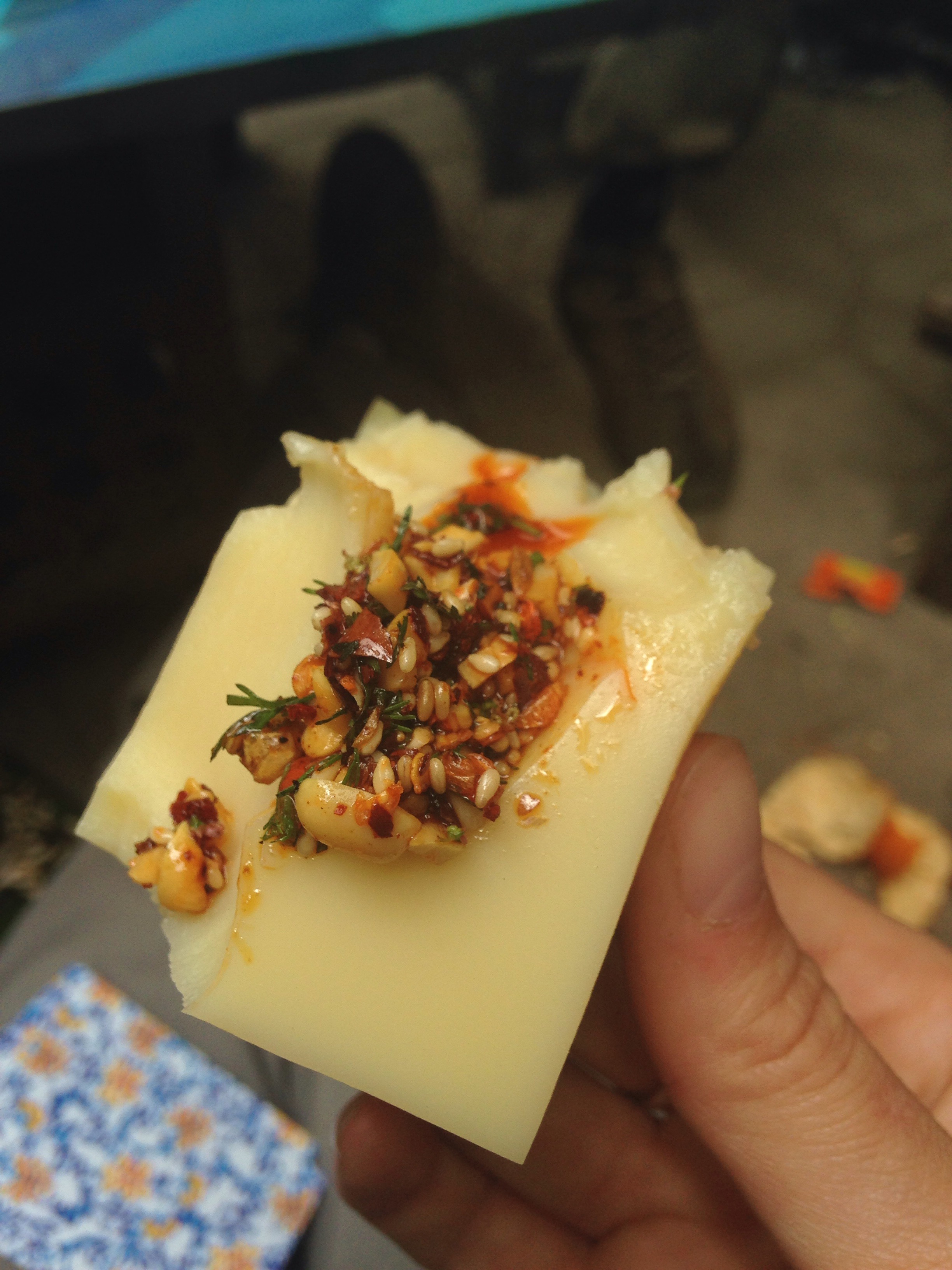
Lunch is served and the custard Dou Fen has set into a solid jelly like block. It gets cut up into chunks and mixed with chilly and peanut oil in a bowl. Some people simply hack a big chunk off and plonk the sauce on top. Dou Fen is really popular in Yunnan, it’s like the staple food here.
  
After lunch the cooking activity continues as dinner is prepared in the big covered courtyard. Huang and his friends invite us to sit down to a drinking card game and the beers are brought out. I’m allowed to take it slow but Paddy has to put his best Irish drinking hat on.

A delicious bowl of homemade sausage and cured ham is presented. It goes very well with the beer. We finish one game and then the rice wine comes out…
A constant stream of snacks is brought to the table. 

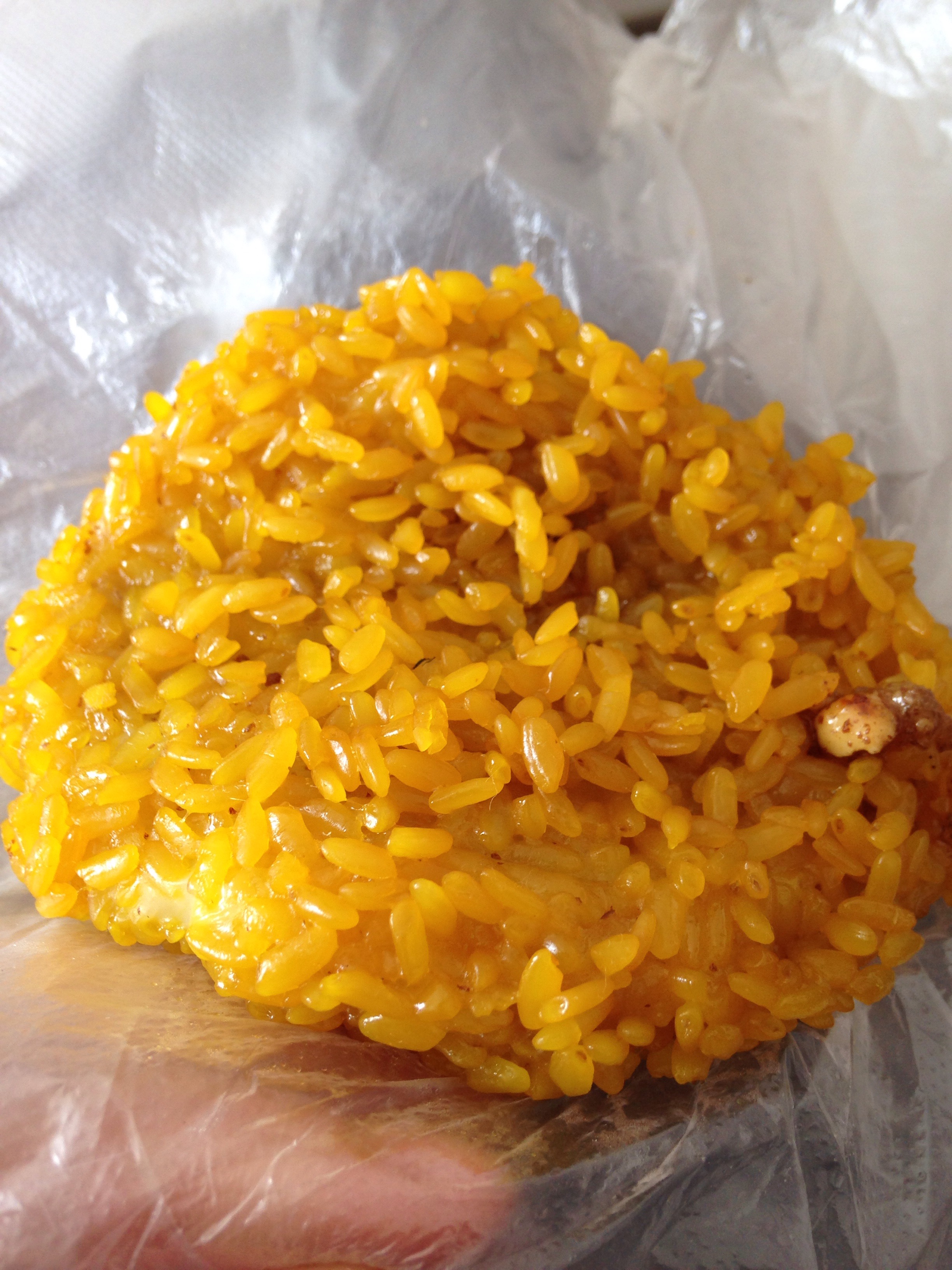
Sweets, nuts, dried plums and hot packets of Ba Ba – yellow rice doh filled with a sugary peanut sauce.
  
We relax on the big sofas for a while after the card games and the atmosphere reminds me of Christmas Day back home!

Huang’s niece teaches me some Chinese words while Paddy attempts to call a travel agent in Iran. 

At around 5pm dinner is ready and it really is a FEAST. 
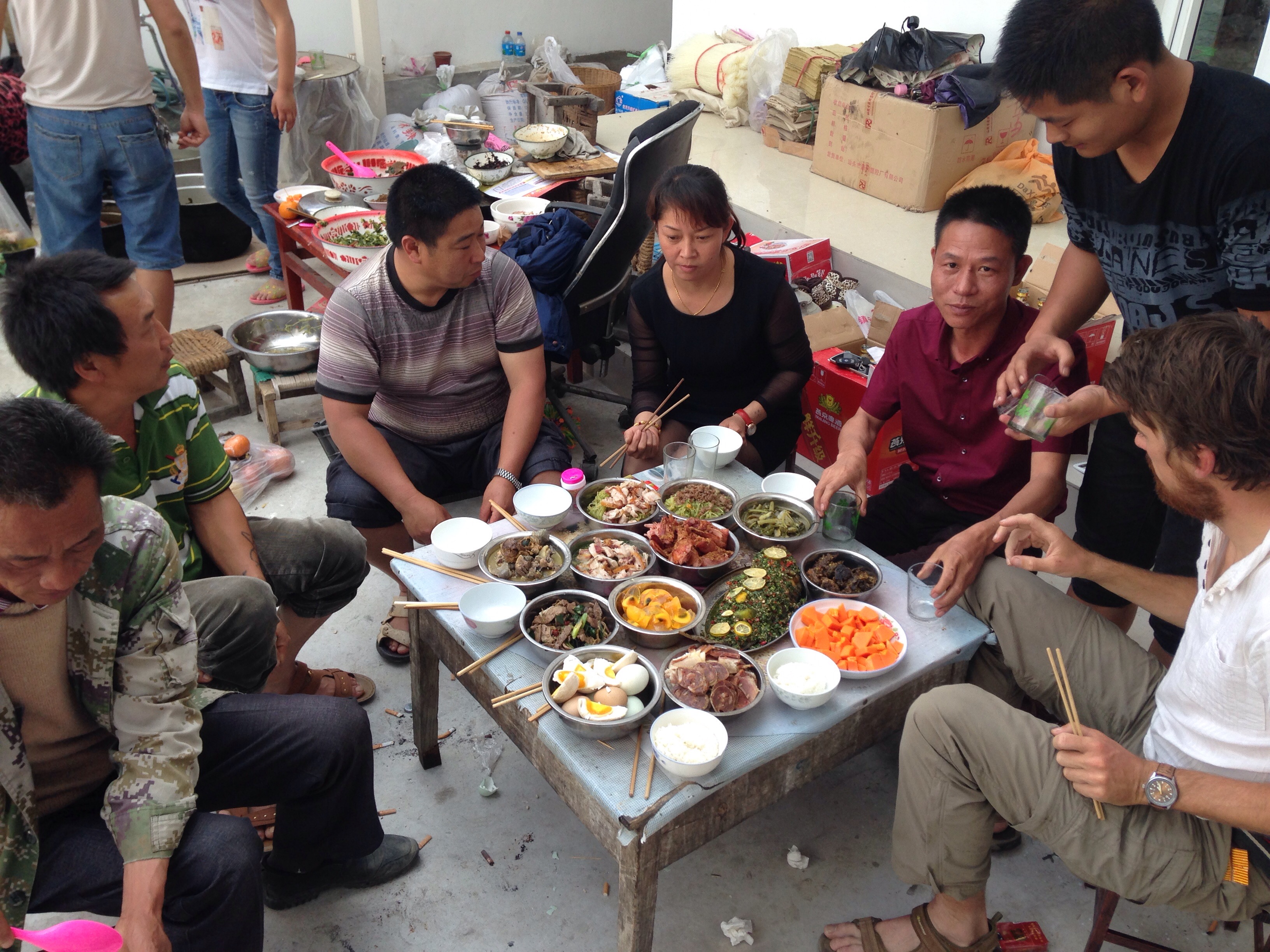
  
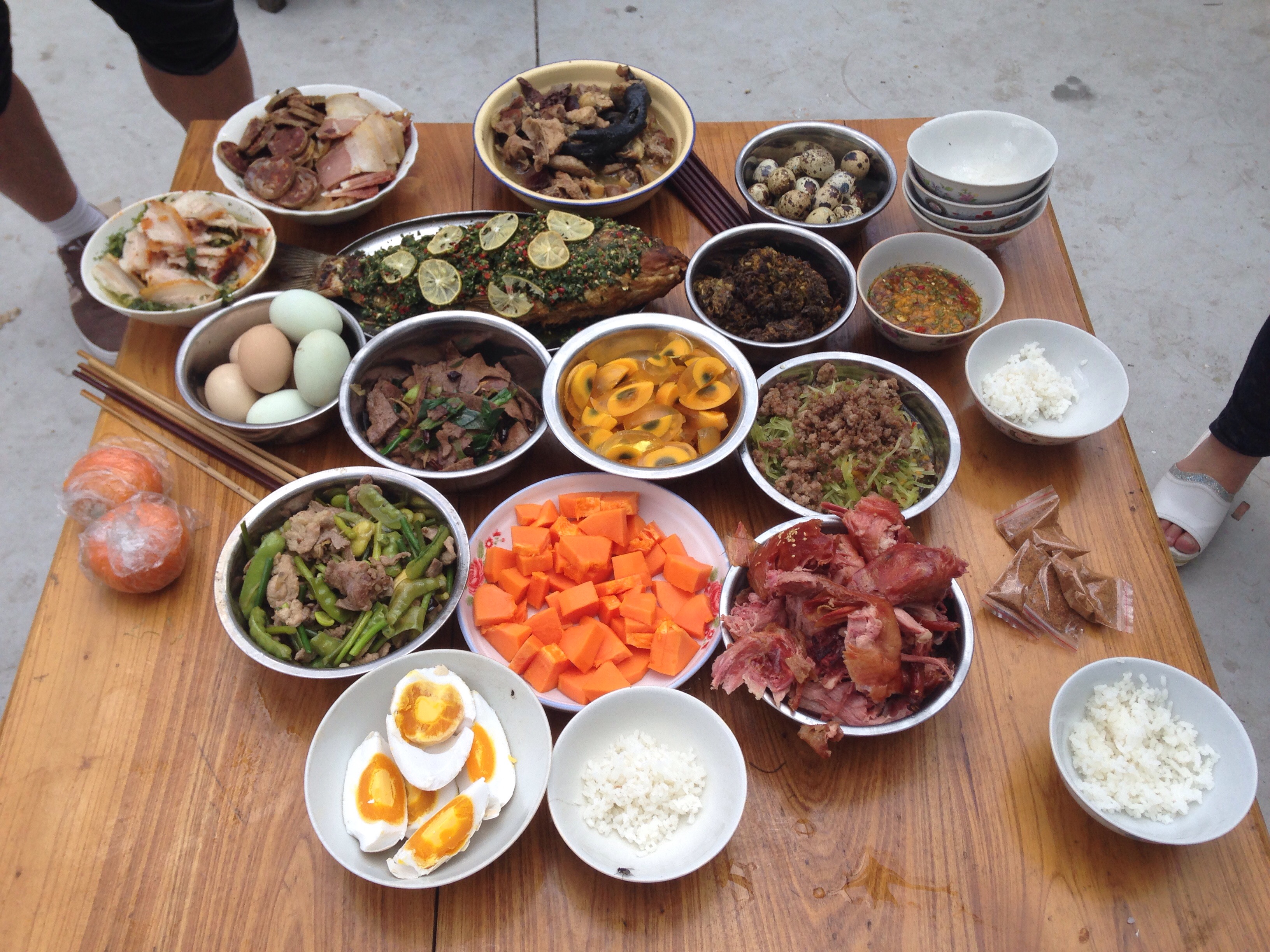
There are so many dishes; whole fish, duck, chicken and pork as well as an array of delicious vegetable and lots of differently preserved eggs. The group sit around 4 tables all of which are covered with dishes. The food is amazing!! 
  
Over dinner we ask about Chinese society and what it’s like to be starting a family in the China of today. Huang talks about the how there can be huge pressure on you to be wealthy. Wealth gains status in your community. ‘Without wealth you have no respect and no voice’ he explains. 

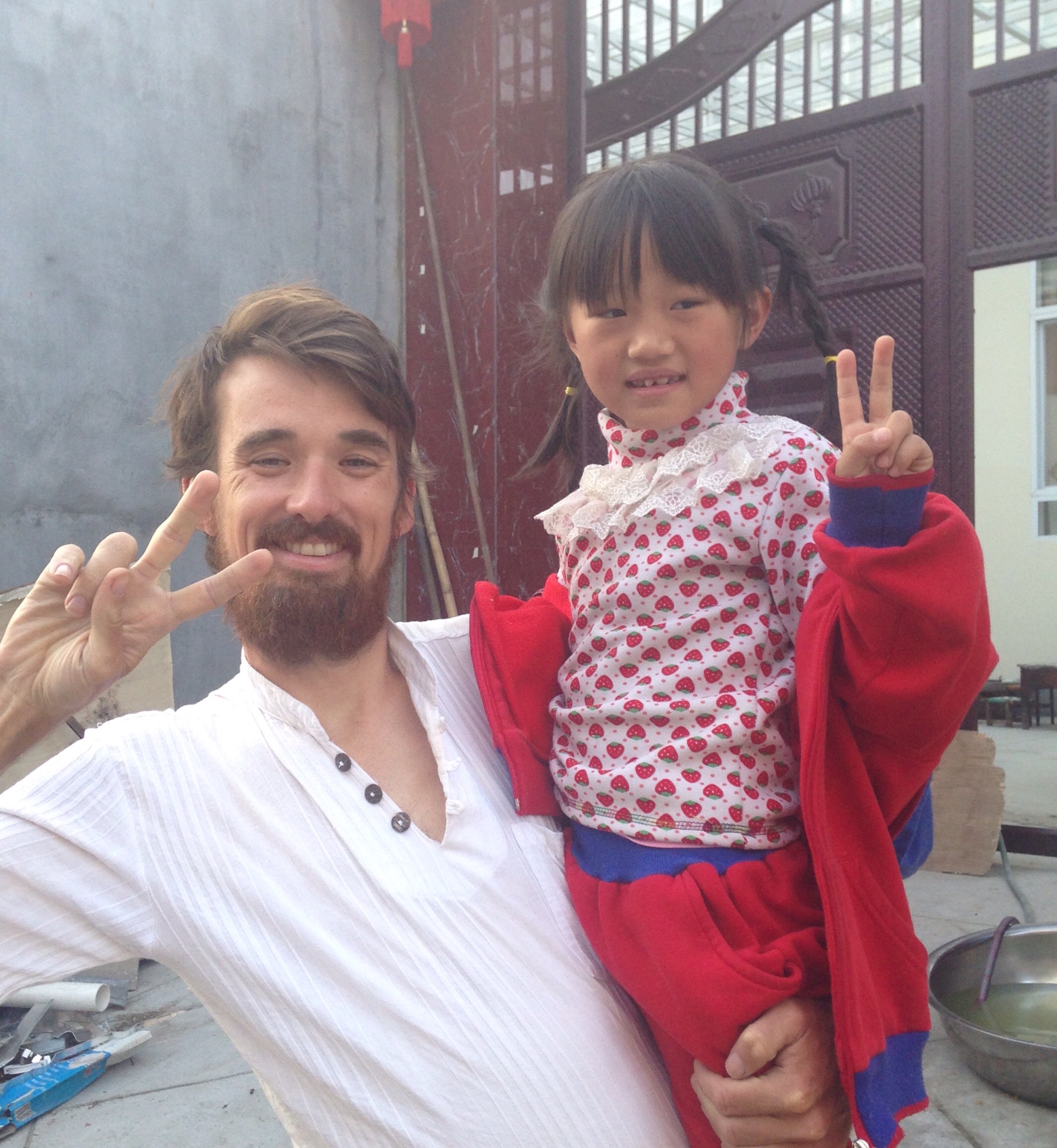
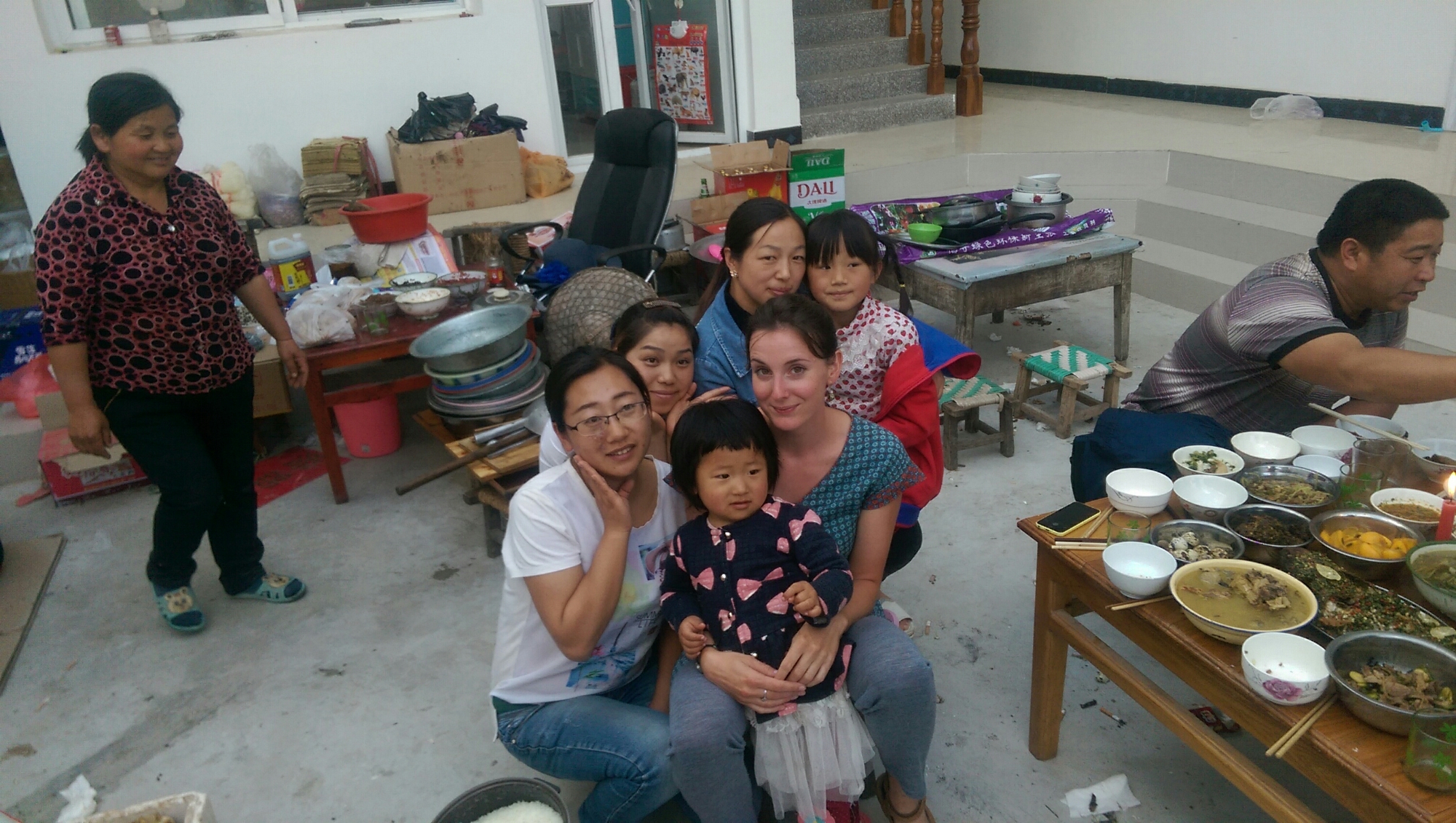
After dinner, we take some photos together:
image  
 

Paddy with Huang’s niece
 
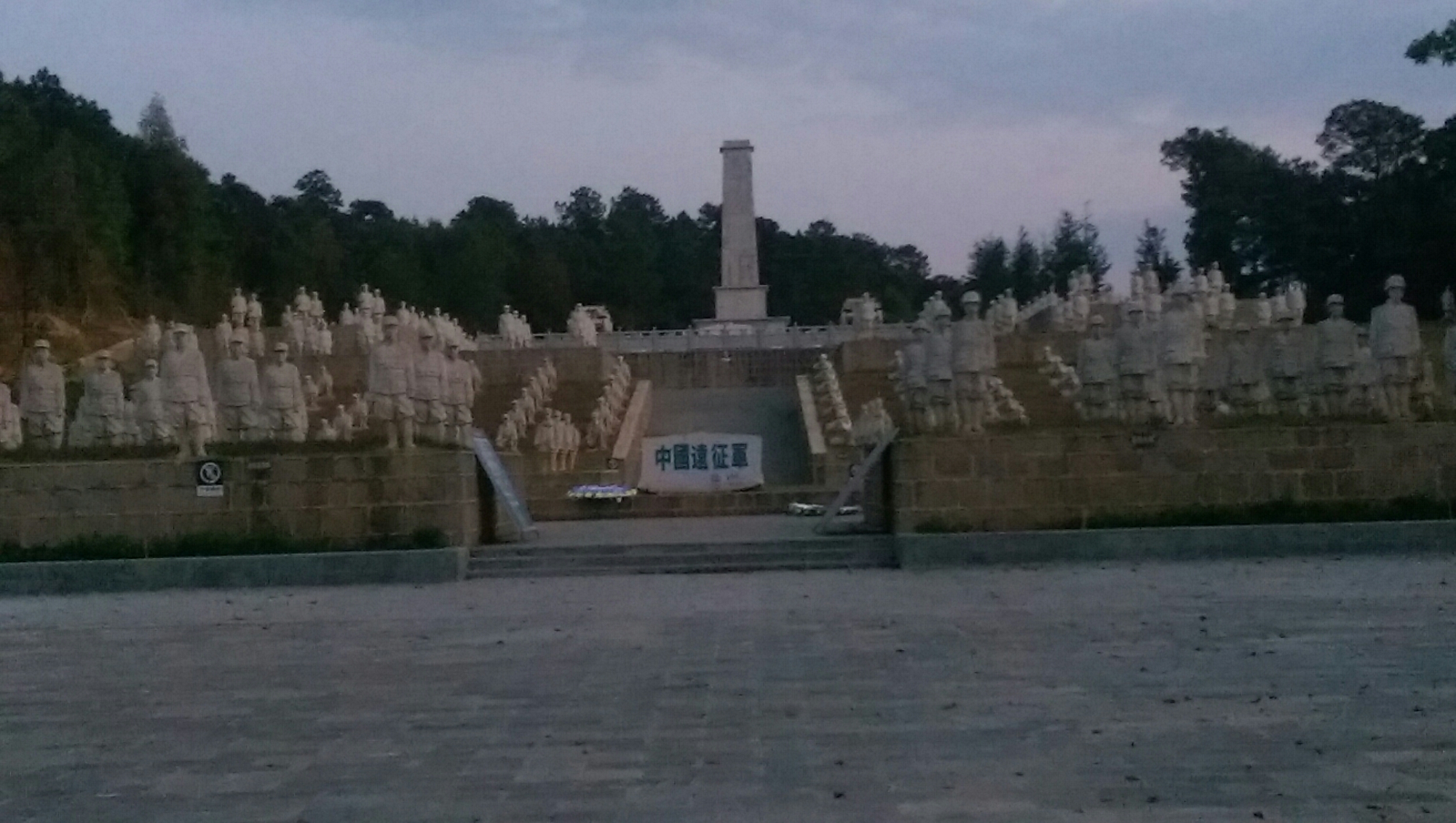
 To round off the day, Huang tells us that he’d like to take us to a special monument which stands on a mountain about 20 minutes from Zhen’an. The mountain was the staging area for a large scale battle against the Japanese who invaded China during the Second World War.

The drive up has scenery which is just incredible! Huang tells us that the monument was completed 18 months ago and that the road has been specially built by the government so that locals and tourists can visit the site. Chinese sentiment is less than favourable to the Japanese and it is obviously important for people to understand what it cost China to win the war. 

We arrive at dusk and are blown away by the monument which consists of thousands of individually carved stone statues, all dressed in army uniform. 
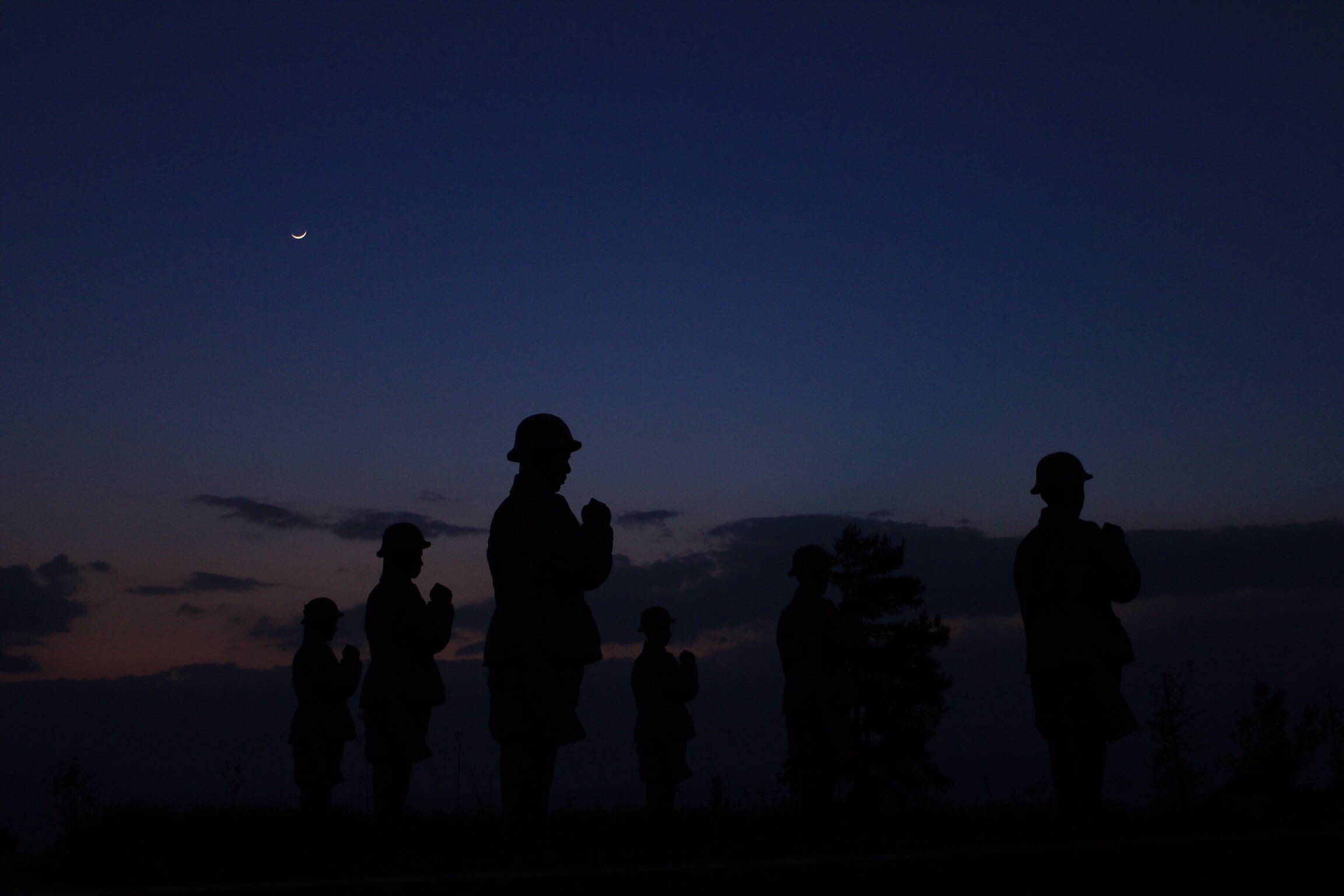
  It is an amazing place, the faces of the statues are so real and are apparently based on real men who died in battle at the site.
image

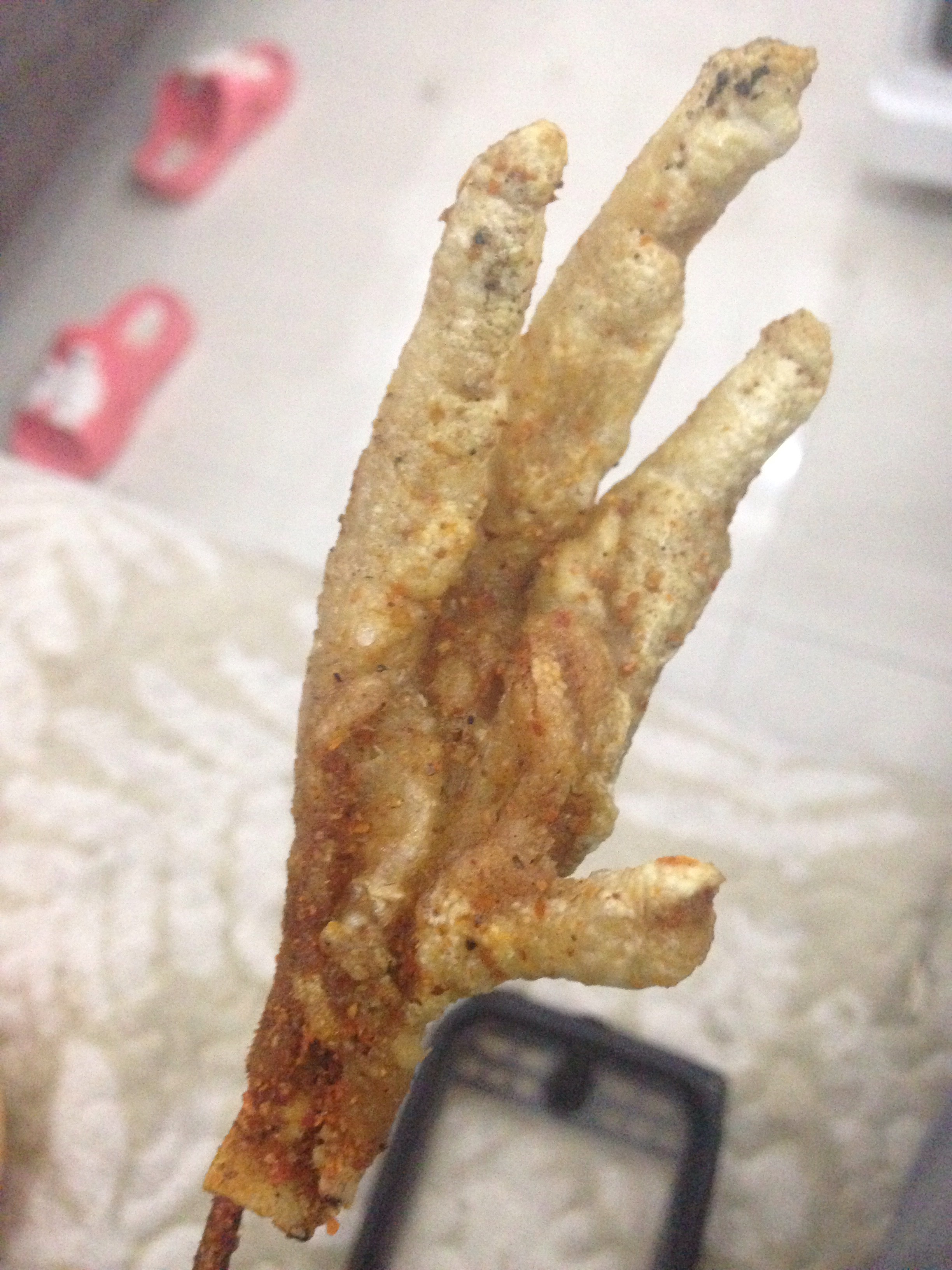
The night is nicely rounded up with a classic spicy chicken foot – a delicacy here! I cause a slight panic when I get a very painful piece of chilli stuck behind my contact lens after rubbing my eye!
 The next morning we are all invited over to Huang’s brothers house for breakfast and dinner. When we arrive duck, rabbit and chicken (all of which had been freshly killed that morning) dishes are being prepared. Huang’s brother oversees the cooking while we play more card games although we don’t really drink as we need to cycle 40km after lunch.

Needless to say the lunch was delicious if not a bit rushed as we needed to get going. We swap contact details, take some final photos and say our goodbyes. 

We never got our SIM card, but that hardly mattered after such a great weekend with such friendly people
Crossing the border with China: Muse / Ruili

Please also read recent comments below this post from other travellers regarding this crossing.

There is only one current border crossing between Myanmar and China and there is a certain amount of uncertainty and mystery about how cyclists can cross.

There is comparatively very little online about cyclists crossing this border and lots of differing information about what you need to organise to be permitted to cross. Posts by cyclists on the Lonely Planet ‘Thorn Tree’ forum led us to an agent and described what others had done.

The area between Lashio and Muse remains a restricted zone in which foreigners need a government permit to cross.

We had read some reports that we also needed a guide, the travel agent we were liaising with regarding the permit (Exotic Myanmar Travel and Tours) was insistent we did, although 2 weeks previously they sent other cyclists up the road without a guide and only a permit. Apparently the rues had recently changed and now you need a guide, and not a cheap guide!

Initially we were also told that we needed to go with the guide all the way from Mandalay but we knew that we could definitely cycle as far as Lashio.

We are uncertain why exactly the area is currently closed, the official line is that there is still regional fighting between Shan separatists and the government; the area has seen its fair share of fighting in the past. We suspect the real reason however is more opium related.

Either way we were told we could cycle to Lashio but that we would need to meet the guide there and then rent a car from Lashio to Muse. The guide would bring our permits with him and organise the necessary paperwork at the border.

The whole thing is an expensive option, but we hooked up with a Dutch couple, Geart and Sytske, cycling the same way and split the guide cost with them. We temporarily had a 5th member of the team, but Victor had to withdraw after a pretty bad illness forced him to cut his trip short.

Dealing with the agent was very tricky due to language differences and the shifting sands of information which trickled from her. After 50+ emails we finally settled on the plan, costs timing etc…

As the day of crossing approached Geart and Sytske decided they wanted to put the system to the test and head for the border without the guide or permit. Would they get through?! Unfortunately well never know as they fell ill and did well just to get to Lashio in time.

This meant the 4 of us met the government guide in Lashio in the evening. He turned out to be very friendly and helpful arranging a good value taxi for the morning…although the information he would give about the area, permits, his role, his expenses, was incredibly vague and changeable – but we enjoyed his company.

We set off in the morning for Muse with Tandem sitting upright on the roof of an estate car sandwiched between the 2 other bikes.

We only passed one checkpoint on the road from Lashio and that was just outside Muse. Our guide needed to show our permits and passports and his official guide identity card. Our guide told us that this check point is open 8am-6pm so it might be possible to cross after hours with a bike and avoid this… 

Upon arriving at Muse at 4pm and finding out the cheapest hotel in town was $30 (!!) we persuaded our guide to take us over the border that day.

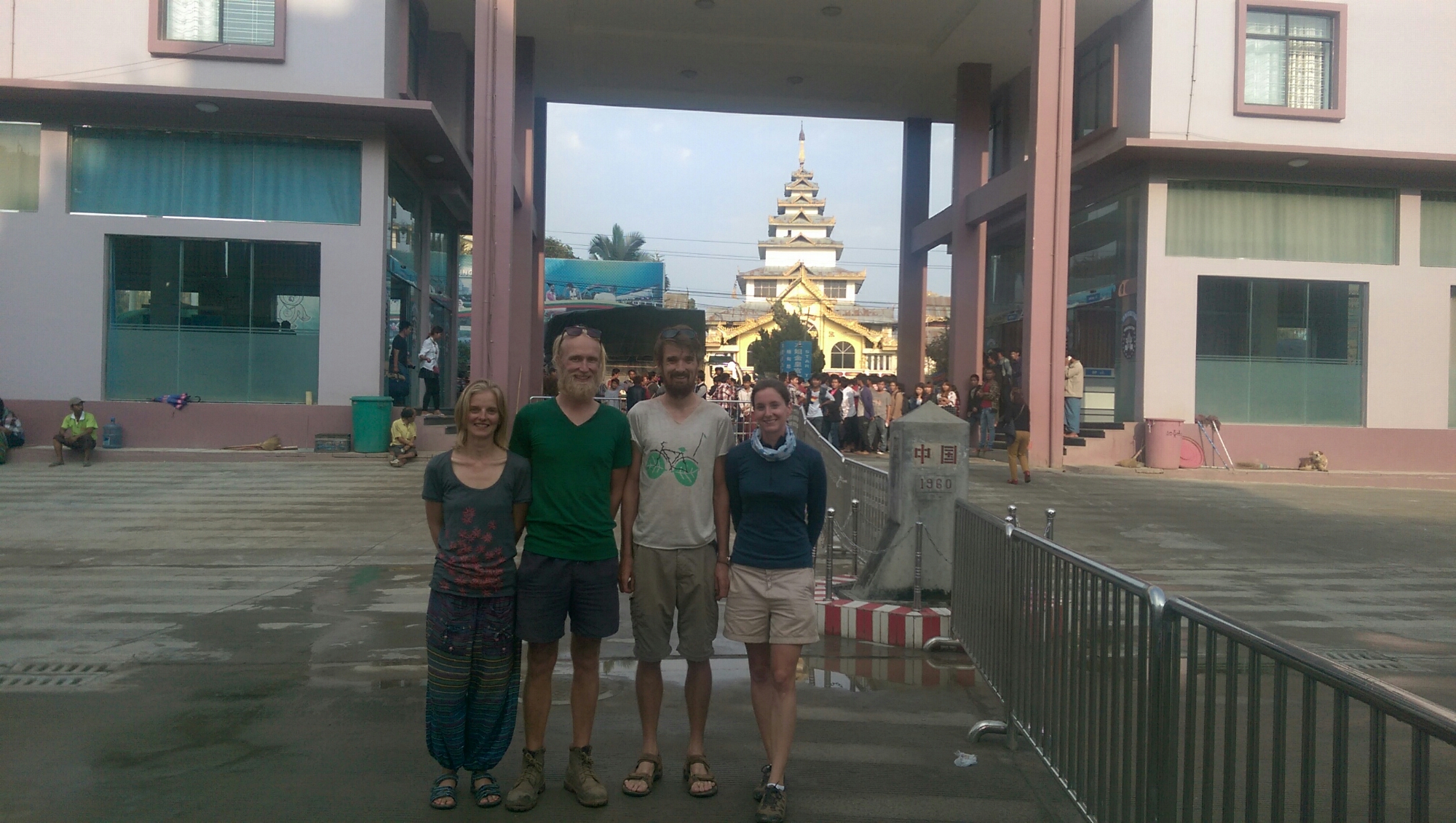
There were a few phone calls back to head office to check this was OK before he headed into the border post with a big box of biscuits for his friend to speed up the process. Finally, around 5pm,  we crossed into China.

We still have no idea if we needed the guide or whether we got ripped of by the agent, the guide or the government policy for travel in the region… but this is part of the game! We got to China and are now very comfortable with our overall schedule.

CHINA!

Our first impressions of China are that it couldn’t be more different to bordering Myanmar. In fact, it seems that whenever China does anything it does it bigger and better that pretty much anywhere else. 

China, quite literally is awesome. We have two months here but we will barely be scratching the surface of its vast countryside. We’re likely to cover anywhere between 2600 and 3000km by bike but we will only cycle through two of China’s many provinces – Yunnan and Sichuan.

Having crossed the border with Geart and Sytske we found ourselves cycling through the border town of Ruili. The difference between the two countries is instant and it’s a bit like entering a completely new world.
image

As the four of us walked around Ruili city centre we gaze open mouthed at the clean streets, perfectly paved roads, silent electric motorbikes and huge neon lights which completely dominate the city centre. After 3 months in Asia, parking lines on the roads and street bins which have different compartments for recycling are a real sight to be seen!

The next morning Paddy and I head off without Geart and Sytske as they need to stay to sort out their breaks.

We don’t set off until 10am (Beijing time). The whole of China officially works on Beijing time but because the country is so big this means that the East provinces enjoy later evenings and some towns will unofficially work on two time zones. If we were still over the border in Myanmar it would be 8.30am!

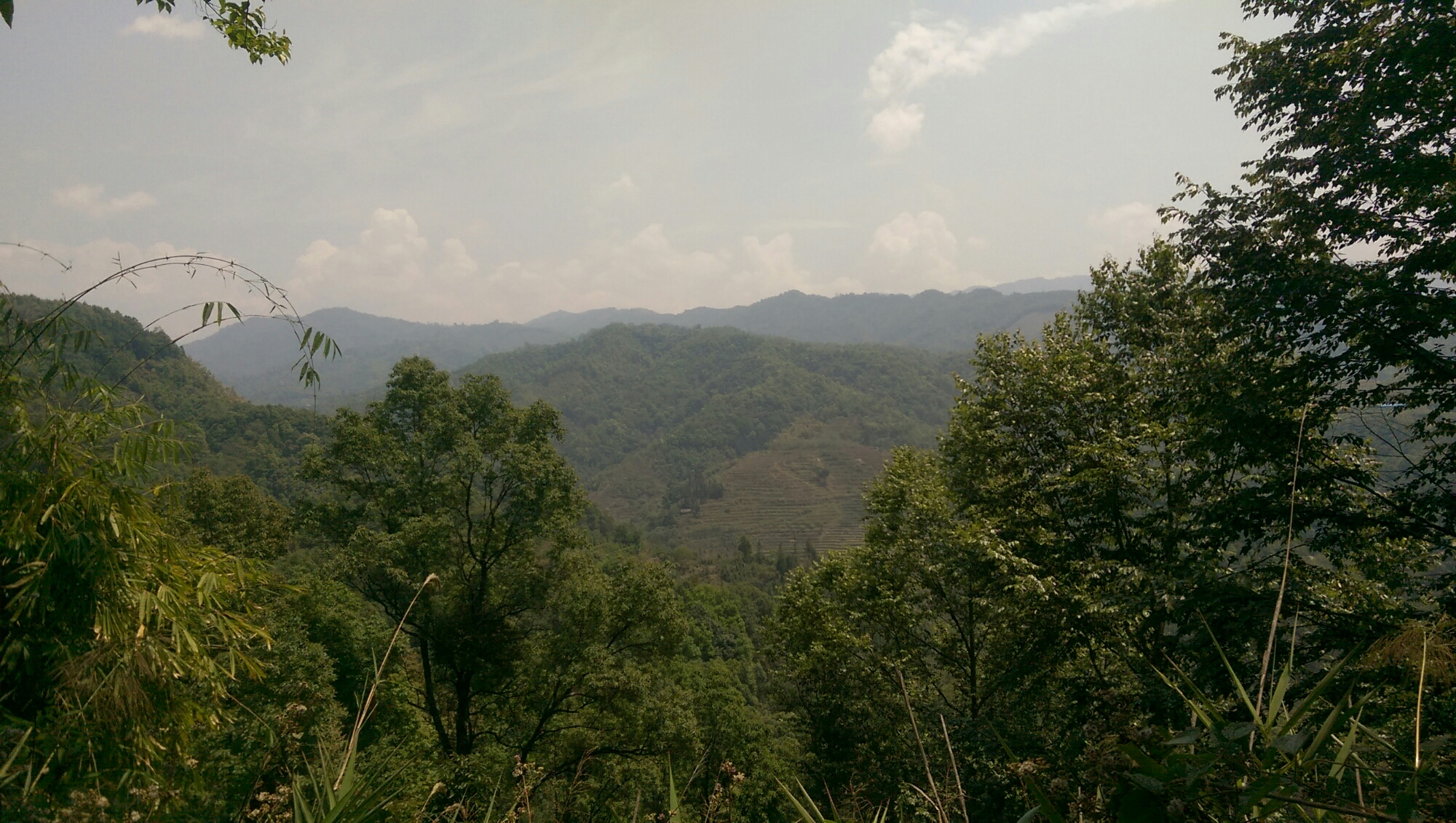
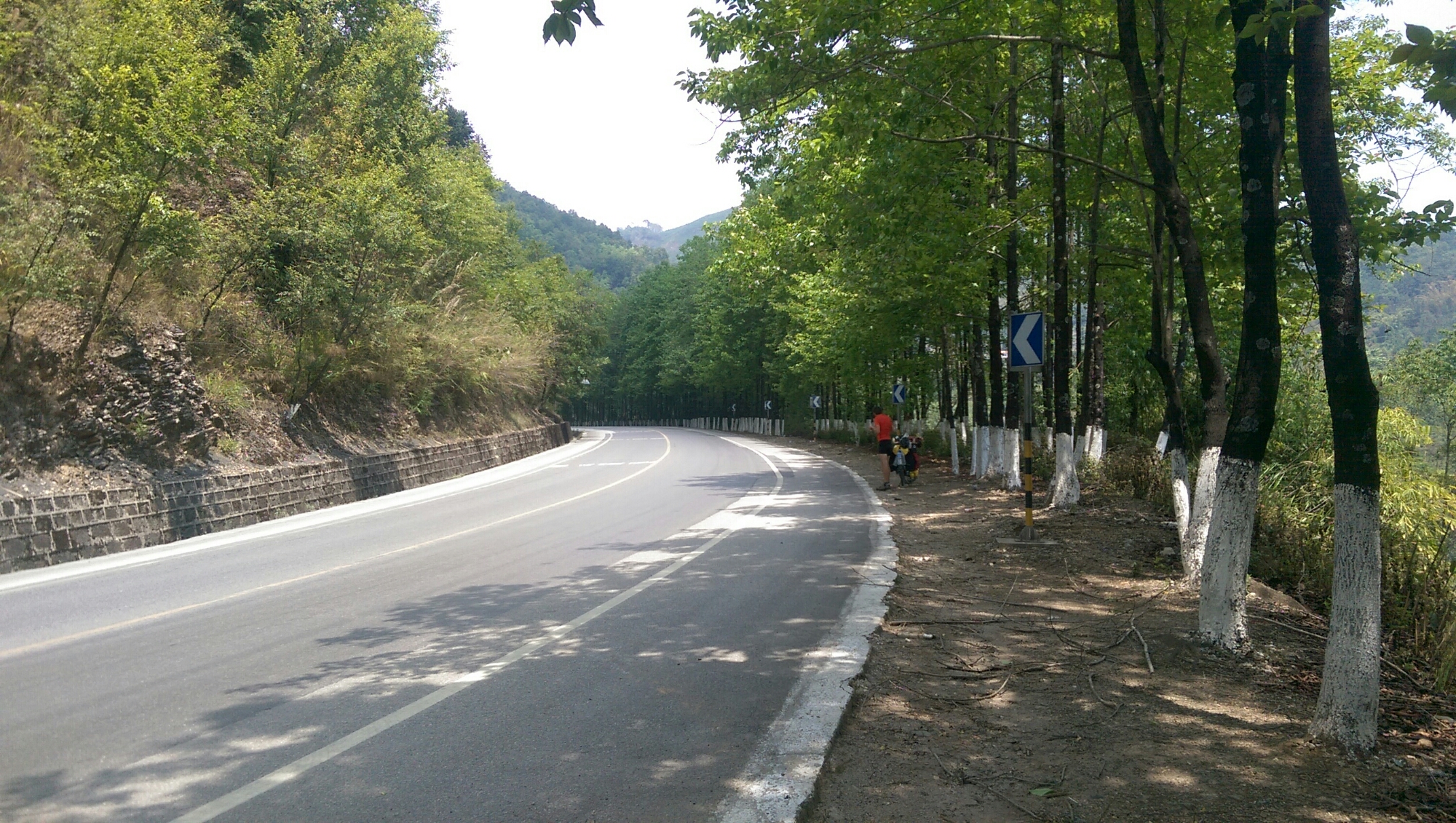
The rain which we had had the day before had disappeared completely and it is a crisp morning full of blue skies and sunshine. It will be a day of up and down through the mountains on the G320 rd.
image

Huge, lush valleys and rich forested slopes appear from nowhere as we snake our way up to 1100m. It is very beautiful and the wonderfully smooth road, comfortable incline and decent hard shoulder allows us to relax a bit and really appreciate the views as we climb. 
image

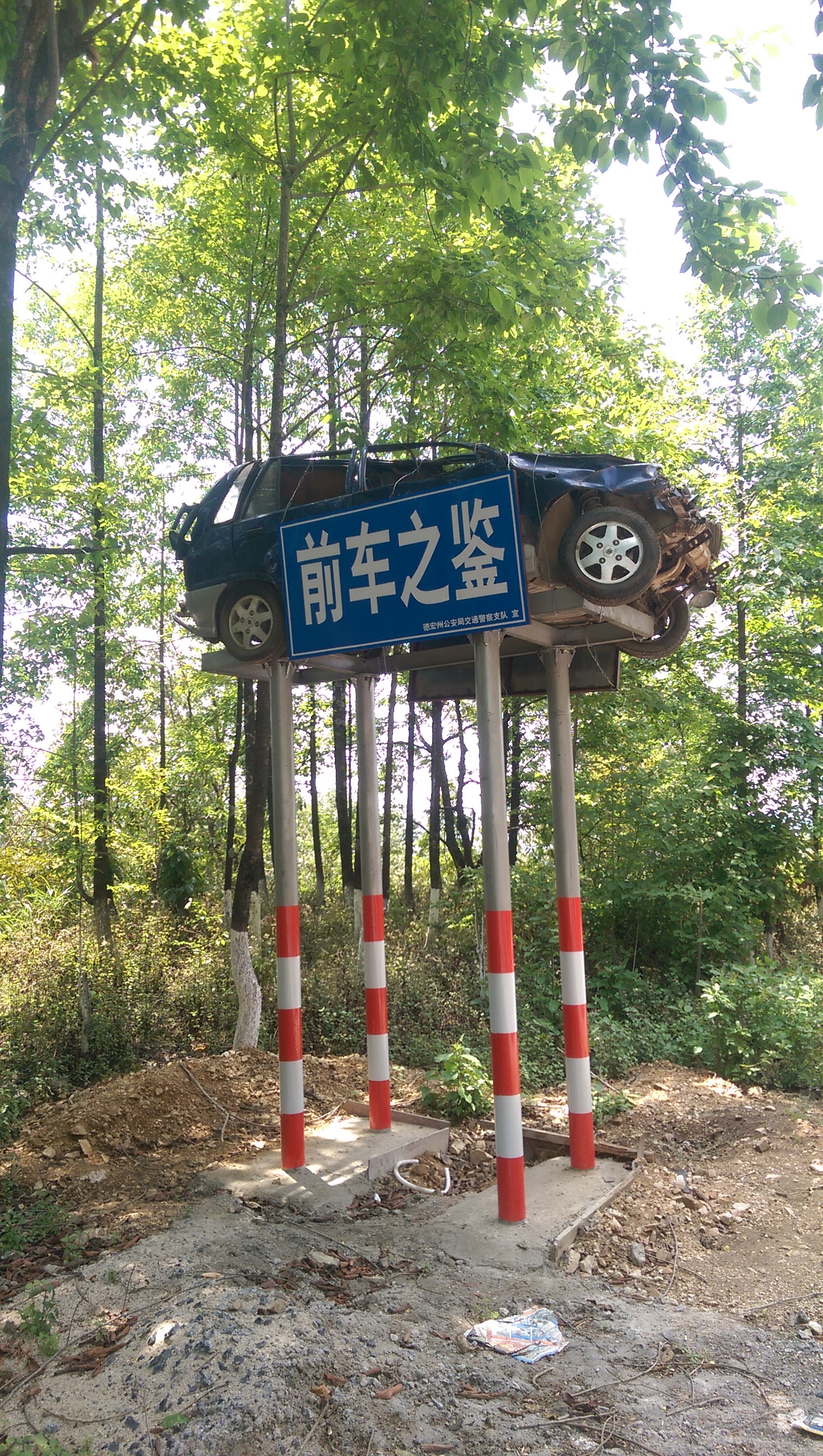
Another example of how the Chinese do things here. A simple sign to tell drivers to slow down just isn’t enough…

image

They say that China will be the top economic superpower in 20 years and you can well believe it, the country oozes productivity.

Despite the obvious challenges that come with this landscape, some major infrastructure has already been completed with evidence of a lot more still to come. We pass at least two huge complexes of new flats, we see the evidence of hydroelectric dams and we spot new roads connecting once remote villages. 

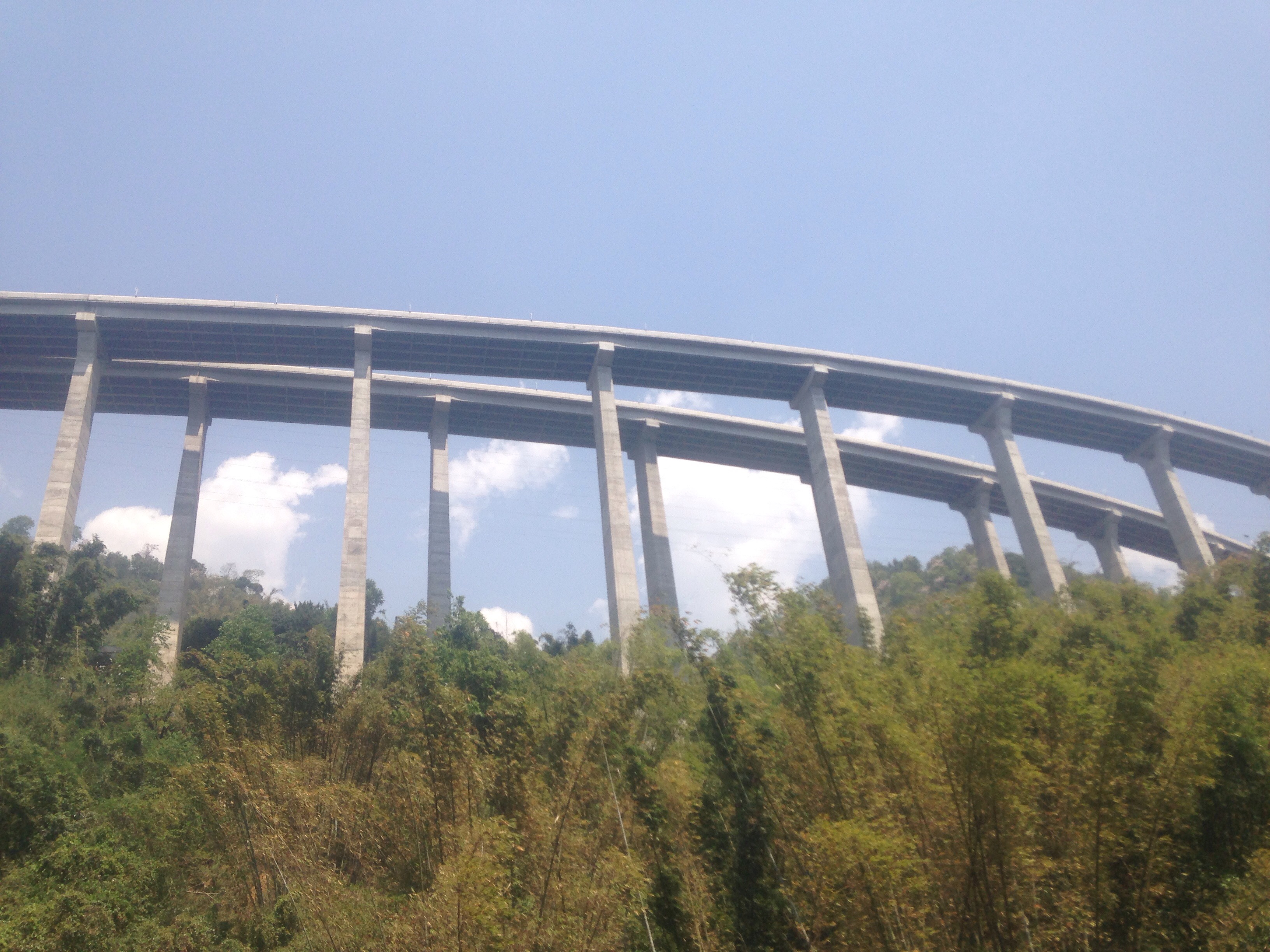
The road we follow is actually the old road, running parallel to it for most of the day is the new high-speed road. It is an amazing piece of engineering. Some of it is jaw dropping…

  
But it is currently very underused because the tolls are so expensive. 

 We pick up supplies as we plan to camp – food is cheap to buy and we’re looking forward to clawing back some of our budget after the huge expense of Myanmar.

A camping spot was tough to find because the road mostly just cuts its way through a valley, but finally we find somewhere semi-private with a bit of cover 20km from the large town of Mang. We pitch up just before dark and during the night there is an almighty thunder and lightening storm with heavy rain. We snuggle down into our Big Agnes sleeping bag and wonder how all our gear will hold up in its first proper rain test.

The next day is much the same – 73km to Zhen’an were we will sleep. We stop for a late lunch in Longling and drop by the small museum which focuses on telling the story of the Comfort Women system which the Japanese ran all over Asia during the war. It’s worth a visit if you find yourself passing through.

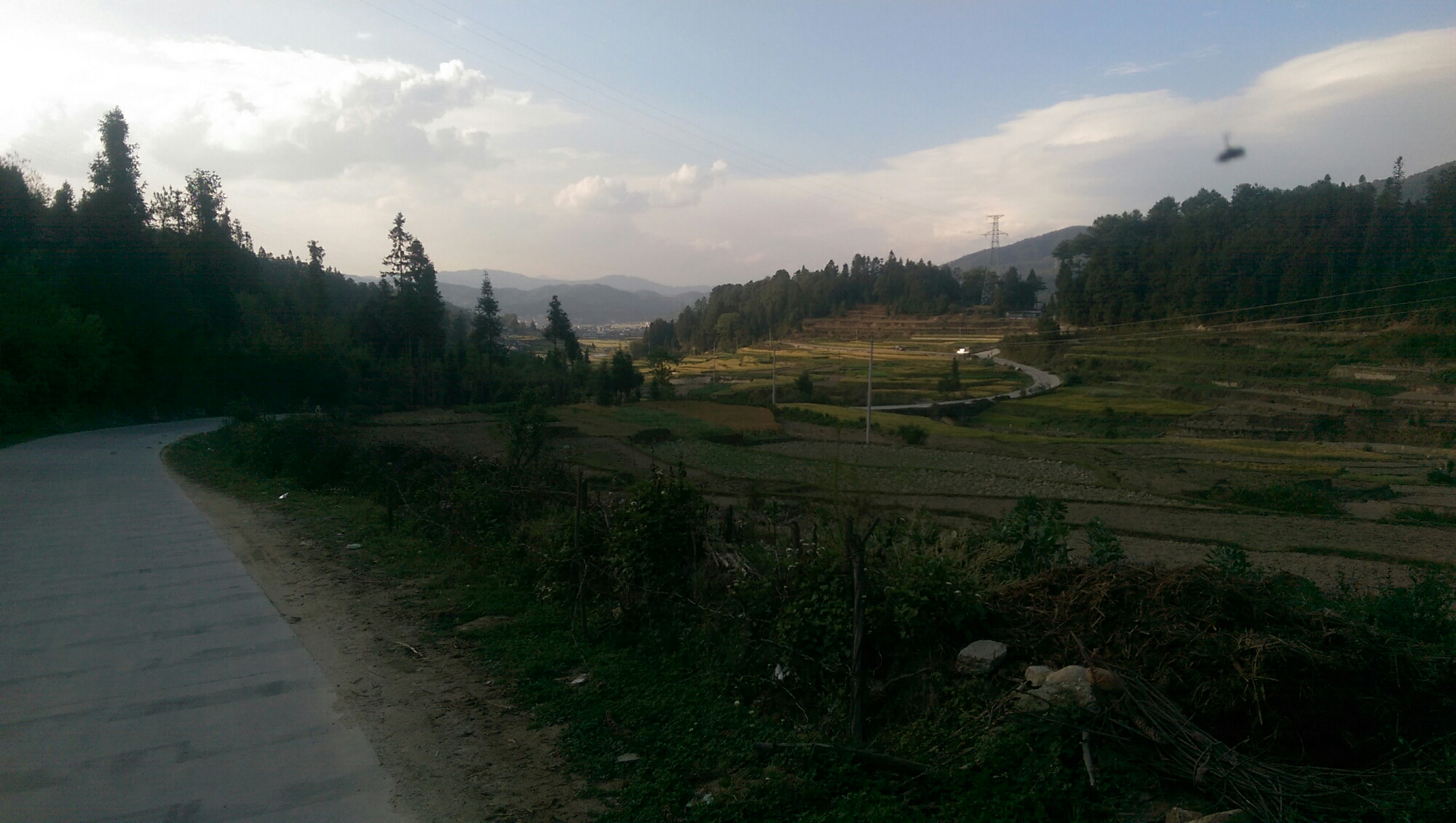
We keep climbing up to 1900m – the highest we’ve been so far – and then drop down towards Zhen’an which is a small town surrounded by beautiful tiered wheat fields gently blowing in the breeze. 

image

Applying for your Chinese Visa in Bangkok

The application process for a Chinese visa is a lot more time consuming than any other Asian country we have been to. 

We considered applying via an agent but in the end decided to fly solo with it all. 

We felt we just needed to get organised with prolonged access to a computer and printer.

 While we waited for the Myanmar visas we made our way north to the Chinese Embassy to pick up the forms.


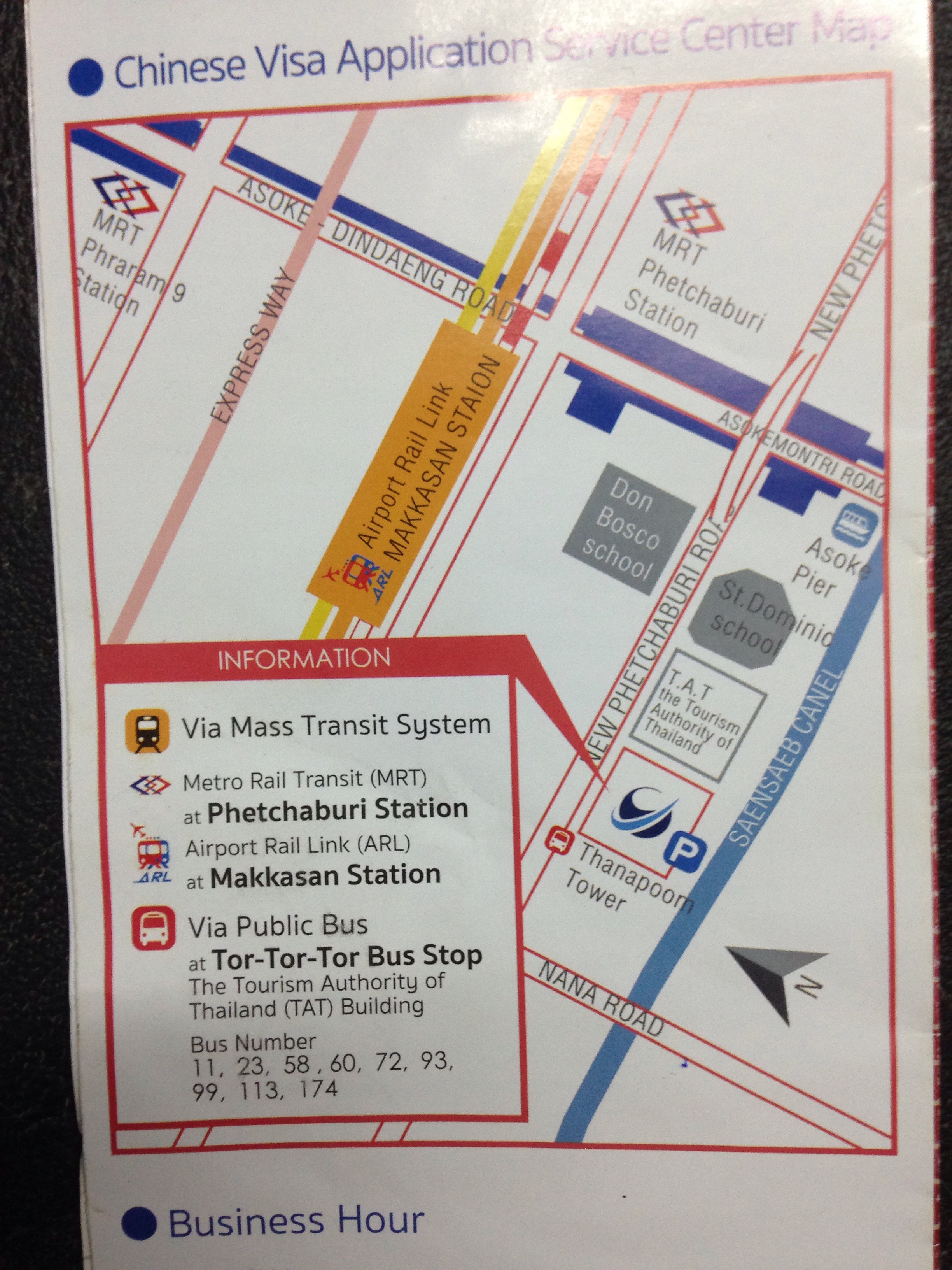
First things first, the visa application centre is NOT in the Chinese embassy like it is in every other consulate. You need to go to New Pretchaburi Road to Level 5 in Thanapoom Tower (10 min walk). 

  
Going to the embassy first did prove quite useful in the end because they showed us examples of some of the supporting documents we would need to submit.

 It seems that the Embassy, no doubt because the application process is so onerous, has subcontracted the management of the first phase of the application procedure out to a private company. http://www.visaforchina.org

This company offers advice, information and runs a first stage tick box exercise on your application before its sent to the Embassy for final approval.

In a way it’s sort of good because they give your application a thorough once going over before you handover and wait for the outcome… Also unlike other consulates you pay on collection.

They are open 9:00am to 15:00 Mon-Fri. But if you want the 2 day express service you need to drop off before 11am.

We were told it was only possible to apply for a 1 month tourist visa in Bangkok, although we have heard of others successfully applying for three months in other cities… (we hope to extend ours at least once when we’re there).

The form is very detailed and requires supporting flight bookings (!), accommodation bookings (!), a detailed day by day itinerary, bank statements and a ‘Letter of Certificatin of myself’ which details your intent of travel, employment status etc. Having a bank statement was important, especially if you are currently unemployed.

  
Everything has to be done on a computer and printed off. You also need photocopies of your current immigration exit stamp (Thai in our case) and passport page.

We had also read that including other supporting documents like our travel insurance document was a good idea, but these weren’t needed in the end.

The detailed itinerary itself took a long time to write out and then there were flights and accommodation bookings to organise.

If you want more information on any of the above and how we went about it please leave a comment and we can try and answer your query.

Anyway, everything was good and efficient and we submitted on Tuesday and collected on Friday morning paying 3200 baht total.