Persopolis

 It was time to dive into Iran’s ancient Persian history and where better to start than Persopolis, the ancient city of the Achaemenid empire which sits north east of Shiraz. We would take a bus from Yazd, spend a night camping next to the ruins and spend the next afternoon cycling the remaining 60km to Shiraz after visiting the site. 


From the very beginning, Persopolis was intended to be a ‘showcase city’ to illustrate and flaunt the wealth, power and artistic superiority of the Achaemenid empire. 

Construction started in 520 BC under Darius I and added to over the next 150 years by his son Xersus and other subsequent rulers. It’s worth pointing out that Britain was still stuck in the Iron Age with the Celtic people building their ditch and bank forts at this point and the great Roman buildings such as the coliseum wouldn’t be built for another 550 years. 
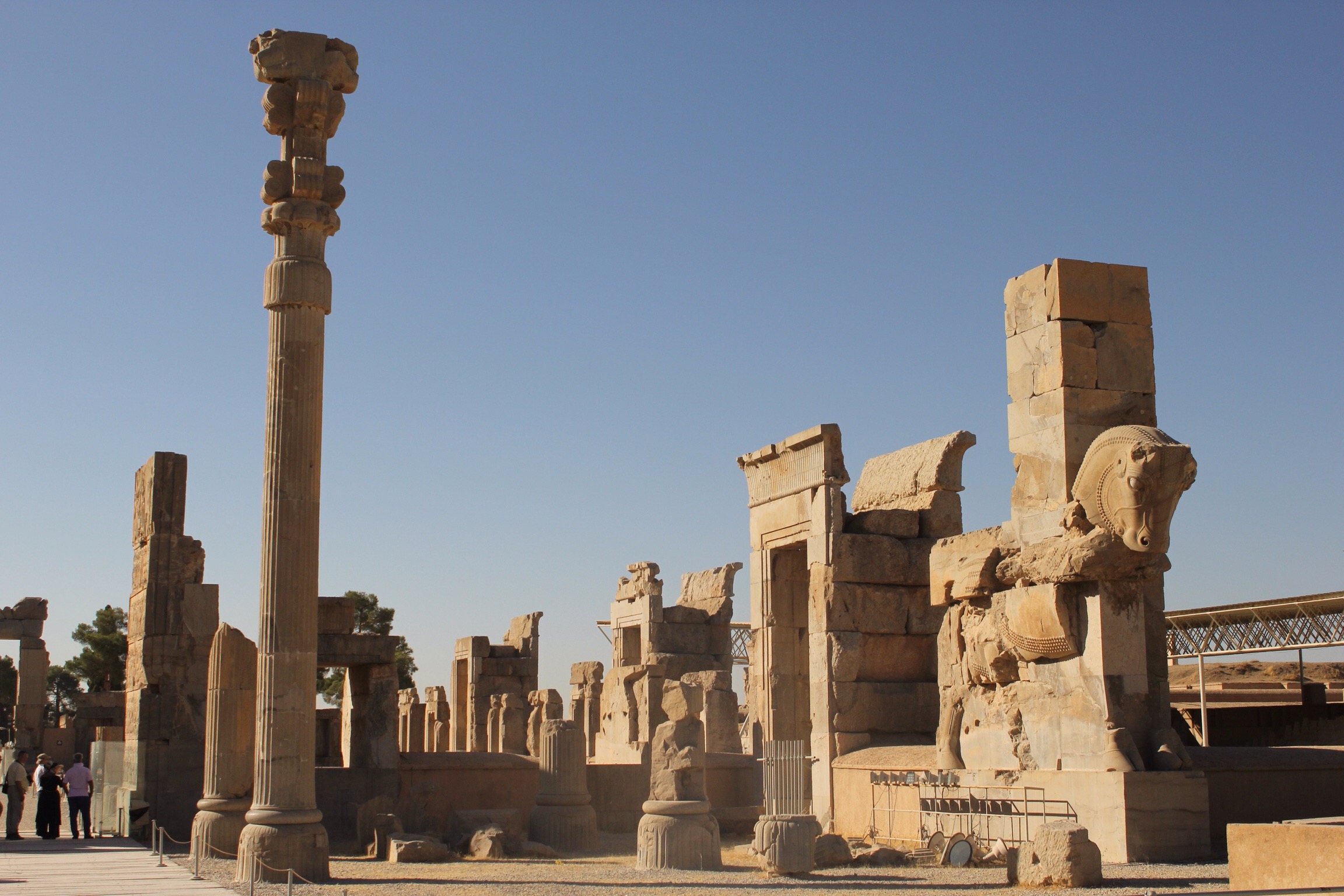

It’s also worth noting that unlike many of the great Greek structures which were being built at around the same time (e.g. Acropolis of Athens) Persopolis was built, not by slaves, but by paid labourers and artisans, a testament to the humility and egalitarian approach adopted by Persia’s rulers.

The geographical location is significant – it sat at the centre of the empire which, at its height, encompassed Afghanistan and Pakistan and stretched all the way west to parts of present day Greece, and south to Ethiopia.
Historians believe the city which, sits elevated on a towering 12m stone platform, was used for an important annual gathering on No Ruz (Persian new year) when subjects from across the empire would travel to pay tribute to their King. 

The city was taken, looted and later burned by Alexander the Great in 330BC and then for 2000 years much of it lay beneath large dunes of sand and dust which helped to preserve what was left. Archaeological excavations started in the late 1800s.

Unfortunately we forgot to change the battery in the digital camera and so had to make do with Paddy’s phone for the second half of our visit…
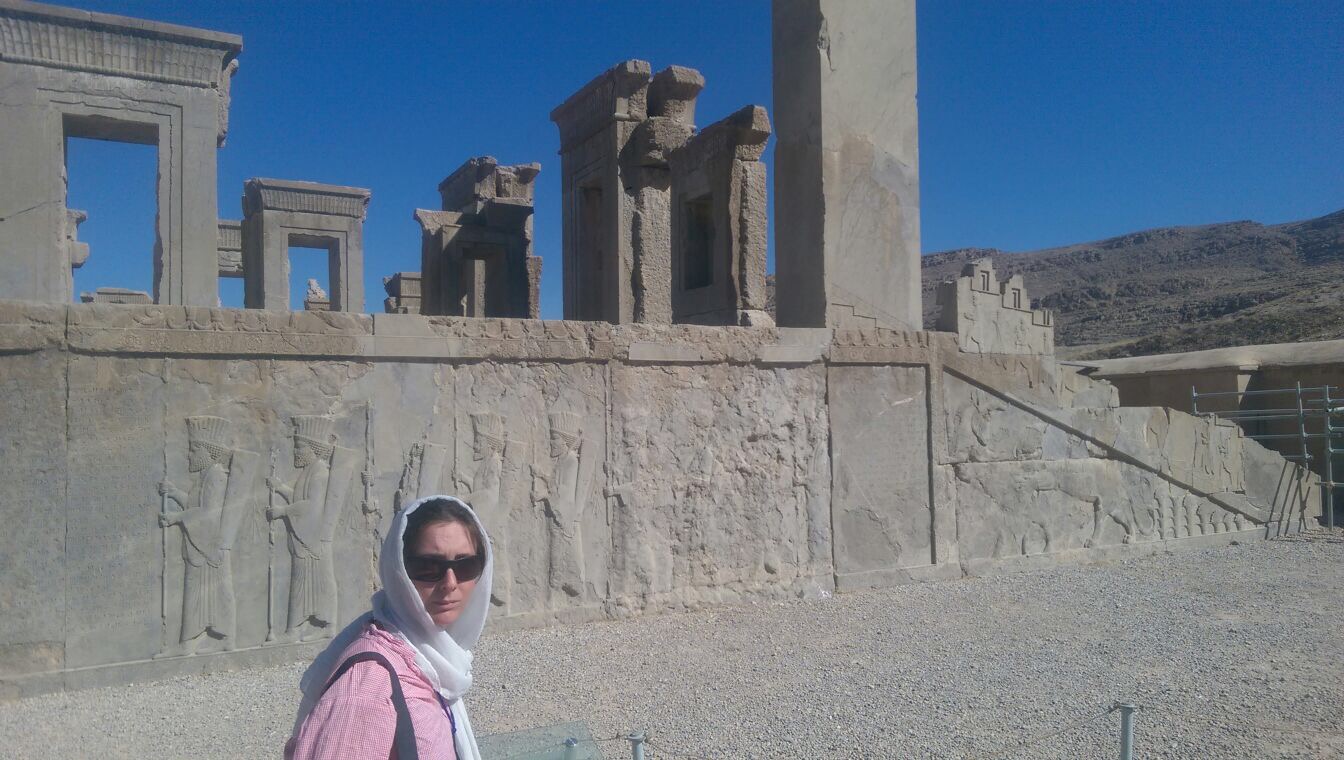

Even though there is little left of the sparkling city there’s enough to spark your imagination. 
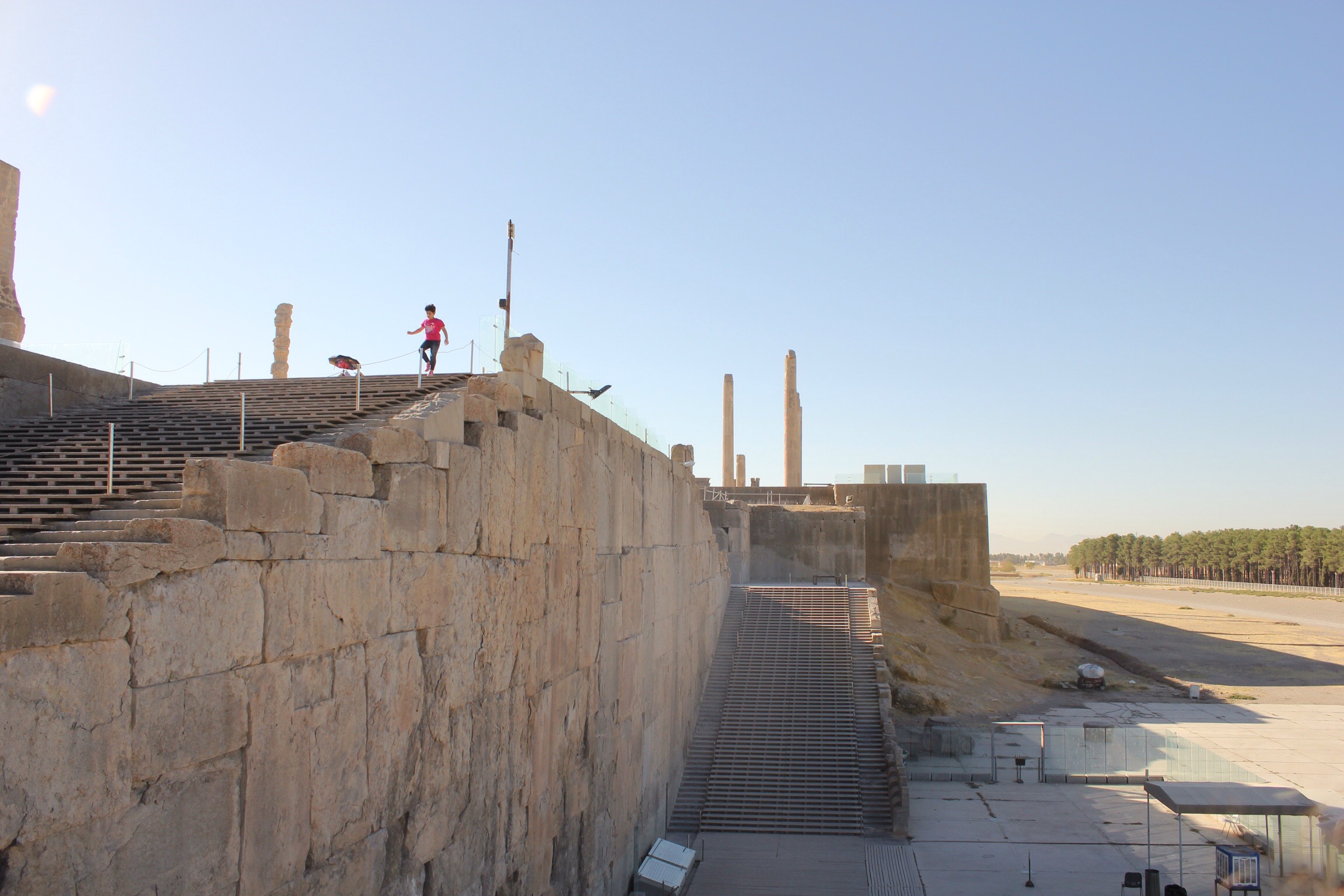

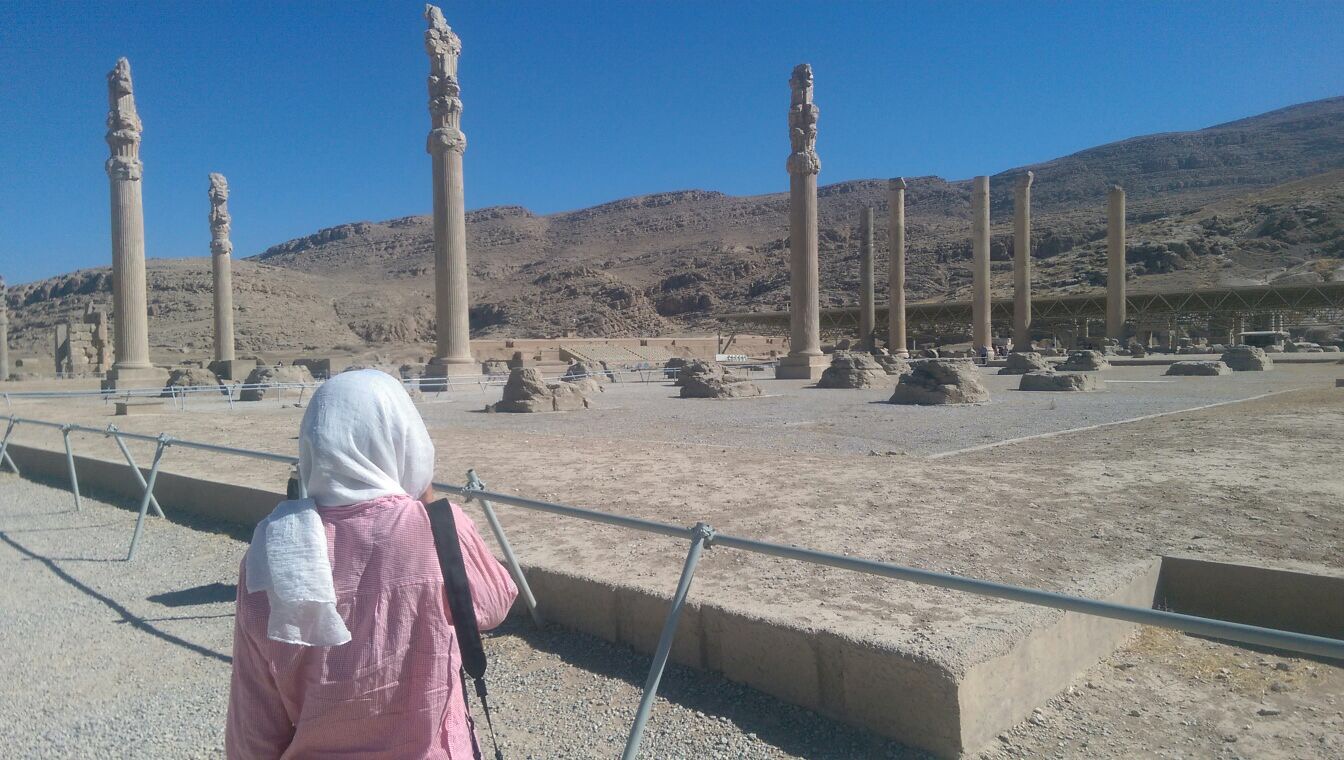
A majestic double staircase leads up to the city complex and then a walkway takes you through a towering doorway called the Gate of All Nations which is flanked by giant winged bull creatures.


There are some amazing bas-relief sculptures decorating the Apadana palace and staircase. They depict the delegations from the Empire’s various provinces arriving at the city gates baring gifts of cloth, livestock, pottery and furniture. 


The Palace of 100 Columns and the Tripylon are pretty awe inspiring mainly due to the height and number of stone columns which make up the structures. These would have been vast halls with towering ceilings and polished stone walls but historians argue over their exact use and purpose. 

It was possible to climb up the hill to the tombs of Atraxerxes II and III which offered amazing panoramic views of the site. 
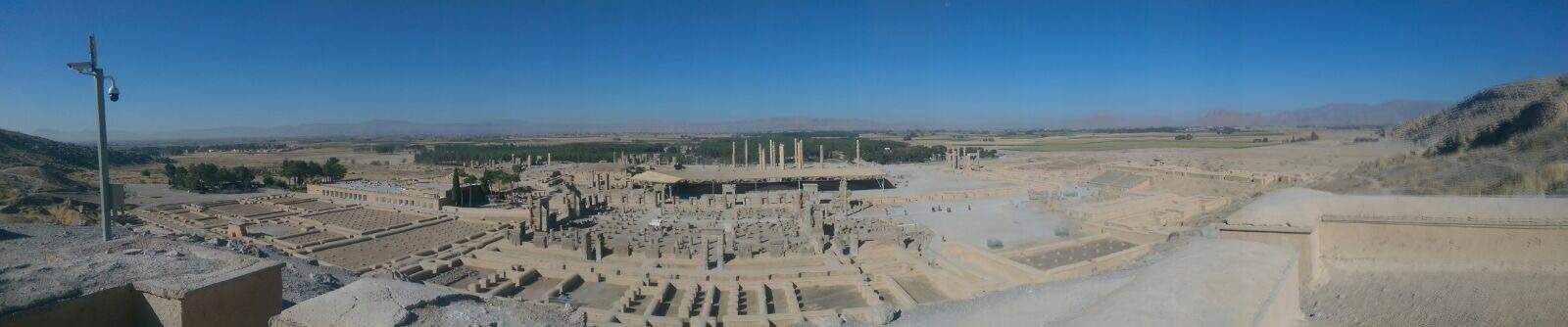

It was a great morning and because we had camped so near the site we were among the first in at 8am, missing the worst of both the crowds and the heat. 

After a hurried lunch of Falafel rolls and Zam Zam cola (which we later realised we never paid for!!!) we got ready to cycle to Shiraz. Our exit was delayed due to lots of people wanting to pose for photos with the tandem. 

It was great to be back on the bike – our first proper cycle in Iran – but it was during the hottest part of the day and I was still getting used to wearing full hejab and a headscarf under my helmet. It was incredibly uncomfortable cycling up the hills!! 

We arrived at 5ish and the white sprawling city of Shiraz which, sits at the bottom of a vast valley, appeared before us. Flanking our road into the city was a lovely pedestrianised boulevard, a waterfall tumbling down the rock face behind.

We lingered for a while soaking up the atmosphere. That day happened to be a national holiday so there were lots of locals milling about, having picnics (a favourite pastime in Shiraz we are told). 

Along the terraced walkways a number of free-runners were practising their moves. This one guy (who could clamour up the whole complex in about 20 seconds) climbed up this vertical surface and then polished his set off with a headstand on the edge of the highest wall… 

We’d have three nights in Shiraz staying with a couple of warm showers hosts before cycling north to Esfahan. 
Yazd

Yadz sits in the geographical centre of Iran and also in the middle of a desert, so we arrived and left by bus rather than bike -we’ve already had our desert fix in Turkmenistan. At 7am we wearily got off our overnight bus, put tandem back together and cycled the 10km into the old town. 

 We made a great decision by heading to a swanky hotel and getting a buffet breakfast for a reasonable price. By 10am we were full of various sausage, breads and jams.

We headed outside, it was hot! Our time in Yazd clearly would be spent chasing shadows to stay out of the sun.

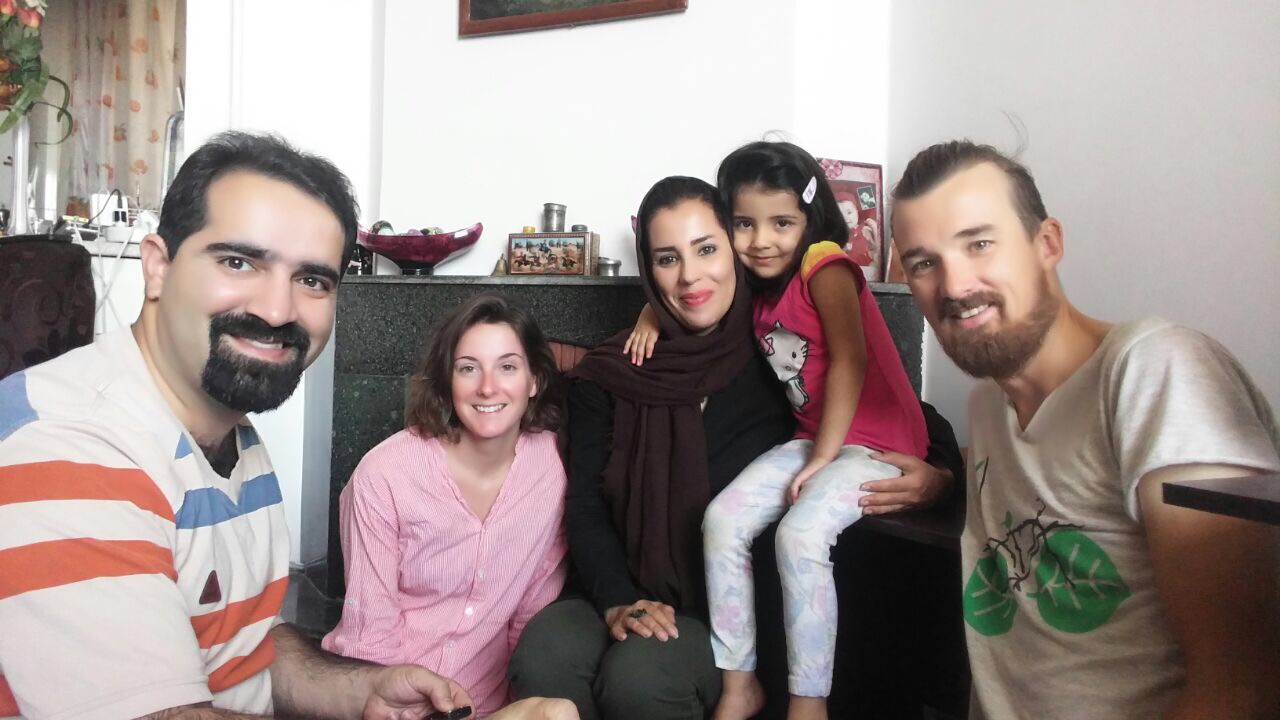
Later that day we met our warm showers hosts Mohammed and Maboub with their wonderful little girl, Anita. 

They were excellent hosts and we shared food and good conversation with them at mealtimes for the next two days. Instead of eating at a table, it’s more commen for Persian families to lay out a patterned waterproof sheet into their rug and eat on the floor.

Maboub was also a talented artist and musician.

Anita is 4 and charmed us from the minute we met her, here is her colouring-in versions of us:

I particularly liked my jester hat and Annie’s green skin.

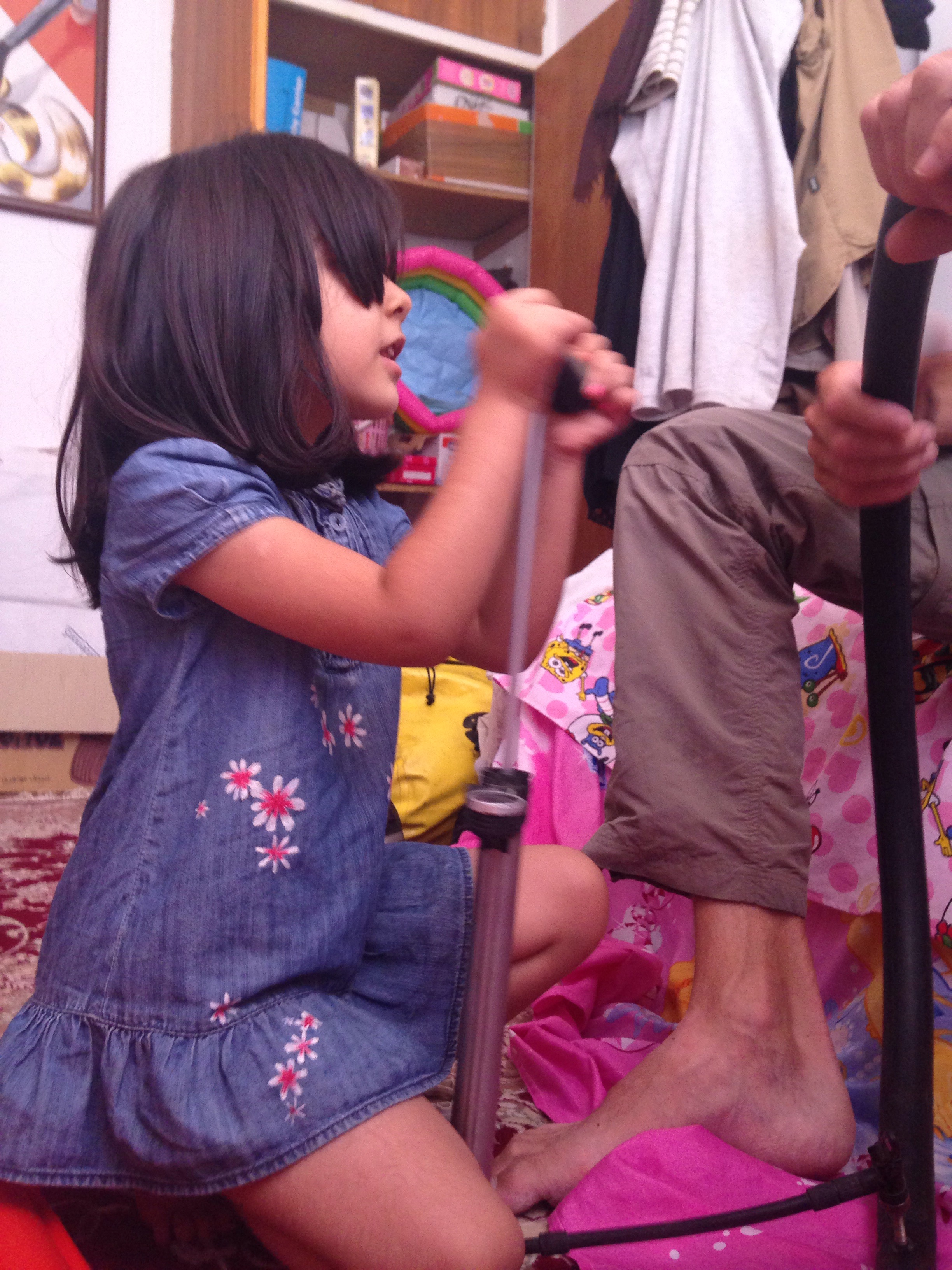
Over our two days Anita painted all of Annie’s nails, styled my hair, helped fix a puncture, showed us some groovy Persian dancing and generally made everyone smile lots. In return Annie sang a song which made Anita very happy. 🙂

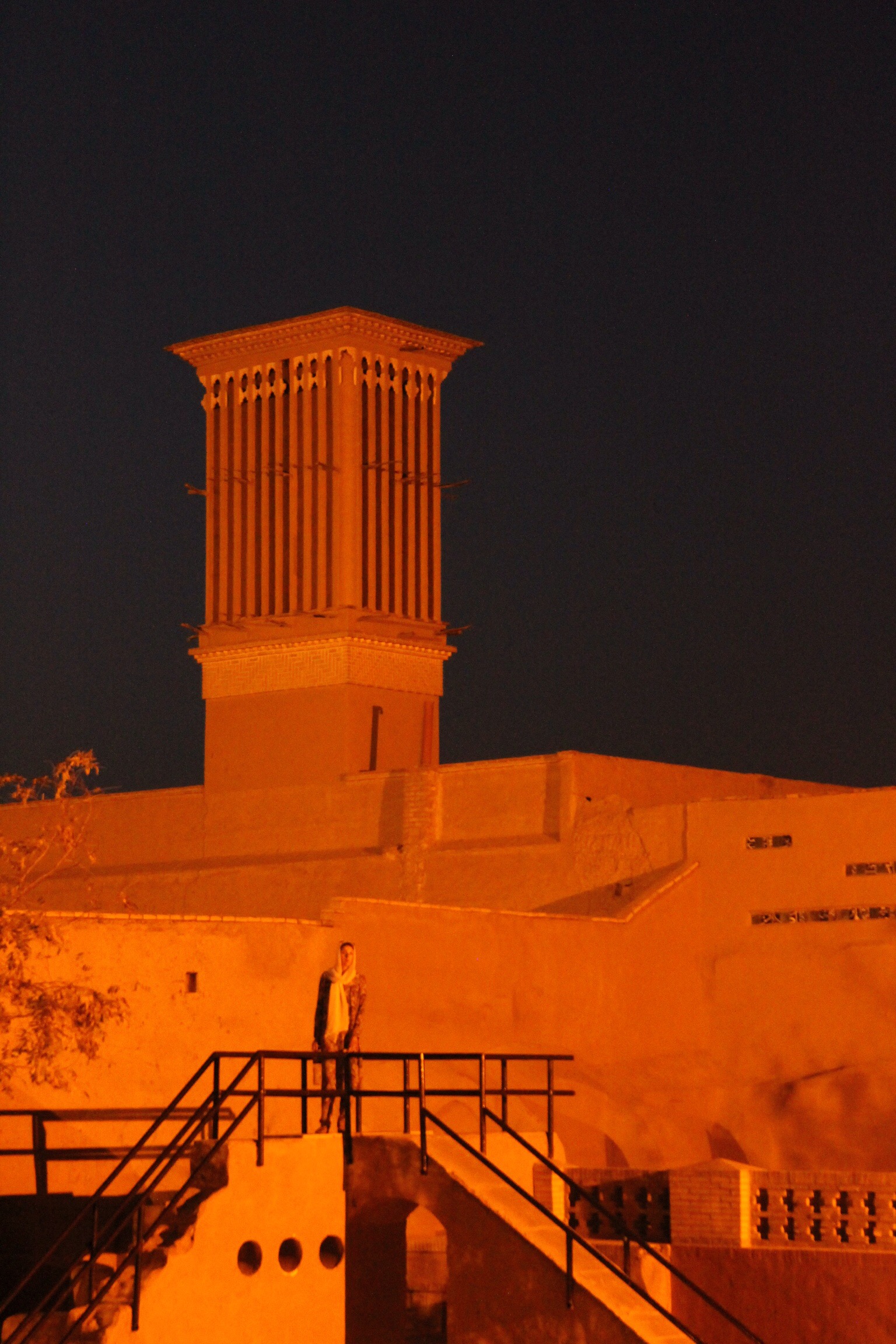
Yazd had lots to see. The old town is mud-brick built and has some ancient but extremely clever ways of dealing with the hot climate. Firstly most buildings have at least one badgir which is like a reverse chimney – it’s a tall tower that catches air from 4 sides and directs it down into the building to provide ventilation.

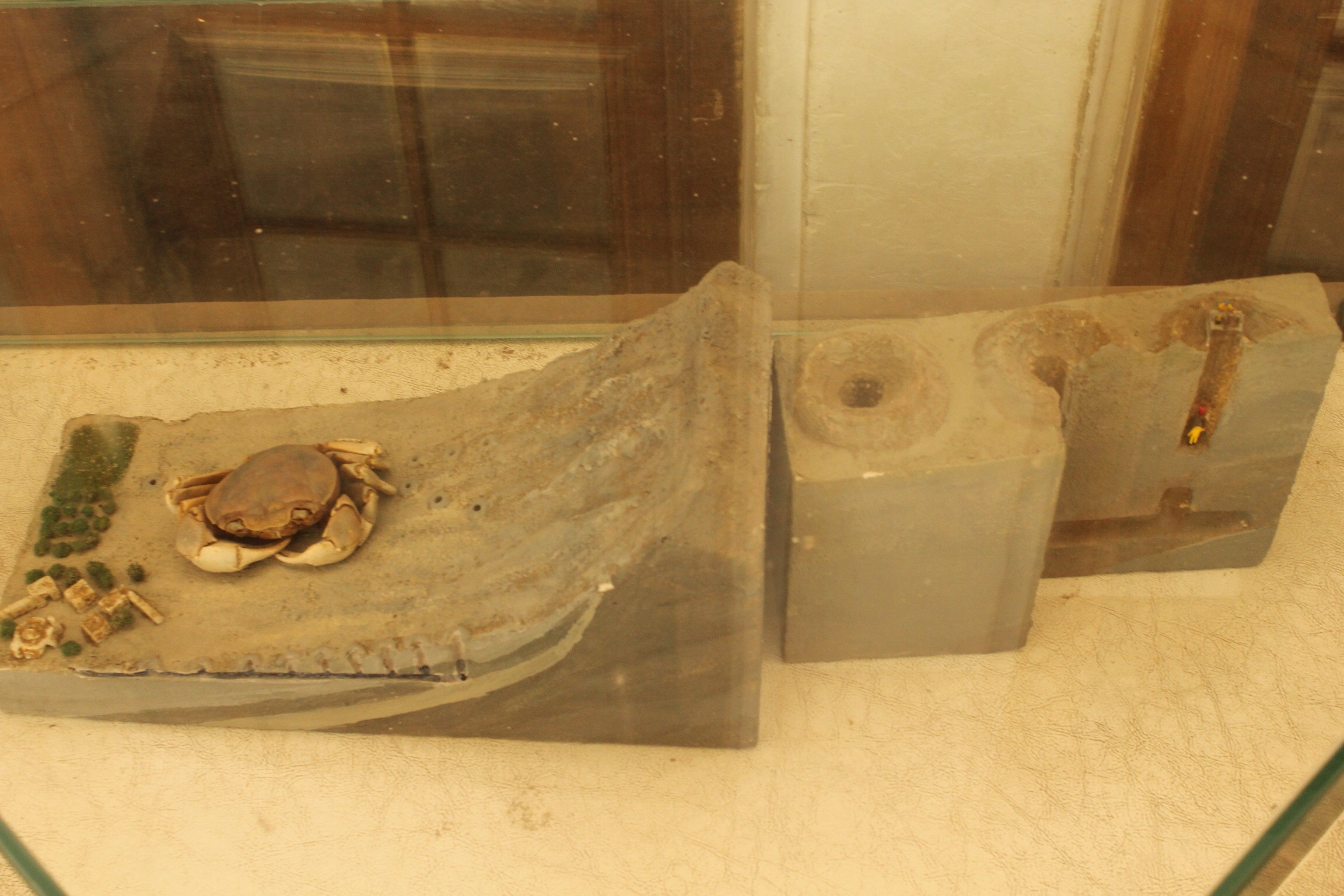
But this is surpassed by the water management system. Persian civilisations grew up in an area where there are no significant rivers, and cities have developed near mountains in order to get fresh water. To do this deep wells were dug up in the hills and underground passages, called Qanats, were dug to transport the water along a gentle slope down into towns and cities. Along the 60cm wide qanat new wells were dug every few hundred metres to check the direction, depth and provide ventilation. 

The slope and direction of the qanat is critical so that the water arrives into the basement level of the town. 

Once there the water serves underground collection points, Hamams, clothes washing areas and huge storage reservoirs called Ab Anbar. These egg shaped buildings are about 30m high (mostly underground), 15m wide and ventilated by 4 Badgirs.

Needless to say we thought the water museum was excellent! The Qanat system allowed civilization to flourish on the Iranian plateau and although metal pipe has taken over, a lot are still running and in use.

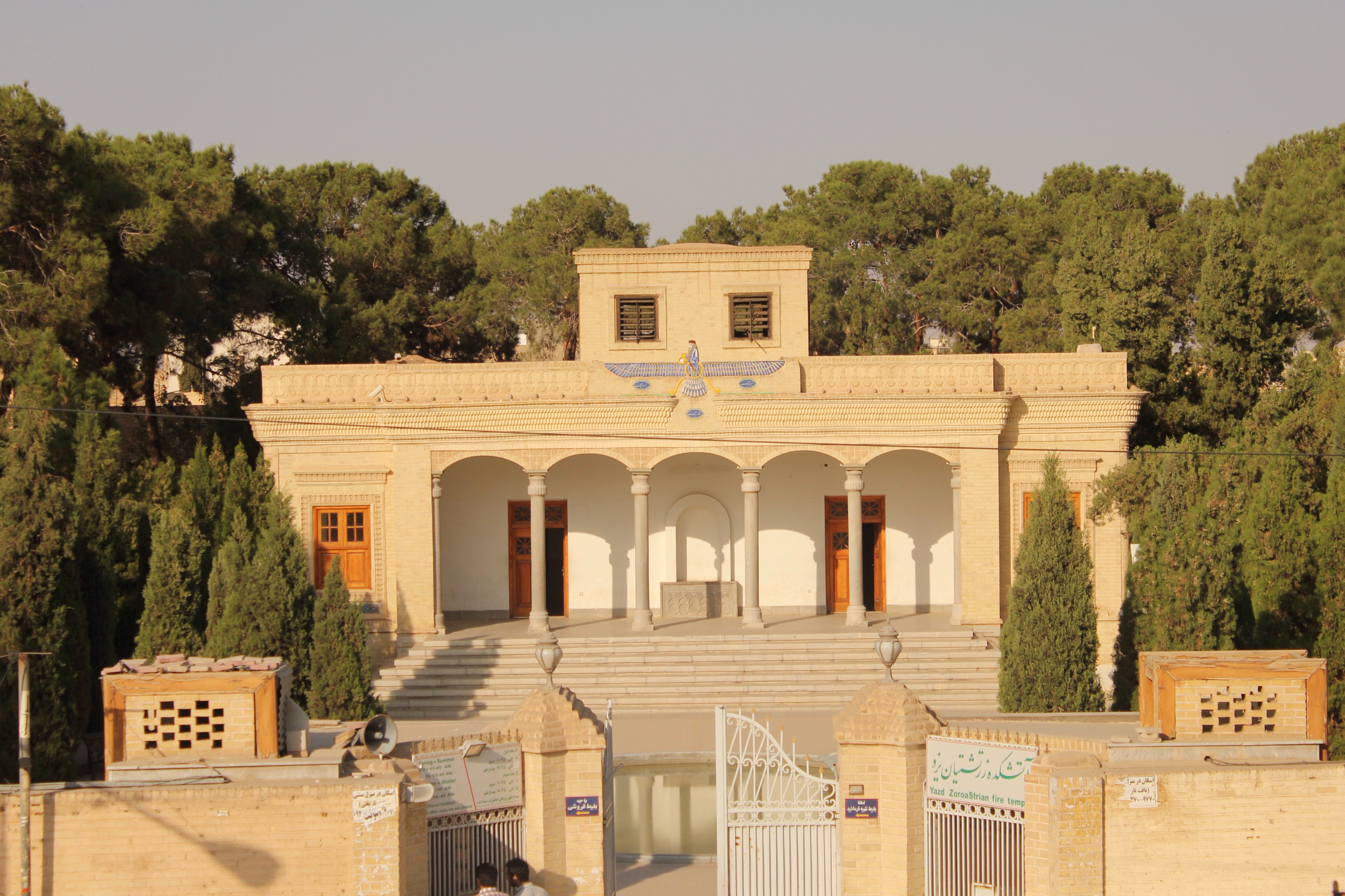
Just down the road from Mohammed’s house was the Zoroastrian fire temple or Ateshkadek and museum which we paid a visit to and was very interesting. 

Zoroastrianism or Mazdism was the first monotheistic religion and was the main belief system in Persian until Islam arrived in the 7th century. Zarathustra was apparently born in 1768BC and was apposed to the superstitious belief of the time. He preached that there was a single omnipresent God called Ahura Mazda and there were opposing forces of light and dark in the world. 

Zoroastrian’s worship of fire represents the light from Ahura Mazda and there is a burning flame in Yazd that has been alight since 470 AD! Interestingly it is believed that the 3 wise men from the Bible were Zoroastrian Magi (priests).

Today there are around 10,000 Zoroastrians in Yazd and around half a million worldwide. From speaking with Mohammed they seem to be well respected in the community. It was very interesting to learn about such an ancient faith and the fire temple was well worth a visit even if it looks a bit like the Olympic flame behind a big panel of glass…


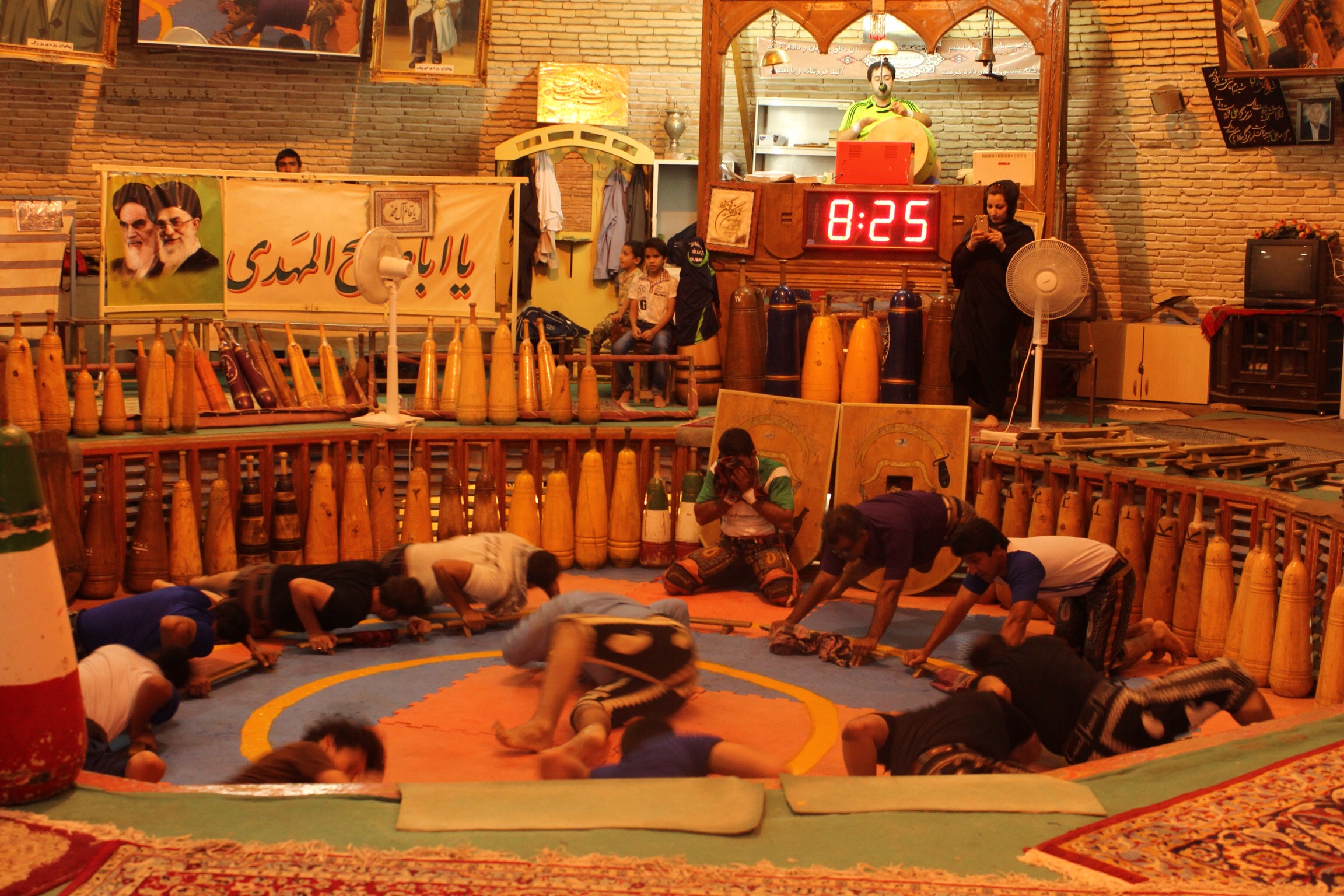
On our last evening in Yazd we had another great dinner with Mohammed and then headed out to see the local club Zurkhaneh (House of Strength). This is a kind of body building/strongman ritual that was located inside an old water storage building. About 15 barrel chested men perform repetitive lifts/spins/push ups to the rhythm of a drumbeat and a man reciting parts of the Iranian epic Shahnameh and old Iranian poetry. 

It was impressive for us tourists and at the same time it felt like a regular social occasion for the men. Some of their kids joined in and took a go at the ‘spnning around very fast’ manoeuvre and half way through an old master arrivedand was greeted by all with great respect. He even joined in lifting some weights.

After 2 days it was time to say goodbye to Yazd and we headed to the bus station to travel south towards Persepolis and Shiraz. As usual at the bus station a host of different people came to help us, get photos and swap phone numbers…we’ve given out our number to a lot of Iranians now and randomly gets texts asking how we are getting on! We’ve also got really good at jamming tandem + bags into the bottom of busses, so with little hassle we set off south.

Mashhad and the Harem-e-Razavi

Iranian hospitality is world famous and our warm showers app is a good indicator of this. Despite the practice being illegal in Iran, there are probably more warm shower (not to mention couch surfing) hosts registered in Iran than there are in all of the countries we’ve been to so far put together. Many of the hosts aren’t even cyclists! Just normal families who want to meet people from different cultures.

There are 76 hosts in Mashhad alone. 

We had organised to stay with a family in the west of city so that’s where we headed when we disembarked off our coach. We had our first taste of Iranian drivers (who are notoriously bad) but Paddy steered us through the centre beautifully. If possible, tandem gets even more attention than usual here and we’re flooded with photo requests as soon as we stop to check the map. 

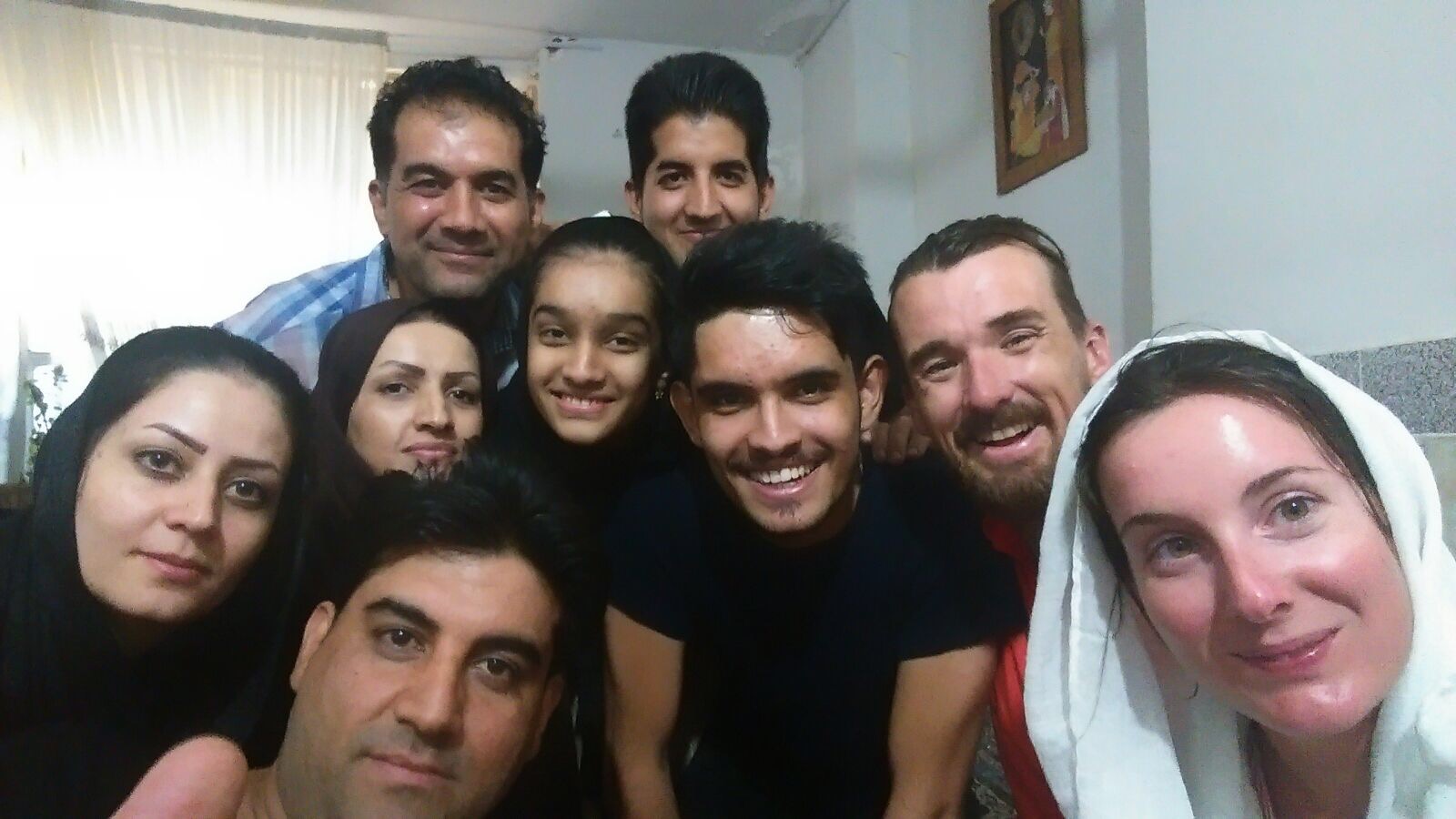
Our warm showers host, Mohammed and his lovely wife Zena, couldn’t have made us feel anymore welcome and we really enjoyed hearing all about Mohammed’s new start up business which will offer a digital selling platform for Saffron farmers in Iran. Him and Zena are awaiting on their visa application to move to Amsterdam so we met them at a really interesting time. Iran grows more than 90% of the worlds saffron! 

We planned to have just one full day in Mashhad to visit the city’s main tourist draw; Harem-e-Rezavi or the shrine of Reza who Shia Muslims believe was the 8th Imam (rightful spiritual leader) after the death of the prophet Mohammed (there are 12 Imams in total). 

Reza is the only Imam buried in Iran and the site is considered one of the most holiest places for Muslim pilgrims, particularly for Shia Muslims but Sunni Muslims also visit. 


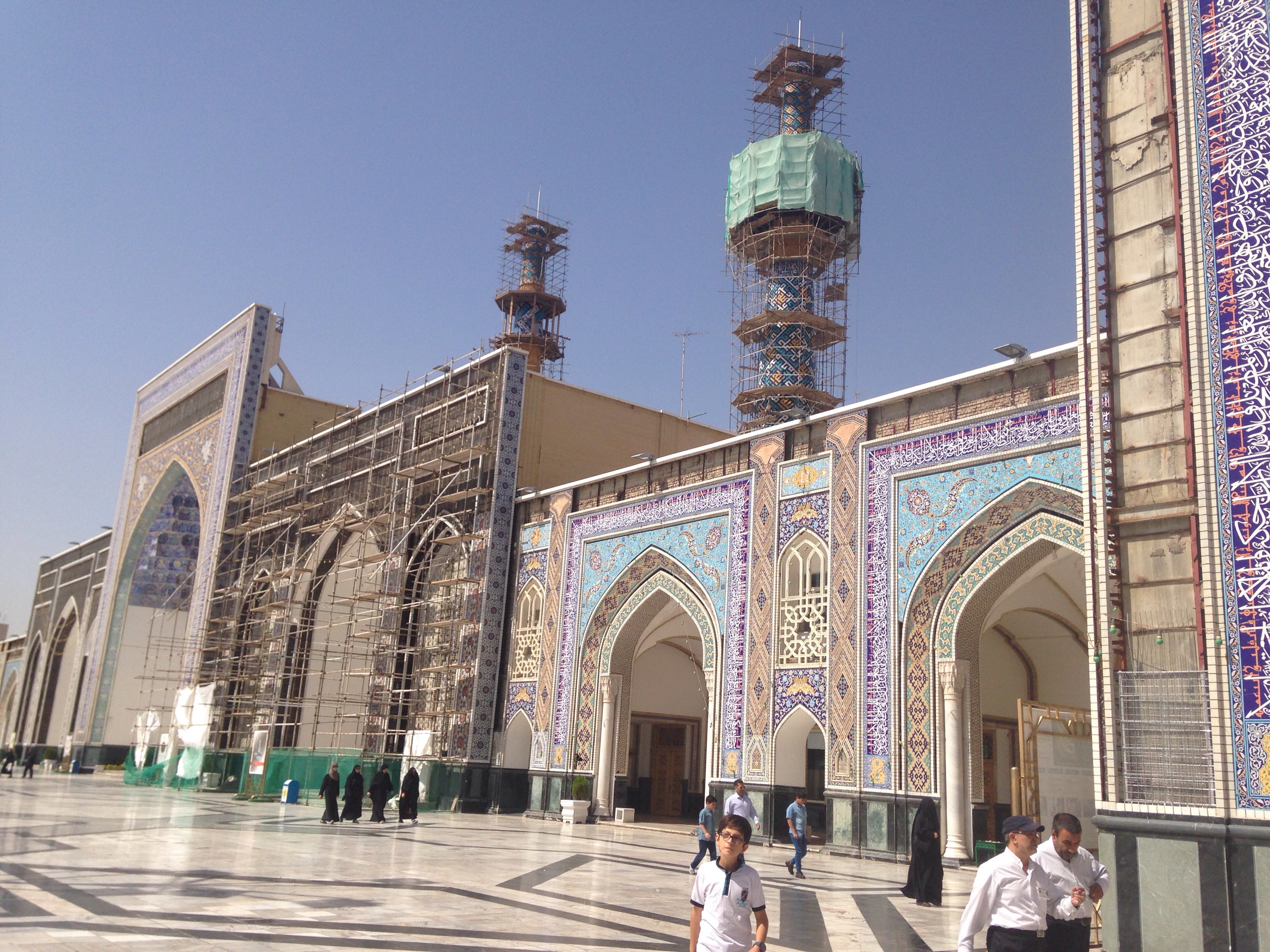
The building of the shrine site was started in the 14th century and has been growing ever since. Buildings are simply bulldozed down to make way for new expansions every year. The site can currently hold a whopping 7 million people. Mecca only holds between 2-3 million and unlike the latter there has never been any incidents or injuries due to poor crowd control here.


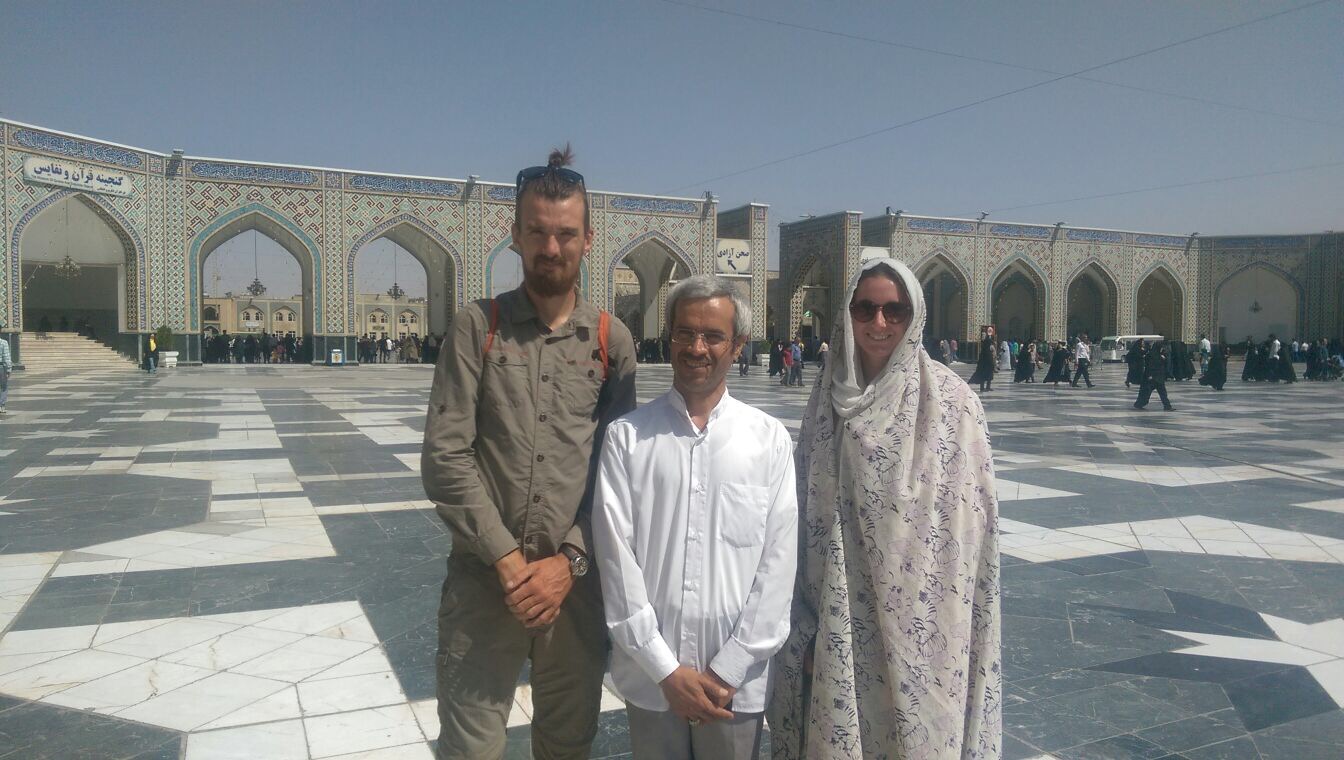
Both sexes are required to dress conservatively and women must wear a chador on site. Luckily I was able to borrow a thin 100% cotton one from Zena. Here we are in the large square. 


The chador is essentially a large piece of material (black usually but not always) which is wrapped around the head to cover the full body and is held in place with your hands or wrapped around the arms. Chador literally means ‘tent’ in the Persian language of Farsi. 


Other than holy sites, it is now not a requirement for women to wear the chador but many still choose to. It’s more common in holy cities such as Mashhad and more provincial towns than in Tehran, Esfahan or Shiraz. When you’re not used to it, it can get very hot under there!!! 

Non-Muslim tourists are strongly encouraged (not much choice in the matter) to have a guide in the shrine complex. Entry is completely free and all the English speaking guides are volunteers. Our guide was called Ali and despite him being a little zealous about his faith at the beginning it really was great having him and we were able to ask lots of questions. 


Mashhad means ‘place of Martyrdom’. It’s difficult to understand the national psyche of Iran without first understanding the importance that martyrdom plays. Naturally, the Shiite faith plays its part in this aspect of Iranian culture. For example, the three Imams who are most revered are the ones who were also brutally murdered, and at holy sites it is not unusual to see pilgrims showing heartfelt outpourings of grief for their suffering. When Ali was telling us the story of Hossain the third Imam his eyes filled with genuine tears.

During the Iran-Iraq war many men (and boys as young as 13) sacrificed their lives in the name of their country by clearing mine fields by walking through them. Many of these martyrs are still remembered and held in great esteem today, and in every town and city across the country you will see painted murals and road side posters of their faces.

But to say that the Iranian ‘martyrdom fever’ is simply a bi-product of religious fanaticism would be missing an important subtlety, and the genuine importance placed on ‘putting others first’ is fuelled by social and cultural etiquette just as much as religious teachings.

Ali took us on a walking tour of the site and explained some interesting features of the architecture which include a turquoise domed mosque from the timurid period and some very impressive tiled ceilings which were only completed quite recently. Surrounding the main buildings are a number of large squares with water features in the middle. Large red Persian rugs get laid down during prayer time. 


Before heading over to the site’s museum, Paddy was lucky enough to be taken down into the main prayer room – a huge cavernous underground space who’s walls and ceiling are covered with mirror shards. Huge chandeliers hang from the ceiling. Unfortunately I wasn’t allowed in but Ali told us that the purpose of the broken mirrors was to help pilgrims to forget their individual needs and wants and focus on their message to Allah.


Coming to the site was a really interesting experience and the site is just as important for Muslim pilgrims now as it was 800 years ago which, made it a fascinating place to people watch. 


Our next stop is the town of Yazd and to get there we will need to take a 16hour overnight bus ride across the desert. 

Our first night in Iran

Iran is a huge country and there was a lot of ground to cover in just one month. The plan was to concentrate our time in the central and western parts of the country before heading to the north west tip to cross into Armenia.

Iranian customs and border checks were very straightforward – a bit of questioning but nothing out of the ordinary and we found ourselves cycling towards the centre of Saraks town by 2pm. Most of the shops were shut and the streets empty – we could only assume that everyone was taking an afternoon break during the hottest part of the day. 
Money exchange, getting a SIM card and finding somewhere to stay were the three priorities. 

We stop at a newsagents – the only shop on the street which is open – and Paddy enquires about money exchange. A man in his 30s who had just popped out to buy the paper ends up taking 30 minutes out of his day to guide is to a money exchange. Finding it closed, he calls his brother in law Pedram who speaks English. 

Five minutes later we see Pedram running down the street towards us. We explain what we need and he insists on inviting us back to his house. We had been in Iran for less than an hour and already we had been invited back to a family home; Iran was indeed living up to its reputation of being the most friendly and hospitable country on earth! 

Iranians take hospitality and looking after their guests very seriously. As tourists in Iran we are considered personal guests to all Iranian people and so they feel bound to ensure that we are assisted in every way possible. 

Iranians also show a similar dedication to civility towards one another, and this results in a social etiquette of extreme politeness which is called Taarof. It is not unusual for a shop keeper or taxi driver to initially refuse payment in exchange for their services for example… 

We were aware that we would be offered many invitations in Iran but that it was important to remember to refuse (sometimes a number of times) before finally accepting. 

The whole system is incredibly alien and difficult to navigate but certainly makes initial conversations very interesting! 

Anyway, Pedram offered his invitation a few times so we judge it to be genuine and we were very glad to accept. 


We had a really lovely afternoon in his grandmother’s house with his uncles, sisters, parents and their children. Family is very important in Iran and Pedram’s family seemed incredibly close. There was a lot of laughter between them. 


We were fed a huge meal and and drank lots of tea. Pedram and his parents were keen to host us that night but decided to call the police to check. The police said it wasn’t possible for us to stay with them but offered to escort us to a shelter where we could stay for free. 

We said our goodbyes and we followed the police car across town on the tandem. 

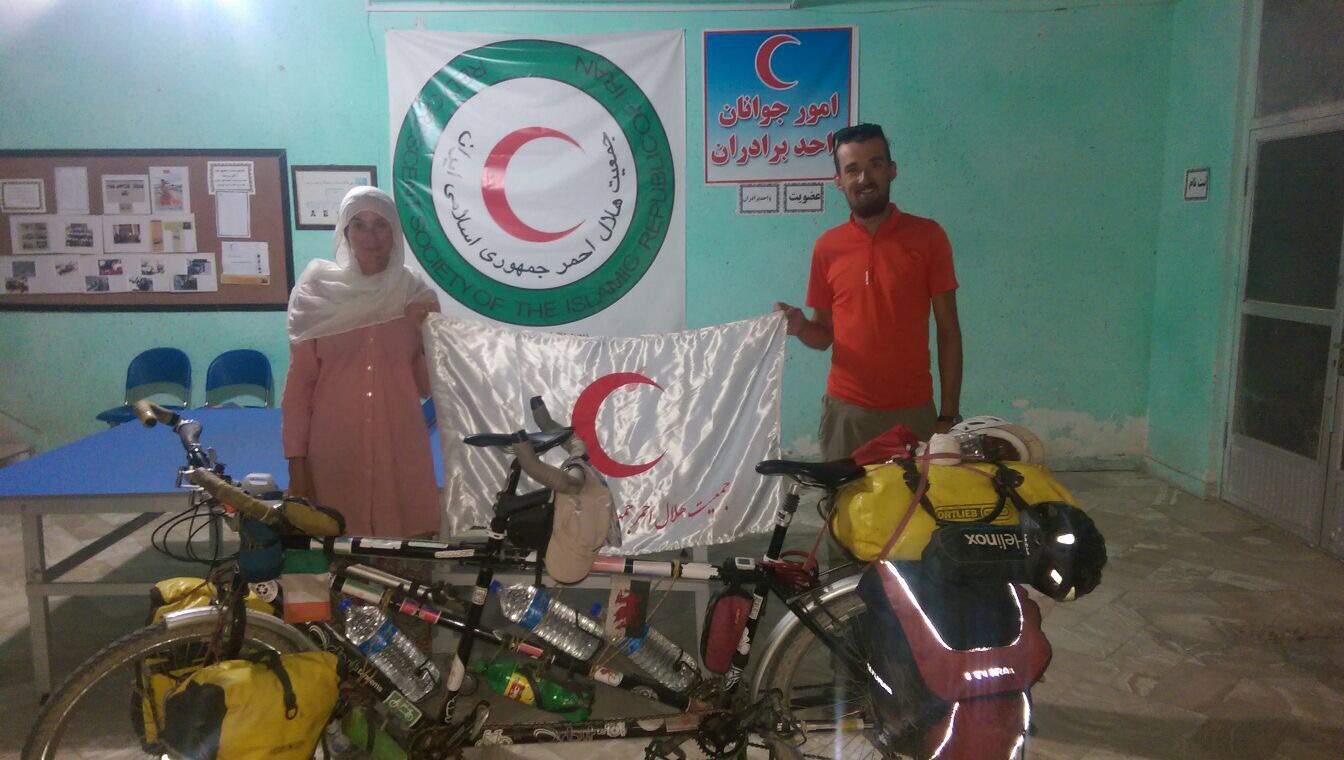
The shelter ended up being a community building run by the red crescent (similar to the Red Cross).  We were given our own bedroom, a safe place for the bike, use of the washing machine, a hot shower and a free meal… Travellers are allowed to stay in these shelters free of charge all over Iran. Amazing!

Here we are posing for a PR photo with the bike.


The next morning we set ourselves the task of exchanging money and setting up SIM cards. In lots of other countries such as Uzbekistan and China it has been almost impossible to get a SIM card but Iran it’s no problem for foreigners to sign up to the system. BBC and other sites like Facebook are blocked and require our VPN but The Guardian, WhatsApp, Skype etc are all a freely available. 

Iran, like Uzbekistan, is currently suffering from high inflation so we’re careful not to change too much.

After a hurried lunch we cycle to the bus station to enquire about a bus to Mashhad. We were incredibly lucky, as the coach was pulling away from the terminal as we arrived but we managed to quickly unpack the bike and fit it underneath before clambering on board. The process would have been quicker but the two bus attendants kept pulling me away because I had managed to get a black smudge on my nose from dismantling the handlebars… They were very insistent that I wipe it off! 

We would stop in Mashhad for a couple of nights before heading across the desert to the town of Yadz. Iran here we come! 

IRAN! Country No. 10!!! 

Out of all the countries we will visit on this trip there are probably none that are as misinterpreted or held in such high suspicion in the west, than Iran. With the exception of China perhaps. 

For this reason, along with China, Iran was the country I was most looking forward to travelling in. 

Being from Britain perhaps adds an even greater weight to my time here. Due to the diplomatic relations between our two countries over the past 60 years the Iranian people have had little contact with British tourists, compared to say French, German and other European nationals. 

Instead of treating you with suspicion and fear however the general reaction from Iranians tends to be exclamations of delight. Firstly, the majority of Iranians are incredibly well educated and open minded people. They know exactly how they are portrayed in western media and are eager to dispel any negative opinions you may have. Secondly, lots of younger Iranians already speak, or are learning to speak English, so meeting a native speaker is really exciting for them. 

There’s no point ignoring the difficult diplomatic relations but since reading up, I’ve spent most of my first week here feeling guilty that my country played such an embarrassing and illegitimate role in Iran’s recent history. Just research the British organised coups of 1921 and 1953 and you’ll begin to ask the question: ‘just how much of the current situation in Iran is our fault?’

I’m not going to forget or ignore the censorship and human rights abuses which I know take place here but I want to spend my time finding out how the rules and laws of the country affect real people and what they think about them. 

I want to know more about Sharia Law and the Shiism pillar of Islam and how it plays a key role in cultural, social and political life here and what normal Iranians think about it. Is the obligatory wearing of the hejab the biggest problem for Iranian women or are there more important causes to get behind?

Having spent a week here, it feels as if we’re just beginning to get an insight into contemporary life here. Understanding the causes and events following the revolution in 1979, the domestic and foreign policies which followed under Khomeini, and how an Islamic republic functions day to day have been important to this.

And of course, as well as this complex and fascinating chapter of Iran’s recent history we also have all the ancient stuff to explore too. The great Achaemenid period and Persian’s epic empires which followed.


There’s no doubt about it, our time in Iran will be incredibly rich, and our only problem will be fitting it all in while having some time to do some cycling.